Showing posts with label Bruce Springsteen. Show all posts

Saturday, March 27, 2021

The Notorious LVB: 1808


The Fifth Symphony:

Okay, he started writing it in 1805, continuing on it all the way through to 1808, where he then got stuck. So he went ahead and wrote another Symphony. As one does. If you're Neil Young, that is.

And why not? He'd been writing all sorts of stuff over the last few years so what's another symphony? In fact, it helped him work out the problem he was having with the Fifth, so he finished that one, too.

In case you don't already know, this is the one that starts with dah dah dah dah!

The first thing I had to learn about this was that it wasn't dah-dah-dah! and it wasn't dah-dah-dah-dah!. It was deh-DAH-deh-DAH, and even that's a pretty shaky description of it.

But my point is, it wasn't an announcement of "serious intent" as I've always thought. It was an off-kilter, "on the two", attempt to tell everyone not only has the show started but you're already behind so hurry up. It was intensity. It was - if I may use an overused analogy - punk rock. It's Neil Young inspired by the Sex Pistols doing "Sedan Delivery" for forty minutes. It's Elvis Costello upping his game after his comparatively singer-songwriterly My Aim is True to This Year's Model.

Of course, this could just be him further adjusting to his worsening deafness and abandoning nuance for impact. Who could blame him?

In a way, it's funny because LVB usually comes at you with all kinds of melodic motifs that glide and flow into each other like, say Sufjan Stevens, but here he's more or less just hammering away on a single riff, like ACDC. I mean, he's messing with it, but he keeps coming back to it.

He turns back into Haydn for the second movement if only to assure you he hasn't lost his mind completely. (Funny how he always feels the need to do that...) But then halfway through it's very Napoleonic for a minute as if the two were friends again. Nappy would soon have Vienna surrounded, so it was no time to piss him off.

It seems like it's going to take the mellow route, like a CSNY acoustic set but then the horns come in loud and martial. The woodwinds and violins try to calm them down, but the brass isn't having it. So the tone sways gently back and forth between the two.

The third movement takes that martial theme and combines it with the Dah-Dah-Dah-Dah (well, you know what I mean). The violins are getting fidgety and keeping the pot on a steady simmer, which is a nice setup for the finale when everyone's caffeine kicks in. Kids, that's why Kiss did "Beth" - the better to rock your ass when the time came.

And it's kitchen sink time! In its own way, like "Rosalita" after "Incident on 57th Street". It starts off with a bang and for ten minutes he hits you with everything, one after the other. He really bashes at you to within an inch of your life.

And like "Rosalita", it pauses halfway through if only to catch his breath and pummel away again. And for the last minute, in double time, as if the horses are charging. 

And. It's. Just. Great.

A

And here's Lenny - with the beard, looking suspiciously like Kevin Kline - (I just miss the messy hair) to demonstrate.


The Sixth Symphony:

He calls it "Pastoral", which is what you do when you've forgotten your electric guitar, or went completely overboard last time out. Here it's the difference between the second and third Velvet Underground records or Comes a Time after riding in the ditch for years.

But on a more serious note, I suspect he got laid. And good for him! And us. After all, as great as the Fifth was, how much of that can you take at one time? Well...

This is his first five-parter - with two Allegros! (wow!) - which is bullshit because when you listen to it, it all flows together but maybe he was getting paid by the movement. (There is a scatological joke here that I'll leave for you to work out. I have a reputation to maintain.)

The first movement has some very familiar themes that most would recognize. (But of course don't count on me to say "Ahh, Beethoven's Sixth!".) About three minutes in, it sounds like there's a man on a trapeze. It might be the sweetest piece he's ever done. Trapeze man comes back in at about eight minutes in and, thankfully, lands gracefully.

Then in the second movement, he decides to take a stroll and look around. He takes his time and manages to sustain this mellow mood for twelve minutes!

The third movement starts off with some themes most of us cultivated folks would recognize, starting off easy but then ending up at the horse races. 

The fourth starts out like Phantom of the Opera (or do I mean that Phantom sounds like this...) except there is some actual drama, and then sounds like Muggsorgsky's/ELP's Picture's at an Exhibition before calming down and being its own self. 

And three minutes into the fifth he hits on a theme/chord progression that works universally. And here is where he shocks me. I'm expecting the old gallop to the finale ending, when in fact he stays within the boundaries he set at the beginning, and ends with mellow.

My conclusion is that he's high, in the best possible way. If the fifth was bourbon, this one is weed.

And it's a full forty minutes, so we're in Thick As A Brick territory.

A-

Here's Lenny again, this time sans beard but with the messy hair, showing how it's done.


The Vienna Concert:

You'd think after cranking out two symphonies he'd relax a bit, but no! 

So he ends the year with a concert premiering both of these Symphonies, and then plays lead on his Fourth Piano Concerto No. 4 and, for good measure, a Choral Fantasia (we all know how those are). 

All in all, a four-hour show. Very Sprinsteenian/Allmans-at-Fillmore of him.

Saturday, June 27, 2015

Rock Music for the Old at Heart

There I am, yearning for some great new music, and get Aphex Twin instead, so I decide to go musically conservative, hoping that will improve the odds of hitting a winner. I end up with something that the old and not very bold WNEW-FM would have been proud to play.

And that's the problem.


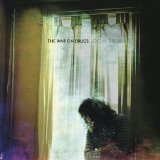
War on Drugs.jpg

The War on Drugs: Lost in the Dream

Spacious, but grounded, or something like that, said the blurb on the cover. Which is a way of saying it’s well produced, I guess.

Leader Adam Granduciel is trying to sounds like mid-60s Dylan, vocally, but puts a thick slab of U2-ish spaciness on top and ends up with some pretty commercial sounding AOR.

But Christ, he sure takes his time.

With its long intro and attempted build-up of momentum, the good but not quite great opener, “Under the Pressure”, never quite takes off the way it's meant to, and after eight minutes, ultimately collapses under all that, well, you know. Unlike Bowie’s “Station to Station” - an even longer song with an even longer intro - which builds and builds to reach an actual climax, this song never gets to that level of intensity.

And this is the fatal flaw of the record. Ten songs adding up to over sixty minutes of music, each attempting an intensity that is rarely reached, indicate that this guy doesn’t know how to turn things up a notch, or when to wrap it up. And well, I’ve got a bus to catch.

It's like he's trying to achieve the trance-like state you might normally get from an extended dance track, but via the intensity of rock and roll. But he never gets there. He’s just too damned slow. Plus dance music typically has  you know, a beat.

Maybe because he sounds so much older, he can only go so fast. Believe me, I can sympathize with that. But unlike Dylan, whose ever-whinier voice was always at least urgent, this guy sometimes sounds like that uncle you’re always avoiding at family get-togethers.

The second song, “Red Eyes”, does okay, but the third one - called "Suffering" - is kinda slow, so I guess it's aptly named. Not a bad song, Just a bad one to have follow two that didn't quite meet their potential.

“An Ocean in Between the Waves” moves a bit more and thus succeeds at its goal, but still takes seven freakin' minutes to get there.

Then there are a few more on the long and slow side that are obviously trying for some atmosphere, and succeed. If only that atmosphere wasn’t boredom! That’s not fair. They’re nice, but nothing more.

Then he goes all Bob Seger on my ass. Not the fun “Good Old Rock and Roll” Bob Seger. The later oh so older/"wiser" “Like a Rock"/“Against the Wind” Bob Seger. Granduciel also likes the wind. (Now there’s a joke I won’t even try to make.) He "fixes his eyes to the wind” (which I can’t do because I just get crap in them and end up rubbing them raw, so maybe I'm jealous) And god does that wind blow for a long time!

Even the short instrumental interlude takes three minutes!

“Burning” tries to borrow some grandiosity from “Dancing in the Dark”, but by this point things are just getting silly.

Paradoxically, the two tired songs that finish things up are actually pretty good. Maybe because by this point, I'm tired, too. The music (and the sentiments) - by sheer force of will - move beyond the cliche, and are quite moving, even though they’re not very specific. Hey, I’ll take what I can get.

This is “serious” rock music, which I find hard to take seriously. I know this sounds snobbish, but it’s really the opposite. I was always well behaved as a child, but this guy tempts me to throw spit balls from the back of the classroom.

And two or maybe three stirring moments spread out across an entire hour is more than I have the patience for anymore. Maybe some editing and the addition of a sense of humor would have made this the classic it’s clearly trying to be.

But his heart’s really in it, so I have to give him props for that. And it’s growing on me.

But only so much.

B+

When to Play It: When You've Got Company, and They're Your Own Age (Old) But Haven't Admitted It Yet

When to NOT Play It: When you’re in a hurry.

“An Ocean In Between the Waves”

Sunday, December 29, 2013

From Ear to Ear!

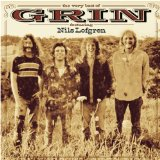
Still wandering around the internets, I stumbled upon Nils Lofgren’s old band, Grin.  I’d mostly heard Nils  on Neil Young albums, as part of Crazy Horse, with Bruce Springsteen and as a solo artist.
But never his earliest - and some would say best - period. It turns out that some are right.


This is pre-solo, pre-Bruce, sort of pre-Neil, back when he could backflip without the trampoline.
And as much as I enjoyed his first solo record, and his contributions to other artists, this record manages to be a revelation. Nils has a sweet voice, plays a razorsharp guitar and - writes some great, melodic songs.  And rockers, too!

You might find the first listen questionable. The first song, especially, where Nils’ brother Tom, sounding a hundred years old, accompanied by a country western piano, kicks off  “Everybody’s Missing the Sun” . But don’t worry, just when you think you’ve bought the wrong album, Nils jumps in, singing the melody he’s been holding back just for that moment, and a wave of warmth washes over you!  
I’m embarrassed to say that I didn’t know how good a songwriter Nils was.  Even the Jaybee-Brother-annoying 1975 solo record wasn’t as good as this softer and sweeter side.  The guitar’s as good as ever, too. A
When to Play It: Any old time.
When NOT to Play It: Around young people.

Sunday, September 18, 2011

Secret History: 1974

My doubts about the mainstream are only growing by now. Good music is officially “hard to find”, at least for me, a seventeen year old. By which I mean I can no longer simply turn the radio on and expect to hear something I really like.

Forget AM radio. Never being fond of brass or strings, I only liked Motown from a distance. So I missed out on the pleasures of much ‘70s soul.

And FM? I could get by but not without constantly changing the station. So there’s very little below that I actually heard there and enjoyed at the time. So with very few exceptions, it would only be later that I’d find the records below.


The following, is more or less in descending order of quality:

The one true masterpiece is Richard and Linda Thompson’s “I Want To See The Bright Lights Tonight” which reminds me of the first Paul Simon album - simple arrangements and great songs. But Richard's also got his guitar and wife Linda singing along, making this one of the very best of the decade.

Randy Newman seemed to be on a mission to piss off the world - something he wouldn't quite accomplish until a few years later with "Short People". He started with his very weird first solo record, moved onto “Twelve Songs”, where phrases like “yellow man” and “darkies” popped up all over the place. “Sail Away” was a bit of a relief, but on “Good Old Boys”, he goes all out with the strings and tells stories of the American South, now using the N word.

What Randy's got going for him, though, is brilliant songwriting. "Marie" is one of the greatest love songs ever (but only when sung by Randy himself). “Louisiana 1928” would be merely moving if it didn't also remind you of Louisiana 2005. This one's my favorite by him.

If you like to read about music, you’ve already heard about Big Star’s “Radio City”. So all I’m going to say is that what you’ve heard is true. On first listen you might not think much of it because the Beatles were better. Just remember that the Beatles were better than everybody.

“Feats Don't Fail Me Now” was the Little Feat album that made me a fan. Little Feat remind me of beer – the first one you have is always the best.

I'm still waiting for someone to turn “Between Today and Yesterday” into a Broadway musical. Alan Price proves that he's got it with this take on his childhood in the coal towns of England. There are moments on this record that elicit such an emotional response in me (something that I’ll explain at a later time) that I am certain most people will think I'm nuts. I’d like a second opinion.

Neil Young was well into his blue period by now, and people (including me) were beginning to wonder about him, but only after first actually purchasing his records. At first, I was disappointed by “On the Beach”. Side one could be better. I heard a better “See the Sky About to Rain” on a live bootleg with just Neil on the piano. And “Vampire Blues” just isn't funny enough. Ah, but side two! This isn't mood music. It's trance music. And it probably sent most people scurrying back to side one. But it was where I wanted to live. “Motion Pictures” is one of his great depressing songs, but it's the finale "Ambulance Blues" that’s a masterpiece. You're all just pissin in the wind….

I've come to distrust those albums with too serious a theme. But Al Stewart is very likable, so his take on history - “Past Present and Future” - is enjoyable anyway. And like me, you don’t have to believe the Nostradamus stuff to love the last song. This one’s just before Al hits the big time.

You’d think a white British guy trying to sing New Orleans-style and basically stealing Little Feat’s sound, would piss me off a little more. But Robert Palmer’s “Sneakin Sally Through the Alley” ends up sounding better than it sounds, maybe because he used Little Feat as his band. This one bought him a lot of good will from me. And it would only be when he started wearing a suit that I began to find him unbearable.

Most Billy Joel fans love “Turnstiles” or “The Stranger” the best. But don’t overlook “Streetlife Serenader”. It’s a little calmer than his major label debut, and less supercilious (it’s really a word, I swear. Someone called me it once.) There’s some filler on it, but the ones that aren’t, like “Roberta” are quietly wonderful.


And although the following records technically came out in 1973, I’m putting them into 1974, because the artists had already released something else in ’73. That, and ‘cause I felt like it:
It took until “Europe 72” for me to like the Grateful Dead. I then went back to rehear what I had been missing. So the subsequent “Bear’s Choice” almost slipped through the cracks. Plus, I preferred their harmonies to Pigpen’s blues. But side one is gentle and side two is almost hypnotic. Thank you, Pigpen!

One of the highlights of my musical life was that Saturday morning in my room doing homework when I first heard “Incident on 52nd St”. Another was that Sunday afternoon, again in my room, hearing “Rosalita” followed by “NYC Serenade”. I would have sworn that Bruce Springsteen was black or Puerto Rican. I found his mix of rock and roll, latin horns, semi-soul music, and female background choruses intoxicating. Then, when I actually bought “The Wild, the Innocent and the E Street Shuffle” and found that these three songs took up side two, running seven, seven and ten minutes respectively. One of the great, and most audacious, sides in all of rock and roll. Side one’s a bit tame in comparison, but quite good under any other circumstances.


In sum, like the year before, I’m spending more and more time in my room listening to music, instead of hanging with friends doing so. That’s because my friends and I didn’t share the same tastes. That splintering of taste I referred to in prior posts is continuing unabated.

In retrospect, 1974 was not a bad year. The problem is that you should not have to wait for “in retrospect” to know.

Sunday, August 21, 2011

Secret History: 1973

Like the Big Bang, the explosion of music in the sixties hurled huge chunks of brilliance through space.  As time went on, they were no longer the size of stars, but rather that of planets and asteroids.  The great music was there, just not in your face.  It was more spread out and harder to find. But it was there.  I swear.


But we were arguing about it more.  We didn’t all like the same things anymore.  Or rather, we were starting to dislike stuff, instead of just being indifferent to it.


And speaking of arguments, it's a bit embarrassing for me to write anything about the New York Dolls for a couple of reasons.  One is that I hated them on principle at the time.  I was a big Allman Brothers fan.  The Allmans weren't exactly fashion plates, which suited me fine, as I was of the belief that my music heroes, unlike the super-heroes in the comics (link) I loved, should not have uniforms or costumes.  Music was all.  Everything else was a distraction, especially a bunch of guys dressed as women.  David Bowie was a macho man in comparison, and I didn’t like him, either.


But now the other reason to be embarrassed about expressing an opinion about them is that I might overcompensate and go to the other extreme, in the urge to make up for past wrongs.  I don’t want to do that.  I’d look like an idiot.  And you know, that never happens.


But screw that.  I'm here to repent.  The first New York Dolls album is simply one of the greatest rock and roll albums ever.  It's loud, brash, noisy and yes, trashy.  In other words, it’s everything rock ‘n roll should be.  It took a couple of years for me to really take it in.  At first listen, it's just a lot of clatter.  But when you find yourself loving the fourth song on side two, you know you've got a record that goes deep.


John Prine may have been overcompensating, too.  On his third album, “Sweet Revenge”, he moves away from the stripped-down-to-practically-nothing sound of “Diamonds in the Rough”, gracefully avoiding “pretty”, and ends up with what might be his best record.  Funny, rocking and sometimes beautiful.


I always found that reggae sounded best when it was hot as hell outside and you were sitting by some water, getting high.  Since my house doesn’t face a body of water, and my kids have no interest in seeing me high (I think it would ruin it for them), I don’t get much opportunity to experience this optimal setting.  That’s where the soundtrack to The Harder They Come comes in.  It’s a perfect introduction to reggae, and if you’re lucky like me, you’ll get the anniversary edition which contains a bonus disc of other hits from Jamaica (“I Can See Clearly Now”, “The Israelite”) at the time.


Countdown To EcstasyThere were no big AM hits on “Countdown to Ecstasy”, Steely Dan’s second album, (unless you count “My Old School” or “Show Biz Kids”).  But, in a lot of ways, it’s the quintessential SD album.  Fans love “Razor Boy”, “The Boston Rag”, and “Boddissatva”.  The guitars are working overtime here.  And not too jazzy.  Yet.


AquashowElliot Murphy made one of the all-time “Records That Annoyed Jaybee's Brother” with “Aquashow”, and I still can’t figure out why.  We've got the guitars and organs to give you that “Blonde on Blonde” feel.  The subject is a bit more Velvet Underground, though.  Okay, Elliot doesn't have the greatest voice, kind of a high pitched whine actually, but everything else coalesces into a great rock and roll record.


Greetings From Asbury Park, N.J.And then there’s Bruce.  The Boss.  Whose “Greetings from Asbury Park” kinda gets lost amongst his other records.  I can still recite every word to “Blinded by the Light”. (His is still the best version. The Hold Steady were probably conceived while this song was playing), “For You” and “It’s Hard to be a Saint in the City”, especially the wordy bridges.  I know you love “Spirit in the Night” and “Growing Up”.  But I love “The Angel” and “Does This Bus Stop on 82nd Street?”  Maybe my second favorite Springsteen album.


O Lucky Man! (LP Version)Back when weird movies were just beginning to entice me to into the city, “Oh, Lucky Man!” had the added attraction of the having the band playing not only on the soundtrack but right in the middle of the action.  Alan Price used to be in the Animals, playing that great organ on “House of the Rising Sun”.  (You can also catch him hanging with Bob Dylan in “Don't Look Back”.  How cool is that?)  Here he gives a slightly skimpy eight songs to this strange film, but they're all winners.


Valley Hi/Some Days You Eat the Bear and Some Days the Bear Eats YouThere are a number of attractions on “Valley Hi” by Ian Matthews.  One is his covers of early Jackson Browne, Richard Thompson and Mike Nesmith songs.  The other is his pretty voice.  He also does the version of “Seven Bridges Road” that the Eagles stole for their totally useless live album.  But anyway, this is pretty as heck.


BlondelIf you can handle Valley Hi, you’re ready for “Blondel” by the Amazing Blondel.  But be warned, the inside cover shows a guy sitting in his bare feet.  It’s that kind of record, and a prime example of mid-seventies English folk music with a pop gloss.  Depending on your point of view, this is either a beautiful masterpiece, as I thought at the time, or something that should come with a warning label for diabetics.  I’m betting you’ll like it.


ByrdsThe Byrds briefly reunited for an eponymous and much maligned album.  It does suffer in comparison to their earlier albums.  For some weird reason they do two Neil Young songs - one a great version of “See the Sky About to Rain”.  Chris Hillman and Gene Clark add the melody.  Roger must have needed the cash.  Not bad.  Really.


Journey's End/I'll Be ThereMatthew Fisher is the guy who wrote the organ melody on “A Whiter Shade of Pale”, and it took him over forty years to get the royalties for it.  And he spends most of “Journey's End” - his first solo record – feeling sorry for himself about it.  He's got the whiny voice to match, too.  But he writes nice melodies so it all goes down nicely.  It was truly made for sensitive sixteen year old boys like me, who hung our in out rooms listening to music like this, instead of going out and having a good time.


And maybe that was the problem.  When I look at 1973, I see a lot of music suited for isolation, and not much for community.  What did we agree on?  Maybe “Innervisions”, but not much else. 

And that lame metaphor I started with?  All I can say is that it’s easy to see the stars at night.  But you need a telescope for the other stuff.

Sunday, March 14, 2010

Big Brother Is Listening For You

The Song Remains the Same:

There’s this song that I like.  Do you know it?  It kind of goes like…well, I can’t sing.  But the words are about…well, I forget.  But you know which one I’m talking about, right? 

Why, of course!  What, am I a mind reader?

And mind reading alone wouldn’t cut it, since when you did read that mind, it might be blank.  You would need something stronger.

But isn’t it great when our friends attribute such magical powers to us?  It’s like when they ask you if you saw that movie they loved.  You know the one, right?  Of course, they’ve forgotten the title.  (I spend my life trying to forget the movies I hated.  How is it that they forget the ones they loved?)  It’s the one with that guy in it. 

Oh, yeah.   That one. 

As dumb as this all sounds, it appears that I’ve lowered the bar even further, because there really is this song I like - I know the title and how it goes.  It’s not that I don’t remember what song it is.  I just don’t remember which song it is (although “Pictures of Matchstick Men”, “The Mighty Quinn” and “Hurdy Gurdy Man” are among the usual suspects)  And it’s important because this song has an usual history for me. 

Most people I know have a system for judging music.  They:
  1. Listen to a song
  2. Decide that they either:
    1. Like it
    2. Don’t like it.
That’s pretty much it.  It’s a simple system, really.  And I occasionally use it, but not for this song. 

Around the time I turned forty, this song went from the Hate It column to the Like It column.  This isn’t unusual – our tastes do change.  Songs that first sat in one column move to the other, and vice versa.  It’s just a matter of running the song through the system again, only this time you get a different result.

But the weird thing about this song is that, when I turned forty, I admitted to myself that I liked it, and probably always did.
So why would I lie to myself and tell myself I didn’t?  Well, it was because my big brother didn’t like it.

No, not the well-respected, fifty-ish family man who's a year older than me now, but rather, the nine-year-old (but still a year older than me) then.  Now, as smart as he is, and was, perhaps I shouldn’t have been so beholden to his opinion.  So, after thirty years, I came to the inescapable conclusion that I had no reason to dislike the song other than the fact that a nine year old boy disliked it.  In 1966.

But by 1997, I was ready to come out from behind my brother’s nine year old shadow, and begin to think for myself.  A somewhat less than inspiring coming of old age story, I’ll admit.

And who knows?  Maybe even he likes the song now.  If I could remember which one it was, I’d ask.


Mom's Listening, Too:

I’m not saying that it took me forty years to figure out my own musical tastes, and suddenly throw out all the records my brother liked.  It’s just that my experience with this song is a good example of how you can think you’re having your own thoughts when you’re really having someone else’s.

In the early seventies, my brother and I stood united on all the crucial musical issues of the day (Grateful Dead vs. Led Zeppelin, Allman Brothers vs. Led Zeppelin, Beatles vs. Led Zeppelin, etc.).   But there were isolated episodes when I wandered off the righteous path.  So I guess my own thoughts were starting to form…


1971
Elton John: Tumbleweed Connection
I seem to remember getting a less than enthusiastic reaction to this one.  Being an Irish household, it may have been that all non-Beatle Brits were suspect.  I know that my mom wasn’t happy that I spent my allowance on it, as the following primal scene attests:
Mom:  What happened to all your money?
Me:     I spent it.
Enter, two younger sisters, as Greek chorus, to provide moral support, to my mom as it turned out.
Mom:  On What?
Me:     An album.
Greek Chorus Younger Sisters: A sharp intake of breath, in unison.
Mom:  What album?
Me:     Tumbleweed Connection
Mom:  I prefer his first record.  How much was it?
Me:     Three dollars.
GCYS:Very, very sharp intake of breath.  In unison.
(Everyone blacks out, as all the oxygen has been sucked from the room.)

1972
Emerson, Lake and Palmer
I went through an ELP phase (72-74), which didn’t sit well with my brother’s Allman Brothers phase (72-present).  Those Brits again.

1973
Kinks: Everybody’s In Showbiz

I could see the look of disappointment in his eyes.  (It wasn’t hard.  He was calling me an idiot at the time.)  After all, there were so many Hot Tuna records to get, and so little money.  My first Kinks album, and one of the weaker ones, as it turns out.  Brits, too, but big drinkers, and so, honorary Irish.

1974
Advice to younger siblings sharing a room with older siblings:  Don’t play side two of pre “Born to Run” no-name Bruce Springsteen’s “The Wild, the Innocent and the E Street Shuffle”, while getting ready for work/school.  Your older sibling was out late last night, and is still trying to sleep.

1975:
Pre-E-Street-Band-no-name Nils Lofgren’s self titled solo album, and to-this-day-still-no-name Elliot Murphy’s “Aquashow”.  For some reason, these two records really got on his nerves.  Maybe Nils was a little too bouncy/hooky for what was his more boogie/jammy taste.  Elliot’s voice was a little nasally, but his attack is right out of “Blonde on Blonde”.  I’m still a bit mystified.

1976
Warren Zevon’s (or to my brother, Warren Zero) first record.  I admit that I got it because it was produced by Jackson Browne, who my brother thought I had a crush on.  Warren’s voice is a bit husky and awkward, but the songs are great.  His version of “Poor Poor Pitiful Me” demolishes Linda Rondstadt’s.
Crazy Horse’s first album, with soon-to-be-topic-of-Neil Young’s “Tonight’s the Night”, Danny Whitten, and repeat offender Nils Lofgren.  One song in particular annoyed the hell out of him, with a vocal by who knows who (it sounds half Danny/half Nils, but with a head cold), run through a phaser of some kind.  He thought they were saying “Finkelstein” (I does kind of sound like that) but the actual title is “Beggar’s Day”.

1977 and So On:

I think by now he’d given up on me.  Besides, we were both working and could buy whatever records we wanted.  I guess, in retrospect, his focus on the tried and true allowed me to go off the deep end.  I’d spend hours in the cutoff bin bringing home stuff like Earth Opera (because Peter Rowan was on it), and Nektar (because I liked album-long suites), while he filled in the West Coast catalogue.  In all, it was a good balance.

But I can’t leave well enough alone.  As adults, we’d exchange Christmas presents, and I couldn’t resist getting him CDs – Eno and Roxy Music being the most egregious examples.  (Jesus, more Brits.)  Then I went the burned CD route.  Best of Crazy Horse, anyone? 


And So Forth:

But since the whole point of this blog is to turn you on to something you haven’t heard yet, I will be going back to retrace some of my steps.  I expect to find a few times where I went wrong, but hope to find a number of instances where I went right, because there are a lot of great records out there that I think you’d like to know about. 

What was that song, anyway?

Monday, August 18, 2008

All Time Favorites, or The Courtship of Michael's Father:


Getting to Know You:


Somewhere to your right is a list of my all time favorite albums, whose contents may seem a bit puzzling. Let me explain.

One of the problems with “all time” lists is that when you decide to check out something from somebody’s list, you often end up buying the record, listening to it once, not getting it, and putting it away.

Now nothing would please me more than to have someone write back and say that they tried one of my all-timers and totally agreed with me, but that’s not likely to happen. As a matter of fact, the more I think about it, the more skeptical I’d be of such a reaction.

Our tastes are just too subjective, and we often attach a private emotion or memory to the music, which gives it a greater significance than what someone else might give it. And in turn, they do the same thing. My wife and I will probably love music from 1981 to an unreasonable degree because that’s when we first met. Talk about music improving life. Sometimes life improves music.

But more importantly, greatness doesn’t always reveal itself right away. It would be nice to think that the “great albums” just jump off the turntable/CD Player at you. This does happen, but more so, I suspect, to people who are easily impressed. We’ve all had enough experience to be suspicious of love at first listen. There may be an immediate infatuation, but that often leads to an early flame out.

After many listens, great albums hang in there, sometimes getting better and better, which in turn might mean that they didn’t seem all that great at first. Your first sip of a wine isn’t always memorable, but if you find yourself going back to the bottle again and again, it could be growing on you (or you could have a drinking problem).

There’s a period of about a week after you’ve bought a CD when you’ve gotten to know it and have formed a working opinion on it. If you loved it from the first listen, you may think you’ve got a masterpiece on your hands. But more often than not, you find that what made such a strong impression on you is now getting on your nerves. So much so that months later you may ask yourself what did I ever see in that album? 

Remind you of anything?

There’s a familiarization process that takes place that, not surprisingly, is a lot like dating. (Notes to self: 1-research probable inverse relationship between number of albums owned and number of times gotten laid, 2-Kill self) Often, there’s something immediately attractive about the record and it’s just a question of finding out if there’s any content behind the form. Other times, it’s instant irritation, and you just have to know what anyone would see in it/him/her, and you decide to find out.

In my case, the first listen might make little or no impression. Or even a negative one, which usually means that I’m in new territory, and that a week just won’t be enough.

I’ve even had cases where I just didn’t care for a record at first, and put it away for a while. Then, months later, when I feel like I’m ready for it, I put it on again and it sounds great. It took until the following St. Patrick’s Day (no joke) for the Pogues’ “Rum, Sodomy and the Lash” to take hold. Once it did, it never let go. I had to get out of summertime altogether before Public Image, Ltd’s “Second Edition” could get to me. (Listen to it and you’ll know what I mean.)


Connubial Bliss:

The great ones are like spouses. They’re there for you, they don’t disappoint and they’re in it for long haul. 

And their beauty is only deepened by time.

So I’ve put my current top five below in no particular order, and tried to convey my different impressions of them over time.

Abbey Road [Vinyl] 
Abbey Road – The Beatles
Released and bought in 1969.
What I expected:
Back then we were spoiled. There was quality all around, and I had no reason to expect less.
First Time:
A radio station was playing all of side two, and it was one of those rare experiences of sustained ecstasy. Ladies, is this what multiple orgasms are like?
Middle:
Endless replays over the next weeks, with its greatness undiminished.
Long Term:
After having put it way for quite a while, my son got into the Beatles, which gave us an excuse to get it on CD. And it still held up quite well. If I wanted to get analytical about it, I suppose I could carp about how I never really loved “Come Together” or “Something”, or that “Maxwell’s Silver Hammer” and “Octopus’s Garden” are a little lightweight. And yet when I put it on, side one sounds just fine anyway. Side two still grabs me from start to finish, and gets my vote for greatest twenty five minutes of music ever. It’s Paul McCartney’s finest moment, and, sadly, he would never even come close again.

Another Green World 
Another Green World – Brian Eno
Released in 1975, bought in 1979.
What I expected:
Something “spacey”, whatever the hell that means.
First time:
Quiet, a little out of reach, hardly there, really.
Middle:
Not quite Easy Listening, just beautiful and strange. In fact, it taught me the difference between pretty and beautiful, which up until then I thought was just a matter of degree. Now I know it’s a different thing altogether.
Long Term:
After all these years it’s familiarity does not quite diminish how strange it must have seemed when it first came out. This keeps it from ever seeming dated. When an acquaintance tells you they love “all kinds of music” put this on, if only to shut them up, and then enjoy.

 Tonight's the Night
Tonight’s the Night – Neil Young
Released in 1975, bought in 1979.
What I expected:
I had heard that it was harsh, drunken, and out of tune, but I’ve got relatives like this so I wasn’t fazed. Such things are usually, ahem, an acquired taste,
First listen:
I was actually relieved at how generous and accessible it was. Sometimes “masterpieces” can be on the cheap side, as though we should be thankful for what little we get. This one’s got six songs to a side, and they all get to the point right away. The “imperfections” never seemed gratuitous, and are justified by the intensity of feeling.
Middle Period:
I spent many a late evening during my twenties listening to this record. It’s good for basically unhappy people, and it may be a “male” record. I noticed that I didn’t listen to it as much after I met my wife. Maybe I didn’t need to.
Long Term:
An enduring album, but not for a sunny Saturday afternoon.

 The Who Sell Out
The Who Sell Out:
Released in 1967, bought in 1982.
What I expected:
I found this on someone’s list of essential ‘60s albums, and, thinking it strange that it was included while “Tommy” was not, I figured I’d give it a try. It would probably turn out to be a good but not great album.
First impression:
It all seemed so lightweight! Some of the songs sounded too much like other Who songs, which was irritating (until I realized that these came first). And if you’re in a foul mood, you’re not going to appreciate the commercials in between songs.
Middle:
But it grows and grows on you, until you realize how great the songs are. And the commercials are hilarious. It pulled me out of many a dark mood.
Long Term:
The CD version has ten additional songs that I first thought took away from the whole thing, but now seem to exist quite nicely with the original songs. And it recently helped me through an all night drive from Florida, with me enjoying every moment. It’s currently my all time favorite for its combination of power, melody and sense of humor.

 Out of Time
Out of Time – R.E.M.
Released and bought in 1991.
What I expected:
By this point, I thought I might have had enough of REM. I’d been a fan since 1984, and that’s a long time for me. So I didn’t rush out to buy it when it came out. But my sister raved about it, so what the hell, right?
First Listen:
Not bad at all, but I was still afraid that it might not wear well and end up being that “one album too many” we all have of our favorite artists.
Middle:
We spent most of 1991 listening to this. There was a lot going on at the time, which sometimes causes the music to take more significance than it might otherwise have. In this case, it was an island of beauty in a troubled sea.
Long Term:
For the longest time, “Murmur” was my favorite by them, and indeed one of my all-timers. But this one just won’t let go. I’ve read the lukewarm reviews and the complaints about its slickness, but they just don’t wash with me. If anything, it’s the too well known “Losing My Religion” that I savor the least now. It’s quite an achievement when a long, slow one like “Low” can carry you along. And a greater one when all the pretty ones that follow turn out to have a brain.


Old Girlfriends:

If I were to expand the above list to ten or twenty five, I quickly get into a lot of trouble. There are just too many records that fit into that next level that I call “great and Great, but not GREAT”, and they move around like crazy.

Plus, around 1978 my tastes began to go through a major change, so it’s interesting to see how I now view the albums I considered my favorites prior to that time. Back then I had fewer records and more time to listen to them. Kid’s brains can handle a lot of repetition, but that may make something hard to go back to, like an old episode of “Superman” you’ve seen a thousand times..

So here are my old faves:

 For Everyman
Jackson Browne: For Everyman
This has a few of my very favorite songs, but Jackson must be held accountable for pioneering the whole sensitivity angle, which I’m just too old for now. And his first and third albums are really just as good.

 The Allman Brothers Band at Fillmore East
Allman Brothers at Fillmore East
This is still probably the best live album I can think of, with some of the best guitar playing – some of the solos are ingrained in my head - but I like great songs too much to put it in the pantheon anymore.

Europe '72 (Expanded US Release) 
Grateful Dead: Europe 72
I’m not even sure it’s my favorite Dead album anymore, but it did make me completely change my opinion of them. Its several great songs balance out the instrumental excursions. At this point, it’s just a little too played out. But it left quite a mark.

 The Wild, the Innocent & the E-Street Shuffle
Bruce Springsteen: The Wild, the Innocent and the E Street Shuffle
“Poor production” and all, side two, imho, is the best music Bruce ever made. Wild, urban, ethnic, audacious. Side one suffers in comparison.

Layla
Derek and the Dominoes: Layla
Passion and guitars to spare. To this day, the urgency of “Anyday” still gets to me. But it’s another case of something that may simply have been overplayed. Then again, come talk to me in ten years.

I feel a bit disloyal, not liking some of them as much as I used to. But not to worry - to this day I still can’t dispassionately judge the Beatles. Abbey Road, by the way, is the only one that made it to the top of the list and stayed there.

It’s hard to tell which records I’ve played more – the pre 1978 ones when there was a lot of time and not many other records to play, over roughly a 12 year period, or the post 1978s, when there was less time, more competition and different taste, not to mention thirty years.

I do hope that heaven (or the other place) has one of those big computers that will tell me exactly how many times I played each of my albums. I wonder which one I played the most? The answers might be surprising. Meet the Monkees, anyone?

Sunday, January 20, 2008

Neil Young’s Blue Period, or Why “Tonight’s the Night” is Better Than “Harvest”

I ran into a friend in late 1978, a short time after Neil Young released “Comes a Time”, and we both agreed that it was great that Neil had finally come out with another pretty record. It had been a long time since “Harvest”, and we just didn’t get that other stuff he was doing for a while… I guess I’ve changed my mind since then.

Don’t get me wrong. I like pretty. I’ll even tolerate pretty but dumb, but not pretty and offensively dumb. This is not a philosophical quibble. Who wants to be around the perkiest person in the room? After a while, you want to punch them in the face. The miserable bastard, however, is great to be around when he’s in a good mood. That‘s why my favorite pretty Neil Young record is, well, “Comes a Time”, but later for that.

Neil went from being an FM darling to a hit maker (only one, really – “Heart of Gold”) to an FM darling that everyone was hoping would produce another hit. His fans were extraordinarily patient, and he used to drive them crazy at concerts by playing whatever the hell he felt like – usually brand new or unreleased stuff - to the exclusion of what people may have come to hear.

But are we talking about his CSNY songs? Not really. Buffalo Springfield? As great as they were, most of his fans by now thought that they were the band that Paul McCartney was in before Wings. So that left his solo stuff. His first record was good but the only one people remembered from it was “The Loner”. “Everybody Knows This is Nowhere” was sharper, and came out when long guitar solos were still big. It didn’t hurt that the songs were really good. They get even better on “After the Goldrush”. And even though there’s less guitar, it’s still clear as a bell and very, very soulful, even in the quiet parts.

Obviously “Harvest” was very popular, but I wonder how many people loved it. It’s certainly got some good songs (“Old Man”, “Needle and the Damage Done” and “Harvest”) but the rest of it is kind of bland. I just hear a lot of pedal steel, or worse, orchestras. When it wasn’t serious, it was awfully mellow. Okay, that’s enough to make a lot of people happy, and it was such a hit that it would give him the momentum to go off the beaten path for a while without suffering too much commercially.

Without going into the exact order of events, let’s say that life pointed Neil Young the artist towards a darker side, which he explored over several records with no hits on them. People kept buying them because Neil was the Great White Hope before people knew they were looking for one. (What were they going to do, buy Steven Stills records?) Then Springsteen came along, and Neil was off the hook.

But here’s a reminder of what he accomplished while he was off the beaten path:


Time Fades Away

Time Fades Away
A live album of all new material, it’s not quite a great album, but it is quite good. It’s also the first clear indication that Neil was turning his back on slickness. He’s also keeping a firmer grip on rock and roll, which, frankly, was becoming more problematic for those who preferred CSN to Y. By now, Danny Whitten, the guitarist from Crazy Horse, is dead, so Neil uses Ben Keith on pedal steel. But this time around, instead of sentimentality, it conveys chaos and desperation.


 Tonight's the Night

Tonight’s the Night
A dark night of the soul, and not a good place to be for very long, but it’s his best record. “New Mama” is as beautiful as anything he’s ever done. “Albequerque” sums up his take on stardom. “Roll Another Number” disposes of Woodstock in the space of a verse. “Tired Eyes” is the climax, and Neil’s rarely done a record as soulful, even if he and the band don’t hit all the right notes. “Mellow My Mind” is the dark heart of the record. “World on a String” is so primal that it’s hard to believe it was done in the Have a Nice Day Seventies. (Neil wasn’t the only one exploring this territory, though. There’s also Sly Stone’s “There’s a Riot Goin’ On” and Big Star’s “Third”. Don’t listen to these records all at the same time.) It’s understandable why a lot of people didn’t like Tonight’s the Night when it came out. It definitely wasn’t pretty. Not lazy, either – drunk yes, but lazy no. And in 1975, when most of us were moving away from rock and roll, this record lands squarely in it.


On the Beach

On the Beach
A strange experiment. Nothing here is quite right. A fairly straightforward rocker, like “Walk On” gets a little goose from a slide guitar. “See the Sky About to Rain”, done better both by the Byrds, and Neil himself on solo piano on a very powerful bootlegged live version, is kind of anesthetized here. The rest of side one is not bad. It’s kind of funny, weird and topical. But it’s really side two that gives off the eerie glow. “On the Beach” and “Motion Pictures” are slow, quiet and hypnotic, if you give them a chance. “Ambulance Blues”, on the other hand, doesn’t care if you like it or not, and it’s one of his greatest songs. It’s late night music. Actually recorded after, but released before “Tonight’s the Night”, it’s like the hangover after a particularly nasty binge.

Zuma

Zuma:
Most of his demon’s exorcized (but not the misogynist one), Neil reforms Crazy Horse and plays it straight, for him, anyway. I prefer “Danger Bird” to “Cortez the Killer”, which is saying something. “Barstool Blues”, “Pardon My Heart”, “Lookin’ for a Love” and “Through My Sails” are all great. As loud as it can sometimes get, it still strikes me as one of his calmest records. Was Neil in rehab? I doubt it.


 American Stars 'N Bars (Reissue)

American Stars and Bars:
Neil seems to be gathering strength here. Half a new album (“Hey Babe”) and half bits and pieces lying around “Like a Hurricane”, “Star of Bethlehem”. Only with Neil will the bits and pieces be better. The other gems are “Bite the Bullet” and the great , strange “Will to Love”.


 Decade

Decade:
This is one of the few triple disc sets that I could listen to all the way through. (I think it fits on two CDs though). It skimps a bit on the dark side, but makes up for it with the previously unreleased stuff (“Deep Forbidden Lake”, “Winterlong”, “Campaigner”). Plus it’s got almost all of his best songs from Buffalo Springfield.


 Comes A Time

Comes a Time:
The cover shows a smiling, older and wiser-looking Neil. You know by now that he’s been through hell, so the simple melodic beauty is breathtaking. It’s as though he’s saying You want pretty? I’ll give you pretty. I’m better at it than anyone else! And he’s right.


So it’s a happy ending, if you see “Rust Never Sleeps” as a vindication, which it is. And although the rest of his career is uneven to say the least, it's also very interesting. But we probably agree on that. My point is that you may not appreciate the above records, even though you probably own a lot of them already. So go down to the basement and get them out! I think you’ll find they are like antique furniture that may have not looked as pretty as new furniture at the time. But a lot of that other stuff is looking awfully tacky now, whereas Neil's has stood the test of time.

Friday, December 7, 2007

Are You Passionate? - The Arcade Fire

I got an exhilarating glimpse of passionate music from two different video clips on YouTube the other night, both involving the Arcade Fire. The first clip featured them live in concert, performing “Keep the Cars Running” - a song from their second album, “Neon Bible”. They were joined onstage by none other than Bruce Springsteen, who fit in perfectly with these young Canadians. This was a Springsteen song if ever there was one. It’s just that someone else wrote it.
The second clip featured the Arcade Fire on stage, this time with U2, whom they toured with recently. They were performing Joy Division’s “Love Will Tear Us Apart” – a song that alone makes up for all of the cheesy synthesizer moves in pop music over the years. But no one was playing a synthesizer in this clip. It was just a bunch of people playing a song they loved with the instruments at hand.
So in the space of two clips, they pulled together four strands of “passionate music”. That should be a redundant term - music is supposed to be passionate, and many artists spend a lot of time trying to simulate it. (I’m no purest, though. I’ll take a good fake over genuine garbage any day.) So whatever you may think of the artists in question, I’m willing to believe that they mean it – that they put it on the line every time.
I like clever as much as the next guy. Funny is good, too. Loud and fast is great. But passionate is best. It burns out, it doesn’t rust.
Such artists are easy to spoof, but that’s the risk they take and I deeply respect them for it. And Arcade Fire, fits right into this category. There are parts on both of their albums when it seems like the singer has gone off the deep end, and the band is right there behind him. This can seem ridiculous at times, but that’s the high wire act they perform on.
Their first record, “Funeral”, could remind you of early Talking Heads, carrying on that grand tradition bands led by complete lunatics. Win Butler’s voice does not always make it up to the register he insists on singing in. But that’s okay. He practically starts crying on the very first song (“Tunnels”). But, damn, if you don’t get totally swept up in it. “Laika” sounds like a gypsy caravan has crashed into your house. “Power Out” is anything but. “Wake Up” and “Rebellion (Lies)” could raise the dead. And it all ends with the beautiful and powerful “In the Backseat”.
But there are several quieter moments, like “Haiti” and “Kettles”, throughout. This contrast in tone is one of the reasons why “Funeral” is a stronger record than “Neon Bible”. The quiet spots make the peaks seem all the higher.
I do like the second one a lot, too, but it’s more like a Springsteen or U2 album, and I miss the quirkiness. I think the problem with it is epitomized by “Intervention”, which begins with a church organ. It’s hard to rev it up further when that’s your starting point. It’s a perfectly good song, and I suspect that it’s brilliant when played live.
“Neon Bible” does have its great moments like “Keep the Car Running” and “No Cars Go”. The finale, “My Body is a Cage”, is fine, but it’s got that damned church organ. “Funeral”s finale - “In the Backseat” – by contrast, settles for a rock-and-roll-with-violin arrangement to much greater effect. And this is the other reason why “Funeral” is the better album. The instrumentation is more limited, but they do more with it.
But maybe I’m mistaken. Perhaps number two has a more powerful overall sound. The issues are less private and more political. Maybe that will resonate more with you than with me.
In any case, the Arcade Fire reach for, and often achieve, a level of emotional urgency are that are undeniable. In this day of calculated effect, they will not settle for entertaining you. Judging from the video clips I saw, their concerts are transcendent.
Their music can be a little uncomfortable but it’s because they are asking you, are you passionate? They sure are.

----------------
Now playing: Arcade Fire - Rebellion
via FoxyTunes

Monday, November 12, 2007

Music to be Trapped in a Van With - Badly Drawn Boy's "The Hour of Bewilderbeast"

The Hour of BewilderbeastI had the pleasure of inflicting this record on a captive audience on a long drive home from Thanksgiving dinner. I should really have known better - this usually turns out to be a disaster, for everyone but me, that is. But for once, it was a hit.
His name is Damon Gough. He’s a Scottish singer-songwriter-multi-instrumentalist who goes under the name of Badly Drawn Boy. You may know him from the soundtrack to “About a Boy”, but this is the one that put him on the map. What map, you ask? Okay, that’s a fair question, so just work with me on this…
If you’re going to have a strange name, maybe you should play it safe with the title of your debut album. So maybe calling it “The Hour of Bewilderbeast” isn’t the way to go. It gives the overall impression that the music will be... challenging. You know the kind I mean - the sometimes painful, but ultimately enriching type. In other words, it’s work - something that will make you a better person. No fun.
Well, not to worry. This is one of the most enjoyable albums of the decade. Tuneful from the get go, it’s an hour very well spent indeed. The songwriting is consistently excellent, and the instrumentation and pace are varied enough to keep any boredom from setting in. In case that’s not enough, he throws in sound effects between the songs, abruptly ends them, or even starts new ones right in the middle of others, just to keep you on your toes.
Things start off gently, with the cello, French horn and acoustic guitar of “The Shining” - a beautiful ballad. But before you can say wimp, the drums and guitar of “Everybody’s Stalking” kick in. BDB takes us from the contemplative to the rousing and then back again. “Magic in the Air” reminds me of Burt Bacharach. “Pissing in the Wind” (yup, you heard me) is full of heart and soul, “Disillusion” sounds like a hit from the 70s. Even the theme tune is great.
BDB plays most of the instruments on the record, and if you find the last two songs to be a little slow, it’s probably because he’s ready to drop from exhaustion. Damon counts Bruce Springsteen amongst his influences, but I hear the Beatles, circa the White Album. Damon’s not quite in that league, but then again, there’s only one of him.
This record will always remind me of that Thanksgiving drive home. After a rough year, “Bewilderbeast” music gave everyone in the van an hour of great pleasure, and many more after that.


----------------
Now playing: Badly Drawn Boy - Magic in the Air
via FoxyTunes