Showing posts with label Velvet Underground. Show all posts

Thursday, October 10, 2024

We Can Be Weirdos: VU Alumnae


Nico
John Cale

The Time of Your Life vs. No Time At All:

Having recently retired, I veer between two contradictory ideas:

  1. I now have all the time in the world, so I will get every Bob Dylan bootleg like my friend Nutboy recommends.
  2. I am nearer to the end of my life and time is thus limited. Therefore I must be unrelentingly focused on the best of everything, not in every weird byway.

While my default approach is number one, lately I've been opting for number two.

WYHIWYG vs. WTFITS

Most pop records are pretty straightforward. In the olden days, there was a thing called "airplay", which was needed if a record was to become popular. Thus artists, "encouraged" by the record companies, would try to not scare off DJs, whose motto was "what you don't play can't hurt you". The song had to be short, sweet, and catchy right out of the gate. Thus, the end product tends to be what you expect. They hold no secrets and offer no mysteries. And it's good, even great, sometimes. You get what you pay for. Or, to put it another way, What You Hear Is What You Get (WYHIWYG).

Then there are records that, when you put them on, an unprepared listener is likely to say "What the fuck is this shit?" Call it the WTFITS (pronounced what fits?) Test. I'm not talking about records like Ruby Vroom or Second Edition whose first impressions are quite daunting, but that eventually pull you in. I'm talking about the ones that - after dozens of listens over the course of, ahem, decades - still make you shake your head.

I will never know who the WTFITS GOATs are, but I am aware of some real contenders. In Pop Music there's Pere Ubu and Captain Beefheart. Scratching the surface of Jazz reveals Cecil Taylor and Ornette Coleman. And out there in Classical Music, there's Steely Dan fave Cathy Berberian. And if there are Country and Western weirdos I don't want to know about them. I don't need Deliverance vibes.

In this series about, well, weirdos, I will try to limit myself to new purchases. Of course, my mind wanders, and now that I mention Pere Ubu I ask myself why I have not gotten anything else by them since Dub Housing in the early eighties? Oh, because that record scored highest-ever (in the Jaybee Universe anyway) WTFITS score with a 10 outta 10. Even Trout Mask Replica (9.5) can't match that. And my one listen to Metal Machine Music reveals it to be only a 9.0, as you get the joke rather early in the proceedings.

My reaction to such music can be perverse. Sonic Youth, for instance, has enticed me to buy at least six albums while not fully satisfying me on any of them. How did they do that? Is it like having an argument with someone and you keep going back hoping to come out on top of the conversation. 

This might explain why, after getting two rather mystifying Ornette Coleman albums I'm tempted to put this on my Christmas list.

But deep, deep (deep) down I realize the really really real reason is that cool people like these albums/artists and I want to be cool, too. Never mind that when I actually meet any of these cool people I guard my wallet and look for the exit. It turns out the cool people I meet via the written word tend to be the same ones I avoid on the D train.

So before I do any further damage I'm pulling out all my WTFITS albums and, before I die, come to some understanding of/with them.

In the meantime, I will look at some new (for me) records that are kinda strange. This time I'll limit myself to two Velvet Underground alumnae.


Nico: The Marble Index (1968)

Take Chelsea Girls, subtract the good songwriters (Jackson Browne, Dylan, Lou Reed, etc.) and add random background noise to announce that it's art. Nico mostly disavowed Chelsea Girls, and here she wants to prove her avant-garde bonafides, so she dragged John Cale - producer and fellow VU alum - into this project. Good soldier John doubled down on the Art with a capital A and thus must accept some blame. I imagine Nico standing erect wearing a Viking hat when "emoting" these tunes (a term I use loosely) from the top of Mt. Bindingsnuten.

If the theme is "life sucks and then you die" that's fine, but don't actively try to make it so. I like a lot of music that could make one want to slit one's wrists but this could take out an entire neighborhood.

It starts off okay, with an off-kilter little ditty that sets the doomy tone. Okay, fine, I'm thinking, you're preparing me. So I get comfortable in my chair and wait. Then she does it again. And again. And so on. 

I will admit that after repeated listenings, a few songs do emerge, but alas, they recede again as the accompaniment (again Cale) is erratic bordering on random. On one song the background adds tension and thus improves things a bit, on another song it just gives the sense of two blind people occasionally bumping into each other in a dark room.

The climax is "Evening of Light", which - as you can see below - belongs in a cheap '70s horror flick. It reminds me of the worst parts of Pleasures of the Harbor and the best parts of The Wicker Man.

And yet, I don't hate it. It just needs a label, like "Warning: Pretentious, Bordering on Silly".

B-


John Cale: Paris 1919 (1973)

Having spent last summer with Lou, I felt it only fair to dip back into John Cale's oeuvre (I always  have wanted to write - but not necessarily pronounce - that word!). I've got his three albums on Island Records, which are good, if not exactly catchyHis 1990 collaboration with Eno is a lot more fun.

Cale, by the way, was born in Wales, was quickly recognized as a musical prodigy, and ended up in America playing with avant-garde luminaries like La Monte Young and Terry Riley, and playing 18-hour concerts as one does. 

He then met Lou Reed and formed the Velvet Underground, playing, among other things viola. After he got tossed out of the band (just Lou being Lou) he went on on to produce numerous artists including the Stooges, Patti Smith, Nico, the Modern Lovers, and Squeeze. And his own solo career would be singularly idiosyncratic without all the Lou Reed nastiness.

This is probably his most accessible record. Quite lovely and way more enjoyable than anything Lou was doing at the time. I guess this is Cale's stab at commercialism, just to show he could do it. But he can't without it coming out weird anyway. How does one recruit half of Little Feat and get them to sink into the mix without a trace? (Well, they do manage to bust out for "MacBeth".) I guess after years of trying to bend Lou Reed to his will (and vice versa) Lowell George was a piece of cake.

It's a bit baroque, rife with literary and historical references. What undermines it is his not exactly unpleasant but kinda shaky voice. He sounds like he's hanging onto the melody for all it's worth, and occasionally falling off. If it were sung more skillfully, it might have been one of the best records of the decade.

Alas, it's only pretty freaking good.

A-


Next: It gets weird(er)

Thursday, September 28, 2023

Summer of Lou 3: Skip to My Lou

On the left, Lou Reed, in the best of health. On the right, John Cale, overjoyed to be there.

For reasons that are only getting harder to explain, I spent the summer - one of my limited number of remaining ones - with Lou Reed. Not in hell, mind you, just reading about him and listening to his music.

First, I looked back on his work with the Velvet Underground, almost all of which I'd loved for decades. They had a great run (of quality/not fame) from 1967-70. Here's how Lou spent the two years after quitting VU, and before starting his solo career.

Then, I dug into his first five studio albums (1972-76), all pretty good, but none brilliant, so I ignored the rest of his 1970s output.

And that brought me - more or less - back to when I first encountered him.


1980: Lou Who?

Aside from the occasional song on the radio, I avoided Lou Reed for the entire 1970s. He hooked up with the glam/gay/dress-up crowd who were anathema to us Allman Brothers/Grateful Dead loving - and gay fearing - fans. So my first real - if half-assed - encounter with Lou Reed was in 1980. An intriguing start. 

You'd think I'd have followed up on it, but two things held me back. First, as Johnny Rotten said last time, there were too many Lou Reed records and none were safe bets. 

Second, there weren't enough Velvet Underground albums. Except for the post-Lou Reed abomination-in-principle Squeezethey were out of print.

And what about Lou? After a decade of questionable decisions (lifestyle, substances, music), he, um, got married.

What?

The expressions of the onlookers are priceless.

Yes, the man who leaned into the gay side of his bi-sexuality for a decade was now - so he said -  straight, in every sense of the word.

Remarkably, he had been married before, to a saint or a martyr, since he spent all that time doing whatever the hell he wanted, and relied on her to clean up the mess. She did so, dutifully, until she couldn't take it anymore. She wrote a book about it and I hope she makes a million bucks.

He then spent a few years with the frankly stunning Rachel (whose pictures I included in the last post) who was a pioneer in the use of pronouns shall we say. They obviously loved each other, but Rachel picked up where first wife Bettye left off, but Lou continued to be Lou so things ended in 1978.

Lou continued to - in ascending order - make music, tour, drink, do drugs, and be a huge asshole. But even he began to realize things couldn't go on like this.

So he married Sylvia Morales, someone who would - and could - fulfill the same role his prior partners did, but who was also strong enough to get him to straighten himself out.


1982:

It would take a couple more years for Lou to finally make a solo record that made everyone sit up and take notice.


After years of letting himself get pigeon-holed into a glam-gay-drug addict icon that producer-of-Transformer-David Bowie could only dream of being, by, well, being said glam-gay drug addict, suddenly Lou announced he was hetero and just an average guy, albeit with a drinking problem. Probably full of shit but okay. As long as he believed it at the time. And no one believed his own bullshit more than Lou.

With folks shooting Lennon and voting for Reagan it's understandable that Lou - by now an aging rock "star" - may have taken the pulse of the times and decided this new, more conservation generation was not likely to put up with his hijinks.

But questionable assertions of wholesomeness aside, Lou now had an actual band. Guitarist Robert Quine - who could go from cool atmospherics to cluster bomb skronk in a matter of seconds - most obviously, but also bassist Fernando Saunders, who managed to make such transitions almost graceful. And, per Quine's encouragement, Lou himself on guitar - something he hadn't done in quite a while.

The songs were excellent - at turns heartfelt or horrifying - and well-suited to the production. My first take was an appreciation of the atmospherics, and maybe less so of the skronkery. A bit more melody might have helped but that's not what Lou had been selling for at least a decade. And I'd eventually learn to enjoy a bit of skronk now and then.

So, it took some time for me to get what he was about, but looking back I see it as a high point in his solo career.

A


Later that year, the four original Velvet Underground albums started to appear in the record shops again. I picked up their first, The Velvet Underground and Nicoand never looked backI was immediately convinced the VU was THE great lost band of the '60s. 

So I stuck around for Lou's next record.


1983: 


You'd think after the return to form The Blue Mask, Lou would be settling into this newfound consistency. But Lou didn't like sharing the spotlight/credit, so although he kept the same band he basically mixed poor Bob Quine out of it. The result is a more muted record. Fewer sonic highs and lows, but still a steady engine churning nonetheless.

The songs are of a more day-to-day nature. Love after romance, the ongoing drinking problem, insecurities, etc. There is also the beginning of an awareness of the outside world. Lucky for all of us he resists the urge to shoot from the hip or go for fake outrage. Geez, maybe he is a regular guy.

And while it suffers in comparison to Mask, soundwise, it's easier to hear the very good songs he wrote. The melodies are grudging, but Lou does his best to flesh them out, providing some actual vocals!

A-


But that was enough Lou for now.


1984:

Having now given Lou two shots, a second VU album was long overdue. I picked their last one, Loaded, a tuneful, playful delight, and one of the highlights of my summer.


1985:

Their third record - the quiet, mysterious Velvet Underground - helped me through that very cold winter. An almost bewildering first listen, the songs are so good you keep coming back.


1986:

The loud, unremitting second VU album White Light/White Heat damn near scared me away. At least their first has some great melodies. This one, released in January of 1968, was filled with shrieking feedback and distortion, not to mention tales of murder and depravity. A foreshadowing of the joys of 1968.


1987:

The wonderful VU - a compilation of VU leftovers - was easily one of the best albums of that year.

So I was more or less caught up on the VU studio albums. And I was perfectly happy with my two Lou Reed solo albums. I could stop now, couldn't I?


1989:

But this was when Mrs. Jaybee got into the act. You see, Lou had sort of a hit.


LR NY (1989)

"Dirty Blvd" caught Mrs. Jaybee's attention, and she figured, here's a Lou Reed album the both of us might enjoy. 

It's probably his best-produced album. The guitar, drums, and bass sound is sharp and dense as hell, and a perfect match for Lou's vocal delivery. The words of outrage just roll off his tongue, and for once, who could argue with him?

"Romeo had Juliet"

A-


1992:

Then my dad died, on January 15 to be exact. 


Magic and Loss (1992)

Lou released this meditation on loss on January 14 and it fit like a glove. Lou opens up more and shows some real compassion. By now, I'm amazed at Lou's ability to create yet more simple but compelling rock songs. 

He sounds like he gives a shit. And he has, for some time by now.

A-

"Dreamin'"


1993 - 2012: Breaks and Reunions

After a few records, I get my fill of artists. Sometimes it's the voice (Dylan, Elvis Costello), or a feeling of diminishing returns (Neil Young). With Lou is was his narrow range. There's only so much spoken word electric guitar freak-outs I can absorb let alone enjoy. So it was time to take a break from Lou.

In 1993, the Velvet Underground got together for a reunion, but - Lou being Lou - it was short-lived.

Lucky for him - and the rest of the world - around this time he met and fell in love with Laurie Anderson. 

They stayed together for almost 20 years - eventually marrying in 2008 - and while it was no picnic this remarkable woman maintained her own independence while simultaneously bringing out the best in him.

Lou continued making records. All were ambitious, some were praised and some derided.  In other words, same old same old, albeit at a slower pace. But most critically, Lou stood by every one of them.

In early 1997, I did pick up Nico's quite lovely first album, mainly because her version of "These Days" appeared in The Royal Tennenbaums.

In 2001, I got tired of retiring to the basement to play my VU vinyl and got the 5-disc box set Peel Slowly and See, which is almost the complete studio recordings of the Velvet Underground. A great collection, but only for the already converted.

And that was it for a while.

2013:

Then Lou himself intervened by dying, which motivated me to finally get the complete 1969: The Velvet Underground Live, with Lou Reed.

Being annoyed with Reed after hearing many of the horror stories, I picked this time to give John Cale a shot. 


2015:

I followed up with Cale, picking up his great collaboration with Brian Eno


2016-2021:

I spent this time having thoughts like:

  • How could Lou have been such an asshole?
  • Did the rest of the VU hate him?
  • Did he hate Andy Warhol?
  • Did Warhol hate him?
  • And how were those '70s solo albums - the ones upon which his reputation was built (and sadly not the VU albums)?

2022:

In spring, I got a collection of Reed's first five solo albums. If you don't mind getting caught in an endless loop, you can look here to see what I thought of them

Later that year we watched the very touching six-part documentary Andy Warhol Diaries, which led me back to this record:


Lou Reed and John Cale: Songs For Drella (1990)

Here's my initial take.

Now, with a little more context, I can see that Lou and John released this between New York and Magic and Loss. With this dynamic pairing, Cale coaxes Reed out of his guitar-bass-drums comfort zone, and together they produce a record almost as good as the last time they were together.


Now: 

Lou was, shall we say, hard to like. He exhibited all of the qualities I despised in humans. Egotism, selfishness, hypocrisy, mean-spiritedness, childishness, jealousy. I could go on.

For every moment of compassion ("Coney Island Baby"), there would be an album's worth of bile. Yet the 1989-92 run of New York, Songs for Drella, and Magic and Loss summoned the humanity Lou always had in him but was reluctant to express. 

Don't get me wrong. Even though he straightened himself out in the 80's and made better music, he was still an asshole at heart. It wasn't until he met Laurie Anderson that he softened up even a bit. 

So, we have yet another story of "redemption". And I'm just so tired of them. Why don't we have stories of forgiveness? You know, about all the people who put up with his shit and FORGAVE him? Yes, I know, they didn't make the music, but still...

I should explain: 

I'm the guy who watches a thriller and thinks What about the families of all the people who got killed? Where's their movie? (I realize this is nuts.) We don't go to the movies to watch children grow up without parents, etc. Plus, they're um, not real.

But Lou Reed was real. And just another prodigal son who finds the love of his life, and gets everything that actual nice people deserve. 


I prefer the non-prodigal son, myself. And the Marthas who get shit done, not the Marys, who sit around like groupies. 

Maybe it's my obviously Catholic upbringing - turning any potential turn towards the good into an occasion to remind the sinner of all that preceded it. In short, I'm no fun. But if there was any justice his talent would have gone to somebody kinder.

And yet...

In the several Lou Reed biographies I read, alongside the repeated negative descriptions of him, there was also a small but consistent number of dissenting views. Certain words and phrases kept popping up, like "funny as hell", "kind" (wait, what?), "devoted friend" and even "paid my medical bills"!  

But I think the two words that might allow all these wildly divergent views of him to exist in the same universe are paranoid and insecure. If you were an acquaintance who managed to get past the paranoia, you'd end up a friend, if only for a little while. But if you were an interviewer, musician, or (gulp) fan, god help you. And the insecurities that often come with a massive ego can make even the most intelligent of us strike out against perceived threats.

And that adds up to a third word: miserable, which turned up a lot. Many people said he was the most miserable person they ever met. And the trouble with miserable people is that they have to share it with you, so you end up miserable, too.

Now, throw in a beautiful mother (his bi-sexuality didn't keep him from noticing that) and a hated father (guess why?), he was even tougher on his family than on strangers. Someone should have explained to him that Freud didn't write instruction manuals.

This is not an apologia - rather, a lame theory of why Lou was such a prick. 

But the man had a vast amount of talent. His songwriting run from 1966-70 is up there with the all-time greats. 

So let's give the jerk his due.

So long, ya schmuck!


And THAT, dear teacher, is how I spent my summer vacation. And no, I still don't know why.

Friday, August 25, 2023

Summer of Lou 2: In Lou, Of Great Music


How it Started Out and...

At the dawn of the 70s, Lou Reed - like many geniuses of the 60s - had a legacy to live up to. As with the individual Beatles and Dylan, Lou knew any new music he produced would be would be held to that standard, and likely suffer in the comparison. And VU produced a four-album run that stands with the best of them. 

As such, his solo records would almost invariably meet with - at best -  a mixed reaction. And depending on who you were, those perceptions would change, for better and worse. And throw in the variables of drugs, alcohol, sexual ambiguity, and general assholery, Lou would always provoke strong reactions. 

Intimidated by all of that, and with over a dozen albums to choose from, I didn't get my first Lou Reed album until 1982 when he released The Blue Mask. The general consensus was that it was his best record, marking the beginning of his 80s renaissance. Lou Reed had finally produced something that could be mentioned in the same sentence with, say, Loaded

So why would I spend the time looking back on what was to all concerned a low point? My minimal curiosity was piqued when his first five records covering 1972-76 were put into a single, very reasonably priced package. As long as I was willing to put in the time, I'd finally get to hear it.

So, to paraphrase Monty Python, Lou Reed suffered for his art. Now it was my turn.


Kind of Lou:

Lou Reed (1972)

And we're off to a shaky start. 

It must have sounded pretty good at the time, but a bit of a letdown. Fans probably wondered what could have been. Lou was working with six never-released Velvet songs, after all. And once the original VU versions were finally released, they confirmed what already had been. Which was much, much better.

But I came to the VU versions first and was appalled at how poorly the new versions come off. At first, hated this record. But that isn't the only reason.

Let me count the way this album sucks:

  1. From the dull thumps that start off the record (from that terrible 70s production that took away all the mystery, yet highlighted all the shortcomings of the music) the drumming sounds flat. Not even the Stones would sound good under these circumstances.
  2. Backup singers are here to shore up Lou, who never needed shoring up before. 
  3. Excellent musicians instead of a band, which is pretty much the opposite of the VU.
  4. And as I said, inferior versions of songs he originated with VU. Like the first Led Zeppelin album except Lou was stealing from himself. 
Let me count those versions. (You know an album is bad when you're resort to arithmetic).
  1. "I Can't Stand It": Well named! The VU (1985) version is sparer, and far more intense. 
  2. "Walk It and Talk It" is peppy and it rocks, but the rip of the "Brown Sugar" riff is annoying. On its face not bad. But I prefer the slower, bluesy original.
  3. "Lisa Says": See #1.
  4. "I Love You": Lame. Earnest is not a good look for Lou.
  5. "Ride Into the Sun": A bit overdone, but something's got to break through the blurry production.
  6. "Ocean": It starts with a ludicrous gong(!) and is a bit melodramatic. See #1.
But there are some perfectly good songs here, marred by the production, but not arithmetic:
  • "Going Down" is a quintessential album track. Not spectacular but strong. The goddamn backup singers nearly ruin it.
  • "Berlin" is pretty good and there's an actual melody and decent singing!
  • "Wild Child" is Lou's Dylan song. Another album track that works well.
  • "Love Makes You Feel" is the most modest - and thus successful - track on the record. 
Lou is playing it safe. After being away for a couple of years, I understand. But the VU would have never stood for it.

And speaking of them, it's obvious how much Sterling Morrison is missed.  These guys have the hot licks but they don't have SM's uncanny ability to find the perfect accompaniment to Lou's songs.

Overall, a pretty good record, so I take it back. It doesn't suck. It's worse. It's disappointing.

B


Louie Reed and the Spiders From Mars


Transformer: (1972)

Produced by David Bowie, with help from Mick Ronson, it's less cluttered and brighter than its predecessor. Lou sounds relaxed, confident, and funny. 

VU Recycles: 
"Andy's Chest", which is actually an improvement over the original. 
"Satellite of Love", is relaxed enough, but still slightly subpar to the superb original.

The best new ones are, of course, "Walk on the Wild Side", and "I'm So Free". I find "Perfect Day" somewhat overrated.  The overall decadence of it is rather cute in retrospect.

Catchy, but not Great. No one knew it at the time, but it adds up to the best anyone could expect of Lou in the seventies.

A-


After the commercial success of Transformer, Lou had no choice but to show everyone he was above it all. And how would he do that? By making Art. He would bring literature to rock n' roll. And what is the highest form of literature? Shakespeare, of course!


LouReedian Tragedy:


Berlin: (1973)

This is what we used to call a Rock Opera, but no one would have had the nerve to call it that in front of Lou. Especially since he made it about a sadomasochistic relationship between two junkies. And in case you didn't get it already he rubs it in our faces, making it as grim and ugly as possible. In other words, he was no longer the miraculously detached singer of the VU, who could tell you about the nasty side of life without wallowing in it.

The production is excellent - the sound is big, clear, and spacious. But, not content with a mere rock n' roll band to fill it (or god forbid, leave some of that space alone), Lou and producer Bob Ezrin couldn't resist adding strings and a full orchestra.  And maybe it's me, but that's one transformation Lou can't pull off. Sometimes it works, like on "Caroline Says", but even that one goes off the rails at the end.

But I'm happy to report there are a few actual melodies (which Lou actually sings!) and excellent musicianship.

And this time the three recycled VU songs are comparable to the originals. But I'm getting tired of the recycling. Ah, but what's a druggie alcoholic to do when said drugs and alcohol are keeping him from writing? And with that back catalog and all lying around doing nothing...

Apparently, the album they delivered to the record company ran over sixty-five minutes. Said record company didn't want to release a double album, so Bob Ezrin managed to cut it down to ten overlong songs. I'll bet if he just edited them each down he might have fit them all on, and that might have helped clarify the story. As it is, the three longest ones drag out the ending

I suspect I'm looking a gift horse in the mouth. Maybe it's my discomfort with all the bells and whistles in service of Lou.

It's a real mixed bag. Very ambitious, with some successes. A few misfires. Lou with an orchestra.  And sad. Very, very sad. 

At least for all its cynicism, Three Penny Opera was kind of fun. This one's no fun at all. Lou wouldn't approve.

B+


So of course it was a bust and of course, the record company wanted a hit so they put out a very good live album made up almost entirely of VU songs.

But by this point, his fans were starving for some Good Old/New Lou. The rest just wanted to see him die in public. Every artist has a subset of such fans. It's just that with his prodigious drug taking, he raised the subject himself, thus putting him a close second in the Who's Gonna Die Next competition after - who else - Keith Richards.

Anyway, not being one who liked being told what to do, what did Lou provide his rock and roll-starved fans? An R&B record, of course.


Soul Brother Lou:


It must have sounded heretical to those rock n roll-loving (but probably black people-hating) fans. Now though it sounds pretty good. Yes, the slick musicianship doesn't really fit him, but if you pretend it's someone else it's really all right. (It almost is someone else, since his role was limited to getting wheeled into the studio to sing, and then wheeled right back out again.)

It would help if he were a little kinder but he can only manage that on one or two songs. Any more than that and it wouldn't be Lou Reed. And yet the arrangements - done by someone else - increase the fun factor somewhat. 

And not a single VU song. Progress!

B+
 

By some miracle - catchy songs maybe? - it actually sold pretty well. But the record company probably figured they got lucky and put out another live album, just to be on the safe side. And that sold well, too. 

 
Louless

Lou noted a correlation between the high record sales for Sally Can't Dance and his very low level of actual participation in it. 

He also felt like a sellout (again). He'd grown to despise his fans and his record company (Hey Lou, everyone hates their record company). 

And wouldn't you know he found a solution to both issues? He took the next logical(?) step of removing himself completely from the music by propping up a bunch of electric guitars in front of a set of amps and letting 'em rip. 


The result - Metal Machine Music - was a double album of screeching feedback and echo. Essentially two raised middle fingers to all involved. 


I finally listened to it (on youtube.com because even I have my limits) last week. And, well...I've heard worse. Not a ringing endorsement, but also not the worst record of all time. (I reserve that judgment for the mild, the safe, the wholesome, and the uplifting.) But I'm spending too much time with Lou to figure out my WOAT at the moment. 

Many were sold, but few found it pleasing. After a record number of returns the phrase "career suicide' started making the rounds...

So after all that, Lou decided to buckle down and do something Good. And he did, kind of.


A New, Improved Lou!


And it's... good. But nothing to get excited about. It must have seemed like manna from hell at the time but everyone was just so parched that warm spit would have sufficed. That they got water with an ice cube was nothing to write home about.

One step back is the depressingly mediocre version of "She's My Best Friend". The original had a melody, singing, and some energy. But Lou was past all that, thinking his lyrics were people bought music for. And "Nobody's Business" is the same old don't tell me I'm a drug addict BS.

The title cut is likely the highlight, lack of melody and all.

B+


Lou, looking happy for once in his miserable life, with his "friend Rachel", who inspired the record.


Epitaph:

There's a second volume to this series, covering studio albums 6-10, but I think we've heard enough. If you don't believe me, ask Johnny Rotten from 1980, after Sid Vicious was found dead:

Reporter: Did Sid die for Lou Reed's sins?

John Lydon (Johnny Rotten): Yes, too many Lou Reed albums I blame it on. There was that horrible movement from New York to London, and they brought their dirty culture with them. Sid was so impressed by the decadence of it all. God! So dreary.

To be fair, it didn't help that Lou - besides being a huge asshole and drug addict - was bi-sexual (at the very very least), and remarkably open about it, too. Transformer brought him into the Glam Rock arena, which was criticized by many, including 15-year-old Dead/Allmans fan (and somewhat homophobic) me as "not being about the music." I was wrong-ish, and the outright homophobes were far wronger.  But it was just one more thing for people to hold against him. 

He was also the '70s version of the guy who did his own research (on drugs no less). And wondered why he wasn't writing great songs. He just knew it wasn't the drugs!

But being a huge asshole and drug addict DID NOT HELP.


...How It's Going


Next: Lou finally gets it right.


Saturday, March 27, 2021

The Notorious LVB: 1808


The Fifth Symphony:

Okay, he started writing it in 1805, continuing on it all the way through to 1808, where he then got stuck. So he went ahead and wrote another Symphony. As one does. If you're Neil Young, that is.

And why not? He'd been writing all sorts of stuff over the last few years so what's another symphony? In fact, it helped him work out the problem he was having with the Fifth, so he finished that one, too.

In case you don't already know, this is the one that starts with dah dah dah dah!

The first thing I had to learn about this was that it wasn't dah-dah-dah! and it wasn't dah-dah-dah-dah!. It was deh-DAH-deh-DAH, and even that's a pretty shaky description of it.

But my point is, it wasn't an announcement of "serious intent" as I've always thought. It was an off-kilter, "on the two", attempt to tell everyone not only has the show started but you're already behind so hurry up. It was intensity. It was - if I may use an overused analogy - punk rock. It's Neil Young inspired by the Sex Pistols doing "Sedan Delivery" for forty minutes. It's Elvis Costello upping his game after his comparatively singer-songwriterly My Aim is True to This Year's Model.

Of course, this could just be him further adjusting to his worsening deafness and abandoning nuance for impact. Who could blame him?

In a way, it's funny because LVB usually comes at you with all kinds of melodic motifs that glide and flow into each other like, say Sufjan Stevens, but here he's more or less just hammering away on a single riff, like ACDC. I mean, he's messing with it, but he keeps coming back to it.

He turns back into Haydn for the second movement if only to assure you he hasn't lost his mind completely. (Funny how he always feels the need to do that...) But then halfway through it's very Napoleonic for a minute as if the two were friends again. Nappy would soon have Vienna surrounded, so it was no time to piss him off.

It seems like it's going to take the mellow route, like a CSNY acoustic set but then the horns come in loud and martial. The woodwinds and violins try to calm them down, but the brass isn't having it. So the tone sways gently back and forth between the two.

The third movement takes that martial theme and combines it with the Dah-Dah-Dah-Dah (well, you know what I mean). The violins are getting fidgety and keeping the pot on a steady simmer, which is a nice setup for the finale when everyone's caffeine kicks in. Kids, that's why Kiss did "Beth" - the better to rock your ass when the time came.

And it's kitchen sink time! In its own way, like "Rosalita" after "Incident on 57th Street". It starts off with a bang and for ten minutes he hits you with everything, one after the other. He really bashes at you to within an inch of your life.

And like "Rosalita", it pauses halfway through if only to catch his breath and pummel away again. And for the last minute, in double time, as if the horses are charging. 

And. It's. Just. Great.

A

And here's Lenny - with the beard, looking suspiciously like Kevin Kline - (I just miss the messy hair) to demonstrate.


The Sixth Symphony:

He calls it "Pastoral", which is what you do when you've forgotten your electric guitar, or went completely overboard last time out. Here it's the difference between the second and third Velvet Underground records or Comes a Time after riding in the ditch for years.

But on a more serious note, I suspect he got laid. And good for him! And us. After all, as great as the Fifth was, how much of that can you take at one time? Well...

This is his first five-parter - with two Allegros! (wow!) - which is bullshit because when you listen to it, it all flows together but maybe he was getting paid by the movement. (There is a scatological joke here that I'll leave for you to work out. I have a reputation to maintain.)

The first movement has some very familiar themes that most would recognize. (But of course don't count on me to say "Ahh, Beethoven's Sixth!".) About three minutes in, it sounds like there's a man on a trapeze. It might be the sweetest piece he's ever done. Trapeze man comes back in at about eight minutes in and, thankfully, lands gracefully.

Then in the second movement, he decides to take a stroll and look around. He takes his time and manages to sustain this mellow mood for twelve minutes!

The third movement starts off with some themes most of us cultivated folks would recognize, starting off easy but then ending up at the horse races. 

The fourth starts out like Phantom of the Opera (or do I mean that Phantom sounds like this...) except there is some actual drama, and then sounds like Muggsorgsky's/ELP's Picture's at an Exhibition before calming down and being its own self. 

And three minutes into the fifth he hits on a theme/chord progression that works universally. And here is where he shocks me. I'm expecting the old gallop to the finale ending, when in fact he stays within the boundaries he set at the beginning, and ends with mellow.

My conclusion is that he's high, in the best possible way. If the fifth was bourbon, this one is weed.

And it's a full forty minutes, so we're in Thick As A Brick territory.

A-

Here's Lenny again, this time sans beard but with the messy hair, showing how it's done.


The Vienna Concert:

You'd think after cranking out two symphonies he'd relax a bit, but no! 

So he ends the year with a concert premiering both of these Symphonies, and then plays lead on his Fourth Piano Concerto No. 4 and, for good measure, a Choral Fantasia (we all know how those are). 

All in all, a four-hour show. Very Sprinsteenian/Allmans-at-Fillmore of him.

Friday, November 13, 2015

So Normal, It's Weird

The musical year hadn’t been going so well. Oh, I’d been getting plenty of good, weird music but not so much good fun music. Good music that is both weird and fun at the same time seemed out of the question.

But I wasn’t even shooting for that. After Carrie and Lowell (good but definitely not fun) and Shutter Island (pretty much anti-fun) I just wanted a to have a good time. And I started to get a bit desperate about it.

I’m not exactly sure what drove me to go back to a couple of weirdos who got together to make some definitely-not-weird pop music.

While I’ve loved the Velvet Underground for a long time, I only checked out John Cale solo set a couple of years ago and found him to be a very talented if not brilliant.

I’ve been a fan of Eno’s for quite a while, too, but doubted that I’d find a lot of differences among his many, many, (many) ambient albums. And while often brilliant, you won’t play him during a party.

But together, who knows what they’d come up with?


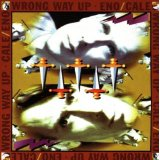
John Cale and Brian Eno: Wrong Away Up

No ambient here. And after producing a few U2 records, Eno probably decided it was time to try his hand at pop music again. Hey, he thought, if they can do it, why can’t I?

So the rock and roll band isn’t that much of a surprise, but the singing sure is. The best you could usually hope for from Eno was a soft murmur, and Cale - a loud scream. But right off the bat, Eno projects on “Lay My Love” and several others, too.

And while Cale does hide behind a couple of quiet tunes here, he more than makes up for it by belting out “Been There, Done That”.  And he’s clearly having a good time. As anyone would be after having worked on a project with Lou Reed, which he had done shortly before this.

Another surprise is how tuneful the songs are. You usually get a lot of atmosphere from Eno and psychosis from Cale, but here it’s all about hummable tunes.

And after a whole bunch of fast bouncy songs, they have the wisdom to end on a quiet note.

So I finally get my fun. But it took a bit of time to sink in because I found the utter normality of it all to be kind of, well, weird.

So I ended up stumbling upon my holy grail of music - weird and fun together!

A-

“Lay My Love”


Saturday, May 3, 2014

Blood on the 8 Tracks, Track Six: Velvet Underground Railroad

1979:


Friend Mike and I grew up in the same neighborhood and hung out in the same bar, where we talked about Ingmar Bergman while the TV played Benny Hill reruns. Kindred spirits, we’d eventually share an apartment. (I wonder if my Brother Pat remembers I took the stereo when I moved out…?)


The rent was cheap, which was great because neither one of us made a lot of money. What little we had was spent on essentials like records and parties. An exaggeration - to the relief of our landlord, we were disappointingly conventional. But we both loved music and would traul the discount bins for whatever we could find.


And it being the end of the seventies, most people were handing in their 8-track players, along with their souls to St. Ronny Reagan, but I digress.  


But it was a boon for us, with discount bins and yard sales overflowing with with used 8-track tapes.

2013:


Mrs. Jaybee and I took a trip to Boston, where Mike lives now. It was a week after Lou Reed died, and Mike thoughtfully left out a good article from the Globe. But then he surprised me by saying he never really heard a lot of Reed’s stuff - Velvets or otherwise - other than “Walk on the Wild Side”. So I decided I’d make him a mix CD of the Velvet Underground.


Later that week, while perusing allmusic or amazon for I don’t know what, I spotted a sale on 1969: Velvet Underground Live with Lou Reed. Then it hit me that Mike had actually gotten the first volume of this album from one of his discount bin dives. It must have been a short time before he moved to Europe, so he probably forgot. I probably played it more than he did.


Anyway, I decided to get the CDs.

VU.jpg

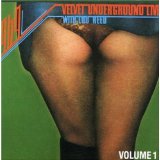
1969: Velvet Underground Live with Lou Reed


The full album (plus bonus tracks!) this time.


And I’m slightly disappointed.


One difference between then and now is that I’ve since become much more familiar with all of their (brilliant) studio output. So now this record suffers in comparison.


Another odd thing happened.  I think the poor sound quality of the 8-track actually added to my enjoyment. The tape may have only played one half of the stereo mix, because my recollection was of Lou Reed’s voice, some muffled guitar and not much else. It gave the songs a very spare quality that I really enjoyed.  The now better quality put them on grounds for comparison with the now familiar studio versions, and the former lose out.


Grade: B+

Having Said That:


It occurred to me that I wasn’t hearing VU-the-icons-who-made-several-classic-albums. I was hearing VU-the-band-playing-a-gig. In other words, this album is a record of a moment in the life of a band, and not a Statement by Rock Gods from the Past, which is what the studio albums represent for me.


Another thing: it’s probably a great record to introduce people to VU with.


So if I put aside my prejudices and try to listen to this like it was a new album with unfamiliar songs, I’d probably give it an A.


On the Other Hand...


But when push came to shove and it came time to make burn a CD for Mike, I stuck with the studio albums.


So let’s split the difference and give it an A-.


When to Play: When you’re looking for some ugly truth.
When NOT to Play: When you’re looking for sunshine and lollipops.
And if you’re wondering where to start with the VU, try this utterly brilliant post.