Showing posts with label David Bowie. Show all posts

Thursday, October 23, 2025

Ziggy Pop / Iggy Stardust


I want to stay as close to the edge as I can without going over. Out on the edge you see all kinds of things you can't see from the center. Big, undreamed‑of things—the people on the edge see them first.
Kurt Vonnegut

Nothing like a quote from a respected author to defend someone who went over the edge on Day 1, huh?


Ziggy:

You have to hand it to David Bowie. He was always willing to dive into the maelstrom. He'd barely finished Ziggy Stardust when he decided to produce Mott the Hoople's All the Young Dudes, and then Lou Reed's Transformer. Reed could send the most dedicated musician to a Buddhist monastery for life, and so during the recording, Bowie could usually be found in a fetal position under the bathroom sink.

After Reed, he decided to deal with a more stable individual and befriended Iggy Pop to produce Raw Power, to no one's satisfaction. 

Bowie also somehow got around to recording his own Alladin Sane.

All this in about a year. Coffee, I suspect.


Iggy:

Iggy himself had made his mark amongst pre-punks with his first few records with the Stooges. But there's only so many times you can threaten (and only partially pull off) the apocalypse before people start to call your bluff. (See his mid-70s humiliation in Please Kill Me.) Plus, square people like me were never going to embrace him, anyway. 

It took until I saw Trainspotting, and the Sex Pistols' choice to self-immolate to "No Fun", to understand his rabid following. My personal Iggy collection starts with a best-of from 1995, which covers most of the essentials. I then moved on to the Stooges' second and third albums - Fun House and Raw Power (the remixed - i.e., non-Bowie - version) and finally got it - the almost idiotically simple music, sung by a seeming psychotic who nonetheless managed to keep a cool distance from it all, and dropping the mask occasionally to show he knew exactly what he was doing.

To my ears, I hear a movement - from the flat lo-fi growl of "I Wanna Be Your Dog"  (one must have aspirations, after all) and "No Fun" (even if those aspirations aren't met), to the sharper bark of Fun House and then to the full-fledged yowl of Raw Power - towards a fuller, clearer sound of very primitive music. 

So what do you do next? Do you soften the music and risk selling out, but at least benefit from royalties as you approach middle age? Or do you try something new? Something's gotta give. So by 1976, Iggy was going through some tough times and had some decisions to make.


Z/Iggy:

Bowie came to the rescue, revived Pop's career,  and, possibly, his art-if-you-wanna-call-it-that-and-I-do, at least temporarily. 

And wouldn't you know, Bowie wrote most of the music for these two records! He very shrewdly left the lyrics to Iggy, knowing the man would have to have the last word on his own image.

He also played uncredited piano on Iggy's supporting tour while also releasing two great solo records of his own - Low and Heroes.) Another busy Bowie year. That's some pretty strong coffee!

Iggy Pop: The Idiot (1977)

Ah, it's great to hear Iggy in these tuneful settings. I can just hear Bowie saying to him, You know, Iggy dear, every song doesn't have to be an apocalypse. Not being an Iggy fanatic, I'm fine with this approach.

The band is (relatively) restrained, which lets Iggy's voice take center stage. With the Stooges, his voice would be fighting with (and occasionally beating) the band. Here, things are more harmonious. The band leaves some space, which Iggy fills with a suave croon. Let's thank Bowie for this.

It's also a relief to hear Iggy the Showman instead of Iggy the Raving Lunatic (which was kind of an act, anyway.)

I give this one the edge because of the last cut being better.

A-


Iggy Pop: Lust for Life (1977)

Released later that same year, it's Iggy saying, Don't worry, I'm still Iggy. Yet it's different in some critical ways. The title track - one of the greatest rock n' roll songs ever - ISN'T loud and raucous enough to send normies (like me) out of the room. It does have those enormous drums kicking things off, which should draw anyone in. And if you want to really be hit by the full force of it, watch the opening scene from Trainspotting. A true statement of purpose.

There are still the screams that remind you of the old Iggy, but this time, he's actually interested in a bigger audience. And it makes all the difference for better or worse, depending on how you like your Iggy. Clearer and punchier, but also safer. (I'm beginning to really love those earlier albums. I guess sometimes I'm looking forward to the apocalypse after all.)

And yet, that triptych of "The Passenger", "Tonight", and "Success" conveys a kind of joy. Rare.

A-


Ziggy-less:

And like with Lou Reed, it turned out great, but was really just a holding pattern.

Neither Iggy nor Bowie realized that they had only a few more years of vital music left in them. And now Bowie's gone altogether.

But these two records are great places to get the essence of Iggy without the broken peanut butter jars and such.

It's been 30 years since that best-of came out, and while Iggy's been keeping busy putting out record after record, I'm not up on any of them. I suspect by now I've got all the Iggy I'll ever need.

That's okay. He continues to thrill audiences in concert, which, I hear, is where most apocalypses take place these days.


Saturday, February 27, 2021

The Notorious LVB 1804-1805


A Little Background Music:

If you want to get technical, we really have to start in 1802, with what is known as Beethoven's "Heiligenstadt Testament":

"Oh, you men, who think or say that I am evil or misanthropic how immensely you wrong me. You do not know the secret reason... For six years now I have been horribly afflicted... Ah how could I possibly admit a weakness in the one sense which ought to be more perfect in me than in others? A sense which I once possessed in the greatest perfection? Oh, I cannot do it; so forgive me when you see me retreat when I would have gladly spoken with you... I must live alone as if banished."

Well, someone needs a hug!

Seriously, I'm using this after the pandemic for people I plan to socially distance from permanently.  And the deafness part would not be a complete lie, either. 

And for all we know he could be talking about impotence or flatulence. (Yet yet another conspiracy theory!) 

But no, it's his loss of hearing. It's hitting LVB hard, so he's hitting back even harder, at least on his pianos, which he is literally destroying (hear that Jerry Lee, Leon, Elton?) after banging on them so hard to hear the notes. It's no surprise that he considered suicide. Luckily for all, he didn't go through with it, and instead buckled down and wrote his ass off, while, for all intents and purposes, he wore earplugs.


The Third Symphony:

Technically he started composing it back in 1803. But if you're going to single-handedly shove Classical music into the Romantic period it's gonna take a little while.

He had originally thought of naming it after Napoleon, who had been doing some pretty cool things up to that time. But in 1804, when Nappy named himself Emperor, Beethoven angrily rejected him with the immortal words "Well then, fuck that guy". He renamed it the Heroic Symphony, spelled Eroica, which I misread as Erotica, which shows where my mind was/is.

So it's not Napoleonic or Erotic, it's Heroic, which the woke young people tell me is secret code for Homo-erotic. But hey, so's the whole Western canon, and I think, football, right?

Anyway, he finally gets around to having it performed privately, but the public would have to wait a year. Reminds me of The Basement Tapes.

Or maybe Dylan at the Newport Folk Festival, because some people loved it and some hated it. And then years later everybody acknowledged it as a masterpiece and acted like they thought so all along. Like hating Hitler or loving the Ramones.

So how is it?

The first movement starts off with a Bang - On the One, as they say - followed by a mini-crescendo barely a minute in. He continues with all kinds of tricky stop-and-go rhythms, keeping it up for a few minutes,  taking the dare that he can keep this up. He really is the shit at this point.

And it never settles into one single theme. Lotsa little ones, though. (Side two of Abbey Road maybe? Or side one of Low.)

The second movement is the supposedly quiet Funeral March. (Wait, shouldn't that be at the end?) but it's really more pained and dramatic than sad. This is where I think LVB is really dedicating this to himself. To the death of his own hearing. Things wander a bit but not in a boring way. (The White Album?) It just goes its own way, with a slower pace (because funerals are usually upbeat Jaybee?). By the time things pick up, I've changed the volume about thirty times. Very ballsy to go for twelve minutes like this.  But it's gathering momentum.

The third movement takes it from there and clocks in at a relatively short five minutes. striking me as the most traditional-sounding part of this piece. 

The fourth does its level best to kick your ass. and largely succeeds because (gross generalization coming up) it's so much more dramatic and energetic than most classical music that came before. It even plays like movie music for a bit. As if you can really imagine it being used during a battle or chase scene. 

There’s definitely something new and different going on here. It’s like he knows exactly what he wants to do and doesn’t care if - but is sure you will - like it. The rules are out the window, along with his hearing.

One could say he's stretching out, finally becoming himself. Or that since he could no longer hear he had to work harder to make his point. (See those broken pianos above, I guess.) I've even read that LVB's deafness may have "freed" him from being distracted by the musical trends of his day, and thus enabled him to go his own way. As if he wasn't gonna do that in the first place! But I get it.

As shocking in its own way as Stravinsky's Rite of Spring would be a hundred years later, but with a friendlier reception. I guess people weren't such stupid fucking assholes back then. But then again, life's a lot simpler if you've got a bunch of servants or slaves doing all the hard stuff for you, isn't it? And there's no Karl Marx around yet to stir things up yet again (see Napolean). Ah, those were the days! And all those Stravinsky haters would get it out of their system with World War 1.

This one runs longer than the second (which itself was longer than the first). London Calling after Give 'Em Enough Rope?

But after all is said and done I like what I like because I like it, so I still give the edge to the First Symphony.

A-

This must have been pretty wild to see live. See for yourself:

Sunday, October 7, 2018

Summer Great, Summer Not As Great

"Summer of ‘18" doesn’t quite have the ring of “Summer of 69” - nor does it match up musically - but let’s face it, that was a tough summer to beat.

The short story is that Beach House owned this summer. Certainly the first cool, cloudy half.

It’s a shame that nothing else I got could quite overcome the oppressively hot, humid second half. (Nothing quite on the order of last year’s Whiteout Conditions by the New Pornographers.) On the other hand, I don't remember 1969 being as hot as our summers are now. I don't know if the music can possibly keep up with the climate.

So, to sum up, no masterpieces. But pretty good.

Let’s try to go in order of increasing order of what I'll call Fun-ness:


The two records in question are their shared EP with Huggy Bear and their first LP Bikini Kill.
This is the pre-Le Tigre Katherine Hanna. It may also be the start of the Riot-grrrls. So...Srkunch!!! 

There are words here, and lots of them are naughty. To sum them up, get the fuck out of my face. Understandable and appropriate - but not always fun - in the middle of August.

For now, I prefer the mellower, goofier Le Tigre.

But beneath the din of Kathleen Hanna’s ballsy (yes) yowl and lo-fi “production” there’s an earthy guitar tone that grows on you.

I'm grading tough now. Once the weather gets cooler - and now that we have a Justice Kavanaugh - I’ll be playing it a lot more.

B


Simply not as catchy as Majesty Shredding, and with the subject matter being what it is, doubly disappointing.  However, their overall sound provides a rush no matter what.

B+


Beck: Colors (2017)

After winning a Grammy, what does this edgy artist do? He goes pop.

Beck’s a real pro. He’s done hip-hop, folk, soul, electronica and now pop. He’s never bad, but sometimes it’s doubtful he’s got his heart in what he’s doing. And while it’s very catchy, he’s hiding behind a wall of pop. Well executed pop, but a wall nonetheless.

I’m a big fan of Mellow Gold (less so Odelay), Mutations/Sea Change/Morning Phase.

As Mrs. Jaybee says, he’s lost his edge.  

Not that Morning Phase had edge exactly, but it was fully committed to pretty, and he was willing to take the consequences.

We’re (and he’s) a long way from “Loser”.

B+


Although he’s produced some of my favorite records, Bowie hasn’t interested me very much musically since 1980. 

He started out pop and rock-savvy and ended up being willfully harsh. Halfway through he hit a sweet spot of weirdness and joy - I’m going to say it was Low - but the inspiration slowly faded as the harshness set in. And his ned to be provocative - but without the requisite musical invention to back it up - that has him coming up short here.

The highlights are the opening and closing cuts, the latter especially affecting as he closes some of the distance he usually maintained with us.

It’s far from his best but I’ve got to hand it to him for going out his way.

B+


Two discs, each pretty long, and made up of the same album, just recorded at different times. So there’s a lot to slog through here.

The first is Will Toledo’s original 2011 lo-fi version of the album. The second is his 2018 re-recording, this time with a band and actual recording studio.

I was spoiled by Teens of Denial, which features Will Toledo the rocker who wrote consistently tuneful, rousing songs. Teens of Style - his earlier record - has the same level of inspiration tunewise, but whose thin sound accentuated Will’s nasally voice - and worse - his tendency/need to shout above the noise.

All the elements are here on both discs. The first one does have the limitation of so-so sound. And also in Car Seat Headrest fashion, too many songs end abruptly depriving one of a true climax.  The second disc smooths over some of these rough spots.

There’s no denying the several rousing moments, but he's asking for a lot of time, and I ain't got it.

B+


Slower tempos than Liege and Lief, but with more humor, via several then-obscure Dylan covers. One in French!

The tragic “Percy’s Song” (although Arlo Guthrie’s passionate version is still my favorite) is followed by the hilarious “Million Dollar Bash”, and on the 2003-digital-remaster, a nice, soulful “Dear Landlord”. The peak is Sandy Denny’s very own masterpiece “Who Knows Where the Time Goes”.  And although I still love the majestic Judy Collins version, this one wins out on sheer wonder.

A-


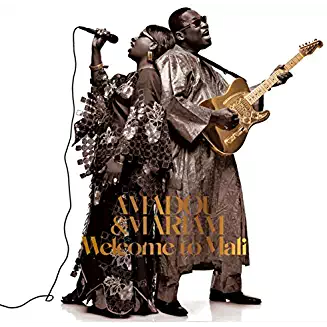
This duo is from - you guessed it! - Mali. Both of them blind, but doing fine, thank you very much. They probably would have been quite happy just making music in Africa, but managed to catch the attention of some well-meaning white people. I'd normally say RUN!, but it apparently got them exposed to a wider audience.

So this is definitely a crossover album, but still Malian enough. 

So what do they bring to the table? A growling electric guitar, for one, and excellent vocals. And some strong production.

And the momentum -bringing us through all fifteen songs - is undeniable.

A-


There are the records that try to hit you over the head on first listen, like Superchunk's Majesty Shredding.

And there are other records that are more patient. They lay out one excellent song after another, expecting you to notice after a while. 

Then there are those very good double albums that could have benefitted from a nip and a tuck here and there, to get it down to a great single.  

But in these confusing times, some such albums like this one actually fit on a single CD.  Hmmm. So let’s call them generously spirited. 

Creation comprises 19 songs. And while it’s definitely not in that first category, it is in the second and third.  

The Truckers are a southern rock band with a dose of country. This time out I only notice a slide guitar on one song. And their rock is more 1970s Rolling Stones than Allman Brothers.

But the country is still strong, with both Mike Cooley and Shonna Tucker contributing several songs. But the main songwriter here is Patterson Hood. Both Cooley and Hood add the rock and roll, but where Cooley goes country, Hood goes introspective.

This one is not as raw and aggressive as their very good Decoration Day, but it has the edge over that record due to that patient, consistent one excellent song after another consistency.

A-

So this summer was short on instant gratification, but long on wisdom. I suspect some of these records will rise in my estimation given more time.

And God knows, in times like these, I'll need that.

What a time to be alive!


Monday, February 15, 2016

Life of Brian, Part Two

My album database (yes, I have an album database, doesn’t everybody?) shows that I have more Albums by the Beatles than any other artist, by a wide margin. But if I were able to count by how many times an artist simply appeared on or participated in a record in some fashion, I think Eno would win it. He’s just all over the place.

So, as promised, here’s a quick rundown of records Brian Eno was involved with, limited, of course, by my knowledge:


Eno As Bandmate:


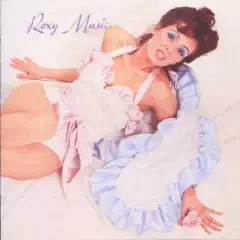
Roxy Music (1972)

Their first, with a lot of weird but infectious tunes and Phil Manzanera playing some great guitar. It almost all comes together, too, especially when they just. rock. out. I suspect Eno’s one reason it doesn’t. But Bryan Ferry’s hyper-vibrato (think the Little Rascals dog Petey on the weight loss machine) is kind of off-putting, too.  B+

"Virginia Plain"


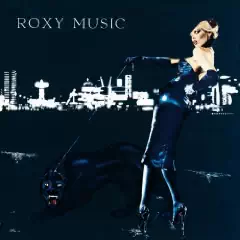
For Your Pleasure (1973)

I already had this disappointing record on cassette and thought I’d give it another try on CD. Maybe the sound would be better. And it is, a bit, but not the music.

Their first record at least seemed to be the product of a single (demented) mind. This one has two sensibilities at war with neither one winning.

Bryan Ferry was the lead singer/songwriter of the band  and arch-nemesis of Eno. It just goes to show you can only have one Brian in a band at a time, and if you have to have two, for heaven’s sake have them spell it the same way.

It was probably a good thing Eno split. Both he and Roxy Music would go onto better things, like one of my all time favorites Siren.

But they’re not there yet.   B+

“Do the Strand”


Eno Goes Solo: 


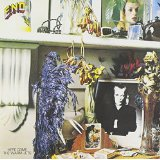
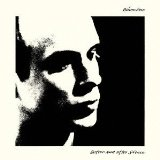
Here Come the Warm Jets (1974)

His first solo record after leaving Roxy Music, he’s now unleashed and comes on like gangbusters. Jets is an aggressively harsh and twisted affair, yet with some wonderful tunes mixed in.

Weird and fun and in your face. it’s a favorite of Enophiles. He’s got something to prove, but I think he’s trying to do too much at one time.  He’d soon settle in for the long haul, and learn to modulate the craziness. He’s only getting started. B+

“Cindy Tells Me”


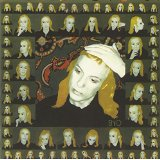
Taking Tiger Mountain (By Strategy) (1974)

His second, and my favorite of the pop-oriented ones.

At first, frustrating but it would grow on me. And hearing it again after all these years, the experiments work, and the willfully weird stuff is just plain fun. The production is clearer here and he’s not trying so hard. The songs are more tuneful and imaginatively arranged overall.
Sorry Friend Mike , but this one’s made me what I am today (which may explain a lot more than I had in mind).

And while I’ll admit, it’s still not “going to the beach” music, it is music for a long drive. Mrs. Jaybee specifically requested it while coming home from a long weekend away last month. A

“Mother Whale Eyeless”


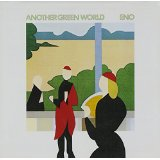
Another Green World (1975)

And here is where the big change occurs.  He’d been preparing for it on side projects with Robert Fripp.

He takes a step back from the everything-and-the-kitchen-sink approach of the prior two records. Instead, this one is minimal, and mostly instrumental, but eerie, beautiful, serene, and a little scary. It’s still in my all-time top five.

And he would continue down this path for many years.

One could argue that New Age starts here, but at best it’s a stepchild, albeit one that made all the cash. See Pure Moods.

Instead of the warm embrace of simple “prettiness” the Eno I know always holds back a little, or throws a monkey wrench in. And I wouldn’t have it any other way. A+

“Everything Merges With the Night”


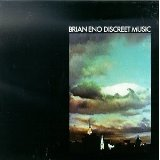
Discreet Music (1975)

And he goes even further - and maybe too far - here, devoting side one to 30 minutes of slightly varying tape loops that result in a kind of background music but with ever-shifting tones. He says it’s intended to be played at a volume just below audible, which is just one step away from 4’33, if you ask me. I still want to hear the damned thing, after all.

But when you do, you kind of know where he’s coming from with it. In its way, the very definition of serenity.

Side two comprises three slightly different experimental takes on Pachelbel’s Canon that are each nice enough, but when played one after the other, a bit much.

So, not a bullseye, but very worthwhile. B+

"Discreet Music"


Before and After Science (1978)

He pulls back a little here, coming back to earth on side one. which is devoted to pop-oriented cuts, but then goes off into space again for most of side two, which is quite lovely.

Overall a good summation of what he was up to at the time. A-

“Spider and I”


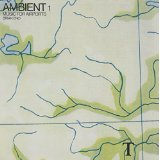
Ambient 1: Music for Airports (1978)

One cut, a simple piano figure played over and over.  Another, harmony vocals only  Another a combination of the two. And finally a vintage Eno synthesizer buzz out.

Ambient? I guess. But simple and beautiful.  A-

“1/1”


Eno the Collaborator:

The big mystery for me is what the hell he was doing in 1976.

But in 1977 he goes to Berlin with David Bowie.


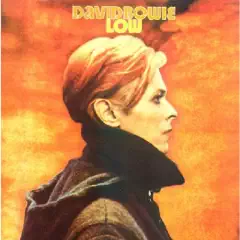
Low (1977)

Hard, sloppy rock on side one, and very Eno ambient on side two. Arguably my favorite Bowie album.  A-
“Subterraneans”


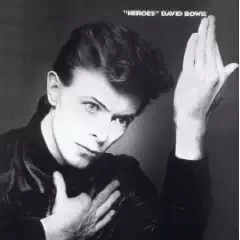
“Heroes” (1977)

The same structure as Low. The rock on side one is edgier and and the ambient on side two more daring.  Overall, very good, Low edges it out slightly. A-

“Moss Garden”


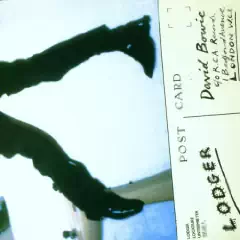
Lodger (1979)

The experiments here are in the songs themselves rather than the sound. A perfectly good record, but the weakest of the three. B+

“Boys Keep Swinging”


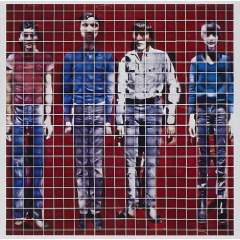
Talking Heads: More Songs About Buildings and Food  (1978)

And then in 1978 he heads to NYC. And when you hang around the coolest places, you meet the coolest bands. And so now he acts as producer and fifth band member of Talking Heads, shifting them (and me) into a different direction.  Melodic, harsh, funky, beautiful.  One of my all time favorites. Definitely in the top 25. A

“The Big Country”


Fear of Music (1979)

This one’s a bit of a letdown because David Byrne’s songwriting opts for the weird instead of the melodic. Not Eno’s fault, I don’t think.  B+

“Paper”


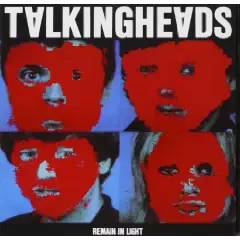
Remain in Light (1980)

Ah, now that’s better! The songwriting and the band and Eno are all on one page and the results are wonderful. But by now the other Heads want to toss Eno out of the band.  A-

“Born Under Punches”


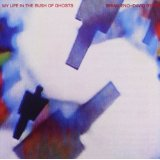
David Byrne/Brian Eno: My Life in the Bush of Ghosts (1981)

This was actually being worked on before Remain in Light and can be seen as the intense experimentation that would eventually lead to the relatively pop(!) of that record. Made up of snippets of radio broadcasts of some very charismatic preachers (the main inspiration for David Byrne’s vocals on RIL), and the musical arrangements designed to fit around their vocal tics and rhythms. This works a lot better than one would expect. Not for parties, but very intense and interesting throughout.  B+

“Help Me Somebody”


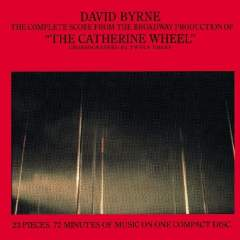
David Byrne: The Catherine Wheel (1981)

Music from the dance production of the same name, and a great balance of songwriting and overall sound.  Eno’s really just a sideman here. Officially at least. But the music is right out of Eno territory throughout. An extremely underrated record.  A

“Two Soldiers”


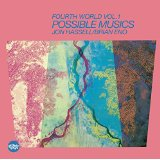
Jon Hassell/Brian Eno: Fourth World: Possible Musics (1981)

A collaboration with Jon Hassell - an Ocean of Sound  conspirator.  The wind instruments give this a Middle Eastern sound, but with some fog and electronica.  Not much fun, but by the time it’s over you’ve definitely been somewhere.  B+

“Delta Rain Dream”


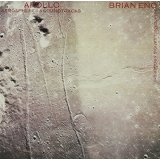
Apollo: Atmospheres and Soundtracks (1983)

Eno’s attempt to provide a soundtrack to the Apollo missions, and a pretty darned good one.  His brother Roger and colleague Daniel Lanois share the billing.

I often can’t tell the difference between what would sound good late night vs good early morning music. Not anymore. This is definitely a night album.

It’s a bit schizophrenic, though.  Eno supplies the deep space buzz, but then Lanois comes on with the more poppy guitar. They eventually split the difference and it ends up being a distant cousin to Another Green World.  That’s a compliment.  A-

“An Ending (Ascent)”


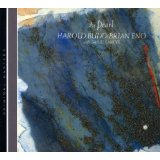
The Pearl: (1984)

A mid-80s ambient collaboration with jazz(-ish) pianist Harold Budd (another contributor to Ocean of Sound).

The formula here seems to be short piano melodies treated with echoes. The sound of a glacier (if the glacier played the piano). Every time I put this on, I hear something different. I don’t mean a different detail or a different aspect. The whole thing sounds different.

As ambient goes this one is pretty chilly. Must be all that ice, even if it is melting.

So why can’t I stop listening to it?  A-

“A Stream With Bright Fish”


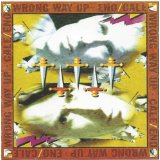
John Cale/Brian Eno: Wrong Way Up  (1990)

He spends the next few years with U2, producing the underrated Unforgettable Fire and the slightly overrated Joshua Tree and Achtung Baby, which probably got him interested in trying pop music again.

As I said last year it took me a little time to love this record because it was so damned normal. But love it, I do.  A-

“Crime in the Desert”


And On and On and On...

And that’s only brings us up until 1990.

He’d go on to produce many other artists, including Coldplay, Sinead O’Connor and James. Wikipedia credits him with 43(!) production jobs.

And I’m not done yet, either. I’ve still got to check out Music for Films, and Roxy Music’s third (and first post-Eno record) Stranded.

But I think I’ll stop there.  Rumor has it there are other artists out there, too.


Recommendations:

Before and After Science if you want to get the gist of it and still enjoy yourself
Wrong Way Up for fun
Another Green World if you’re ready to explore, well, another world.
Music for Airports for surprisingly simple and straightforward beauty
Taking Tiger Mountain if you want to hear something forty years old that still sounds fresh and strange.
Low if you want to hear how Eno could impact an already well respected artist.

Saturday, January 30, 2016

Life - or at least Year - of Brian, Part One

Like a frenemy at work, but way more interesting, Brian Eno has this way of insinuating himself into the most unexpected places. He’s got more mentions in my blog than anyone else, except the Beatles, of course.

You don’t think you’ve heard him but you have. If not his own recordings, certainly his collaborations with Talking Heads, David Bowie, Devo, U2 and a slew of other artists. He even tried to make Coldplay sound interesting again and almost succeeded.

I have a number of his records but I hadn’t gotten anything by him in years.

And yet, he ended up being my Artist of the Year for 2015.

Let me explain.


1972:

While carefully studying the latest issue of National Lampoon, I came across an ad for Roxy Music’s second album, where I first saw Eno. My reaction was one of utter revulsion.

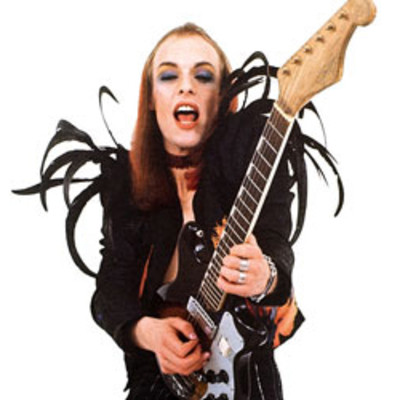
If I thought at the time that David Bowie must have sucked because he was acting gay (what can I say?, I was 15), or that the New York Dolls couldn’t have any talent because they dressed like women, then the made up, strutting, boa-wearing, aggressively androgynous (and on top of all that, balding!) Eno seemed like the worst of the worst.

Here he is at the time:

brian-eno-roxy-music-photo-shoot-circa-1972.jpg

As you can see, he dressed on the extreme end of the glitter rock spectrum and, like Bowie, was a prime target for anyone with an ax to grind about spectacle as a distraction from music (a legitimate concern), or effeminate guys in general (not so much).

Mind you, I hadn’t yet heard any of the music made by him, Bowie or the Dolls. It wasn’t my finest hour.


1975:

Now at college, prowling the music library I dug up some old issues Stereo Review, and came across a review of one of Eno’s early solo records. The review used the term “rip off rock”. And not in a nice way.

Now it could have been written by someone who genuinely didn’t like the record (I forget which one it was), but it sure had the stench of someone who’d made up his mind before putting it on. And it had the effect of reinforcing my prejudices, and boy did I cling to them.


1978:

It’s pretty clear by this time that Brian Eno was the kind of guy you were less likely to be into if you were into Classic Rock a la Bruce Springsteen, Boston or Led Zeppelin. You’d have had to stray to where, say, the Velvet Underground broke off in their own direction in the late 60s.

And I stayed on the main path, until I finally got curious enough to try Talking Heads More Songs About Buildings and Food - a life changing record (all time top 25) that I don’t enthusiastically recommend to people just because I love it. It’s just a bit too weird, but exactly the amount of weird I needed at the time.

And who’s name did I find on the back? Eno, of course.

By this time, I was having trouble separating him from Bryan Ferry (his old Roxy Music bandmate), and Peter Gabriel from Genesis. (All of them weird Brits.) But his name just kept popping up all over the damn place, and always with the coolest bands.

There was even some graffiti spotted in the Village that said “Eno is God”.  Move over, Eric Clapton!


1980: 

It’s June and I’m supposed to be studying for a final but am instead at J&R Music World, in what would become one of the great record store trips of my life, picking up a sh*tload of records that would push me further down that alternat(iv)e path.

Earlier that year, there was an extensive overview of the music of 1970s in the Village Voice. It piqued my curiosity, and I made some mental notes, but like a good schoolboy, committed to doing nothing about it until finals were over.

I almost made it, too. I told myself I’d be in the store for only an hour or so. Plenty of time to study, I said. I ended up spending half the day there, and only managed about an hour of half-hearted studying in the school library.  Got an A, though!

One of the records mentioned a few times in that article was Eno’s Taking Tiger Mountain (By Strategy).  It was cited by at least two critics, who put it in their list of top ten records of the decade. So I decided that was a good place to start.

Ah kids, watch out for those gateway drugs!

I listened to this record for months - not always in complete ecstasy, mind you.  There was a lot of exasperation, too, as I tried to understand some of the weird things going on.  Friend, and then Roommate, Mike looked back on that time and said “Man, that was a terrible album.”

And I can understand his reaction. Mine was more mixed. There were several great pop moments mixed in with a lot of oddity and experimentation. I couldn’t quite love it because of this seeming inconsistency.

I may have related playing it while getting ready to go to the beach, and was pointedly told it was not “getting ready to go to the beach music”.  My first lesson in context.

But it persisted over the years. becoming a sort of go-to record. And Mrs. Jaybee would tell me she knew I was feeling a little down when I’d put it on.

If I was smarter, I’d give up on things when they first perplexed me. But instead, later that summer I’d double down on Eno and get Another Green World. This turned out to be one of my rare good decisions because it became one of my top five all time favorite albums.

During that same record trip, I’d finally broken down and gotten David Bowie’s Ziggy Stardust and the Spider’s From Mars. (What, no New York Dolls, you ask? That's another post.) And now having had David break my cherry, I remembered how Childhood Friend Doreen told me how great Low
was way back in 1977, so at the end of 1980, while trying to repeat the great June record store trip and coming pretty close,  I picked it up, along with “Heroes”.

And I turn the record over, and who’s name do I find? Eno, again.

It turned out that Eno collaborated with Bowie on both records, with Bowie dedicating most of side two (remember side two?) of each record to the tracks that were very Eno-ish.  They would turn out to be a among my very favorite records. Definitely top 100.

Over the next few years, I’d move on to his other 70s records and some ambient stuff, but as time passed I heard Eno the same way you did - as a producer.

Oh, there were the occasional knockout pull-the-car-over-and-just-listen moments, like “Ms. Sarajevo” with U2 and Luciano f*cking Pavarotti. in 1995, but otherwise I decided there were other artists who deserved my attention more, and stopped buying his records.


2015:

So he starts throwing spitballs at me via Shutter Island and Ocean of Sound, with “Lizard Point”, which I still can’t hear.  But you now know how I react to exasperation.

So I thought, okay dude, let’s see what you (still) got, and got Wrong Way Up, which turned out to be one of the musical highlights of the year.

And then I read the liner notes to Yellow Moon and there he is again.

So in the fall, I’m in a record store - I don’t have enough records, you see - and spot a leaflet for a show called “Music for Enophiles” which turned out to be a tribute band doing covers of Eno’s solo work from 1974-1979 - his prime pop period.

Now, one of the things I love about Mrs. Jaybee how she always surprises me. I thought I’d have to drag her to this show, but she reminded me that she liked Brian Eno, too. He was, after all, the soundtrack to our lives when we first started dating.

The band came on and reminded us how powerful these forty year old songs were. We had a great time but I didn’t recognize the last song. So I asked one of the singers, and it turned out to be the title song of his first record Here Come the Warm Jets. How did I not recognize this song? I’d clearly been away too long.

So I decided to give him another try and got The Pearl.

And another, and got Apollo.

And finally, decided to pick up Taking Tiger Mountain on CD.

Oh, and I also got Roxy Music’s second album - For Your Pleasure -  on CD because he’s on that too.

To the point that I came to realize that it’s Brian world and I’m just living in it. Or may he’s still God, and when he loses a sandal, half of his fans get rid of one of their’s, too.

And in case the earlier picture has frightened you off, here’s a picture of him now:


See?  He turned out just like you and me.

Next, I’ll give a quick roundup of his music - limited by what I know, which is at most 30% of his overall output - and make some recommendations.

See you then.