Not Going Back:
I'm not goin' back to Woodstock for a while,
Though I long to hear that lonesome hippie smile.
I'm a million miles away from that helicopter day
No, I don't believe I'll be goin' back that way.
The quote above is from Neil Young's “Roll Another Number”, from Tonight’s the Night, and it pretty much sums up the mood of the entire album. It was 1973 and it was already clear to Neil that the sixties were never coming back. Always ahead of the times, he was already facing down the dark side of the seventies.
And that was over forty-five years ago.
Does anyone listen to Woodstock anymore? Aside from the odd cut played on Classic Rock Radio, probably not. I doubt that anyone pulls out the vinyl to play a side or two. Did anyone buy it on CD? Has anyone played it more than once since 1971?
It’s not an album that one is “in the mood for”. What would that mood be? I feel like hearing a live album - one with lots of crowd sounds - and a lot of different bands because I happen to like them all, so a sustained mood is not what I want. There is no such mood. Not anymore, anyway.
You might put it on if you’re feeling nostalgic. Now there’s a feeling I’m not comfortable with. Neither was Neil, at least until he made Harvest Moon.
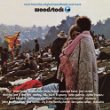
Woodstock came out in the Spring of 1970. I remember seeing it in the window of the local record store, right next to Let it Be. If the latter was telling us the sixties were officially over, we’d use the former to squeeze out whatever we still could from the decade.
As was usual, I didn’t own Woodstock, and so had to rely on friends to play it. And we’d never play it all the way through. We barely played one side all the way through. But we all loved it and listened to it incessantly that summer. But not after that.
For those reasons, it looked like it would turn into yet another of those records - my memory of which was incomplete to begin with - that would fade over the years. And, really, who wants to buy a triple album you’ve already heard before? But amazon $5 mp3s saved the day. So I downloaded it and for the first time listened to it all the way through.
After all these years it’s more or less what I expected it to be. A long-ago favorite replayed to ever so slight disappointment now. That's okay. It still brought a tear to my eye at certain points.
But even the most nostalgic among us don’t want to spend too much time dwelling on the event, which we remember with a mixture of embarrassment and wonder. We’re too jaded to embrace it wholeheartedly. Plus it was a goddamn mess and who - except those who were actually there - can imagine themselves in that environment? (My hat’s off to you if you can.)
But it was an ideal momentarily realized. For all their faults, those hippies were a lot less destructive than the supposedly better-behaved yuppies.
I’m not sure how the baby boomers who experienced it - even second hand - square it with their current politics. By revising history, I guess. It must be slightly embarrassing to those who want to remember the fun part then and say, deny climate change now. We were so much younger then, we’re older than that now.
Maybe it’s best for all concerned to limit our attention to the actual music. So let’s take a look at this big sloppy mess of an album, documenting something that couldn’t possibly have happened.
Choosing Sides:
Side One doesn’t really quite kick off until Richie Havens provides a Defining Woodstock Moment with "Freedom", which pretty much overshadows everything else here. But song for song, it’s pretty good. Just all over the place. Which, I guess, is kind of the point.
I think the theme is the Pursuit of Freedom via Drugs. What a bad idea, right? We’ve since wised up and now escape reality via prescription meds.
Side Two starts off with another DWM: "The FISH Song", of course. In 1970, I was shocked that a record would actually have that word on it.
We listened to it a lot on a friend’s stoop over the summer. One night, we had it on when someone noticed my dad approaching. He was on his way home from the corner bar and stopped to say hello - something he never did. We frantically tried to turn it off before he got to us and Country Joe got to f*ck. But in the confusion, we only succeeded in turning up the volume. He got there just as Country Joe was asking WHAT'S THAT SPELL?!?! and the crowd answered F*CK!!!. It was probably the last thing he expected to hear, and so, he didn’t.
I’m trying to imagine/remember what we were thinking at the time. We were all pretty conservative, and if pressed on our opinion of the war we would have been strongly in favor of it. And yet we could still enjoy the song without getting offended, either because of the sheer gusto of the performance or the novelty of the cuss word. Then we’d go on our conservative way. I listen to this now and get chills.
And in walks Joan Baez, who is usually a major buzzkill. But I have to hand it to her. She brought the first tear to my eye with “Joe Hill” but that may just have been because it made me think of Phil Ochs.
Neil Young contributes the weird (for CSNY, and for Neil) “Sea of Madness”. It's generally regarded as a terrible song but I've always loved it. It's probably as funky and poppy as Neil ever got, and it gives CSN a little kick in the ass. (Y was haunting CSN even then, their second gig.) It's really the only CSN song that is "new" and not a waste of space.
The theme? The War. Oh and pushing that new supergroup. Things are so different now.
Side Three starts off with “Wooden Ships” which while offering nothing new musically that the studio version didn’t already, reinforces a theme of post-apocalyptic brotherhood. And Joe Cocker re-inforces the theme.
Theme: Fellowship? What the hell is that, anyway?
Side Four consists of Santana and Ten Years After who keep the energy level high. I did have to put up with hearing how great a guitar player Alvin Lee was. Aside from Hendrix, the best one at Woodstock, people said. I wasn’t even sure he was the best guitar player on this side.
The Theme: Guitars, of course. Which are great, but politics-free, and thus the most likely to be played now.
Although Side Five kicks off with Jefferson Airplane, everyone knows it really belongs to Sly. And listening to it now, I could almost succumb to that dreaded nostalgia, it’s that powerful, Sly was able to rock a bunch of conservative white teenagers on that Brooklyn stoop. It’s truly the high point of the record. This is the side that almost gets played all the way through. What the hell is John Sebastien doing after it?
Theme: Transcendence. How silly!
Half of Side Six is given over to a badly dated and mostly forgotten “Love March” by Paul Butterfield. And even though Hendrix saves it, we were really just listening to the “Star-Spangled Banner”. A shame, since he’s on fire throughout. But Hendrix is facing up to the war, which, despite every attendee’s wish, continued after the show.
Is the theme Resignation? Or acceptance of Reality, such as it was?
For the Record:
Playing a three-record set all the way through is kind of exhausting to begin with, especially since I’ve heard it all before. If I owned it then, I could see myself doing it then, while everyone else got bored and started playing stickball, leaving me alone on that stoop. I’d be bored too, but that’s how I roll.
Once you wipe away the nostalgic haze of the sixties and the aura of the event, this holds up okay as an album, albeit one with many different artists and thus one without a consistent musical identity. There’s some music that doesn’t age well, and the crowd noise and announcements, while not helping to make a tight record, certainly help make an expansive document of an event.
And Woodstock was always about more than music. Which is why we don’t listen to it now.
B+
Showing posts with label Richie Havens. Show all posts
Showing posts with label Richie Havens. Show all posts
Saturday, September 28, 2019

Sunday, June 20, 2010
Secret History: 1967
Well, this is the year when all that is good supposedly happened. Sgt. Pepper, Monterey Pop, Summer of Love, etc. I'll admit it: Sgt. Pepper is a very good album, but hardly my favorite. The Stones "Between the Buttons" is lighter and poppier than "Aftermath", and thus a bit less brilliant. Buffalo Springfield's second album, "Again" has several classics on it. You can even it pick it up in the cutout bin, if you don't feel like springing for the "Box Set". (That Neil Young's got quite the racket going for him, doesn't he?)
But you already know all that.
Cream's "Disreali Gears"? Eh. I'm just as likely to listen to "More of the Monkees", but more on that later.
The Moody Blues – "Days of Future Past"? Well, I guess this one's our fault. We all liked it a lot, and well, they just kept at it for years afterwards. It's not a bad record at all, just too many strings. (This was back when some people's idea of art was a classical music orchestra.) Do we really need to hear "Nights in White Satin" (Which at first I thought was Knights. Picture that why don't you?) again? Ah, but "Tuesday Afternoon"! That one'll always work on me.
As unfair as this sounds, I can't quite suppress a yawn. Not over the quality, mind you. It's just that we've all been over this already. So let's go deeper.
If ever there was a record that defines a cultural divide, it's "The Velvet Underground and Nico". Yeah, I know Nico sounds a bit odd, and I wouldn't be surprised if you didn't love the more experimental at the end, but if you don't like what precedes it, please stop reading now. One of the greats. If you've ever wondered why people thought Lou Reed was a genius, start here.
If you were lucky, you could catch "You Set the Scene" on Saturday afternoons on FM radio. If you're luckier still you bought "Forever Changes". Love was
one of the first interracial rock groups, and is sometimes thought of as the West Coast Velvet Underground. That's because beneath the beautiful melodies and soaring strings, you get lyrics about the dark underside of the Summer of Love. But beautiful nonetheless.
Roger McGuinn is holding back a bit on The Byrds "Younger Than Yesterday", which is why I like "Fifth Dimension" a little better. And David Crosby contributes the hilariously bad "Mind Gardens", but he redeems himself with "Everybody's Been Burned", one of his best songs. Chris Hillman fills in the gap with several catchy tunes. It's not quite their best, but still damned good.
My copy of Jefferson Airplane's "Surrealistic Pillow" is on heavily scratched vinyl. But it's lighter on its feet than either "Volunteers" or "Bathing at Baxters". This might seem tame for a record that came out at the beginning of the psychedelic era, but it's tuneful and a delight.
With Moby Grape, it's more scratched vinyl. (I wish people would take better care of their records before giving them to me.) And yet the energy of this record is still shines through. I love the guitar riff that starts it all off, setting the mood immediately. The singing is great and songwriting isn't far behind. A tinge of country, but definitely rock. The classics are "Hey Grandma", "Indifference" and "Omaha", one of the most joyous rock and roll songs ever. "Listen my friends!..."
The Kinks "Something Else" is the kinkiest Kinks record ever, and almost as good as "Face to Face". Side one is a hard look at everyday English working class life. ("David Watts" is one of the best songs about class ever.) Side two is the Kinks at their strangest, with "Waterloo Sunset" as the finale.
Procol Harum's first album, "A Whiter Shade of Pale",
with
the title hit, the original "Conquistador" and a bunch of other excellent songs, may be their best. My vinyl copy is kind of woozy. The guy who punched the whole in the center must have been drunk that day. And because the sound quality on vinyl is poor, Robin Trower's guitar sometimes sounds like a kazoo. Hey, not your fault, man.
The obvious Jimi Hendrix album to own is "Are You Experienced?". Even if you're tired of the hits, the non-hits and the CD bonus tracks keep you coming back. But how about "Axis Bold As Love"? It doesn't burn as brilliantly, but it gives off a nice quiet glow. A great evening album.
Poor Richie Havens. Even in the sixties, they made you dress up for album photos.
Clearly taken prior to Woodstock, the cover shot of "Mixed Bag" shows him sporting
thick
glasses, a blazer and dress pants. He looks like he's attending private school. This is the record that provides the title for a very annoying radio program, but the record itself is very pretty and worthwhile.
And speaking of 60's folk, don't forget Nico's "Chelsea Girls", where you get a little bit of sixteen-year-old-Jackson-Browne-sensitivity, a Bob Dylan song where the singer actually hits the notes, Tim Hardin and the Velvet Underground all in one place. Quite the bargain I'd say. But don't ask me. Ask my wife, who, after a couple of plays, said "I can't believe how good this is." (Hey, what that's supposed to mean, anyway? Okay, I admit that I may have, on occasion, put her through some...questionable music.)
You won't hear these songs when your local radio station does a Top 1000 Songs of All Time holiday weekend special. But I'll bet you're so tired of the songs they do play that you won't be feeling nostalgic anyway. The records I mention above will remind you that there was more in the 1967 universe than our short term cultural memory can now imagine.
Subscribe to:
Posts (Atom)