Showing posts with label John Prine. Show all posts

Thursday, October 9, 2025

Simple

Outstanding in their field.


Some things are just so simple.

For instance, the following record is the best folk/country album I've heard in years. Better this year than Hooray for the Riff Raff(!) (by a bit) and Waxahatchee (by a bit more) and Jesse Winchester (a bit more than that). And nearly as good as Robbie Fulks. Too bad it's 25 years old.

How is this even possible? I was on my last pop legs for a bit there. (This isn't pop, but you get the point.) No jazz chords either. 


The Handsome Family: In the Air (2000)

The songs have the most basic of melodies, made fresh via the kind of genius John Prine possessed, and Neil Young occasionally still does. It makes me want to play guitar again. 

Brett Sparks' rich baritone is nearly as commanding as Johnny Cash's. He sounds ancient, yet I'm sure I'm twenty years older. I assumed the lyrics are profound. Or did the melodies and the voice make them so? Who knows? Who cares? 

But upon closer listen, I find most of them dark and kind of twisted - more than one involving family murder. It's probably the only off-putting element in the whole project. But I'm still listening anyway, especially since there are also a few with lyrics so open-hearted as to bring you to tears.

I'd have preferred to include another album here for comparison or contrast, but that would have just complicated things. This short, modest record is nearly as good as the sprawling Diamond Jubilee.

And it's as simple as that.

A

Sunday, May 17, 2020

Corona-chles IV: John One and John Two


0:

The first John was a sensitive (some would say delicate!) young man who read a lot because going out and having fun like a normal teenager was much too challenging. He listened a lot to music, too, and sometimes the twain would meet, and the reading would be about the music. 

Armed with the Rolling Stone Record Review Volume II he discovered the "new Dylans" - the guys who, in the absence of Dylan himself, might fill the void. Loudon Wainwright (who wrote a funny song about it), Springsteen, James Taylor (I know, right?), and many, many others. Does Joni Mitchell count? She should.  Randy Newman? Yeah. (He was pretty creepy back then, though.)

One of them was also named John.

So John One was intrigued enough by the positive review of John Two's Album One that he tried it out. (And people wonder why he actually read critics!)


I - III:

John Prine

The archetypal "every song is good" album. Very country in its approach, tuneful, and great lyrics. Prine reminds me of Neil Young in his genius at coming up with simple, profound songs using as little as three chords. The singing is a little tentative this time out, but the accompaniment is damn near perfect. This is the very definition of a classic album. 
A  


Diamonds In The Rough

Well named, here Prine goes for the gut with much less accompaniment. It's basically a folk record. The vocals are more forceful, and, well, rough. But it works great. It's not quite up to the songwriting consistency of the first but the best ones ("Souvenirs", "The Great Compromise") are as good as the best ones on the first album. It's also slightly funnier, but of course in mordant way. Uncompromising, and not for everyone but I love it. 
A-
Sweet Revenge

A rocking surprise. John loosens up, gets a full country-rock band and sharp lead guitar from Reggie Young and Steve Burgh. It comes as a relief after Diamonds, is an absolute delight and the funniest one yet. The classic song here is "Christmas in Prison", which I play every year.

The first John stops here because there are other new Dylans to explore. He has a limited amount of money to spend and feels deep down that as good as these three records are, the basic approach is still pretty simple and he may have reached the point of diminishing returns. I mean, how many more great John Prine songs could there be?

But all three of these easily make John One's Best of the 70s list.


IV - VI:

A few years later John One meets a girl he's interested in, and the introductory conversation almost immediately turns to - what else? - music. 

They start trading names, checking for common ground. Then she says "John Prine?" He says hell yes and that seals the deal. For a while.

Later, when he thought of her, he'd also think of Prine's song "Yes, I Guess They Ought to Name a Drink After You", but during her tenure, he'd hear albums four through six.

Common Sense: 
Tenser than any of the first three, and not always in a good way. So Not Fun, but worth the effort. Which is more than he could say for her.
B+

Bruised Orange: 
Although the world (or at least Rolling Stone) called it his best, he and she agreed that this was not as good as the prior ones. She insisted it "just wasn't him". And Prine agreed. It was producer-and-almost-not-a-friend-anymore Steve Goodman's version of him.
B+

Pink Caddilac:
A strange one. Very rocking in a late 50s kind of way. Entertaining while on, but not one you'd go back to. (John Prine just doesn't make bad records.)
B

We even got to see him around this time at Lincoln Center, where he played a solo show but with an electric guitar. And he pulled it off, too.


VII - XIV:

And after that relationship ended the two Johns parted ways for a while, too. A long while. Was it guilt by association? John One kept specializing in miserableness. John Two kept making music. 


XV:

So it was only a few years ago, after the exhortations of his siblings, that John One finally went back.

In Spite Of Ourselves

John One was initially disappointed that there's only one Prine original here. It also wasn't promising to know it was a series of country duets. First, Prine's voice is expressive but won't win any Prettiness awards. But damn, if after the second listen, John One didn't realize these were great country songs, and that the female singers provided all the prettiness needed.  it had almost no original songs but it proceeded to wear me down and win me over. 
A


XVI -XX:

By now, John One's limited time and attention span were redirected to new territory. John Two keeps tending to the old.  It's called commitment.


XXI:

John One hasn't heard the last one yet. He doesn't want it associated with these dark times, even though the cold facts would seem to dictate that. By all accounts, it's prime Prine. There will be a time for it, though.

∞:

And then I get word that he's sick from the Coronavirus.

And, of course, a couple of weeks later, he dies. What did I expect? 

He just went on doing what he did whether I paid any attention or not, somehow finding a way to make it great while keeping it simple. In the process, I've no doubt he's left me a whole treasure trove of songs to discover when I'm ready. Dozens of great ones I have no doubt.

I guess for some, Prine's genre is largely represented by the original - and the new - Dylans, and what came after them. But he's the one I think of when I hear the term "Americana". 

Hell, he's the one I think of when I hear the term "America". 


Saturday, February 4, 2017

2016 Leftovers:

Oh, how I long for the days when Donald was just President-Elect and not yet Actual President. Then I only had my fears of what could be – and music – to contend with. Now that I know what will be, I am feeling nostalgic for last year when it was all just theoretical.

Plus, there were a bunch of records I never got around to, what with Car Seat Headrest blowing everything else away and all.

But these records are pretty good to excellent - you might even love some of them - arranged roughly in descending order of quality:

Go Betweens.jpg
Go-Betweens: The Friends of Rachel Worth

Their first record after a hiatus of several years. So it’s sort of a reunion/comeback album, but with members of Sleater-Kinney as backing band. Sounds weird on paper but they provide perfect support. They drive at least as hard as the GBs of old. And why not? Lindy Morrison was their drummer for the longest time, and she banged it out as well as anyone, female or otherwise.

And it’s interesting to hear this current powerhouse incarnation paired with some of the more melodic songs they’ve ever done. “The Clock” shows how well it all goes together. That insistent beat and hard as nails guitar powering a lovely song.

I’m beginning to think I like the post-reunion GBs more than the pre. I find this record and Oceans Apart more satisfying that anything prior to the 1979-1990 best-of. Robert Forster used to go out of his way to sound out of tune. Now he’s calmed down a bit and the results are striking. Everything comes together here. Highly recommended.

A-

“Magic in the Air”


Robbie Fulks.jpg
Robbie Fulks: Upland Stories

Sometimes I think all you need to understand that you’re listening to a great record - besides your ears - is a quiet Saturday morning. That’s was put this one over the goal line for me. I could finally luxuriate in Fulks’ voice, lyrics and tunes all at once.

Nice and easy folk and country  The tunes are perfectly suited to his voice.  The lyrics - when I hear them - are very worthwhile.  And the accompaniment is perfect.

Some great songs came out of 2016 and several of them are here.

A-
“Alabama at Night”


Angel Olsen.jpg
Angel Olsen: My Woman

It’s not just because she slightly resembles Laura Palmer that this is my nomination for the soundtrack for the next Twin Peaks. It’s also that the music has the weird vibe of Fox Confessor Brings the Flood. But where Neko Case’s voice cuts through the wilderness like a fog horn, Angel Olsen’s despair is right out of Fire Walk With Me.

Her exaggerated, emotive singing - at a high enough volume to push the needle to red - is a bit too much for Mrs. Jaybee, who asked that I not play it when she’s around. The weirdness even got to me when I heard a perfectly nice song almost ruined by a rumbling distorted guitar underneath the otherwise smooth sound – seemingly calculated to make things unnecessarily weird yet again – until I realized it was the sound my fridge was making. So I'll own that one.

After that, the rest kicked in nicely, with both the songs and the band playing them not letting up. She’s got the talent and the courage to back up her craziness.

A-
“Not Gonna Kill You”


John Prine.jpg
John Prine: In Spite of Ourselves

Remember this guy? Back in the seventies he was considered one of the “New Dylans”, and he made several classic albums to almost back that claim up. Since then he’s continued down his own path, maybe not at the level of his early work, but still better than most.

This time around he does a duet album of country covers, which sounds like a really bad idea. After all, he’s a great songwriter. Why not do his own songs?

But he never had a great voice, and he’s got some great co-lead singers like Lucinda Williams, Iris DeMent, Trisha Yearwood, Connie Smith, Fiona Prine, Melba Montgomery, Emmylou Harris, Dolores Keane and Patty Loveless

The odd thing is that I originally assumed he wrote these songs. Shows what I know about country music. It turns out he only wrote one. But with Prine that’s the type of mistake one can make, he’s that good.

But you know how these things can go. You put it on once or twice, enjoy the “gimmick”  and then file it away because when you get down to it, it’s all a bit dull.

But not here. And it’s all in the execution. He picks high-quality songs that don’t demand too much of his voice, and the co-stars shine.

A grower.

A-
“In Spite of Ourselves”


Mitsky.jpg
Mitsky: Puberty 2

She’s got a lovely deep voice. And sounds way more normal that Angel Olsen. But when the music kicks in, she’s like Bjork-lite. And I mean that in a good way, because Bjork gets on my nerves.

These are “insinuating” melodies. They take a little longer to resolve but they do so just in time - before my ADD kicks in.

But because she’s more normal than Angel Olsen, she leaves less of an impression. I think.

B+
“Happy”


Red Headed Stranger.jpg
Willie Nelson: The Red-Headed Stranger

Years ago, when my mom said what good a voice Willie had, I didn’t take it as a ringing endorsement. I’ve lived to regret that.

I alway thought it was a woman thing to admire a guy’s voice. But it’s becoming more apparent to me that it’s Willie’s voice that really puts a lot of songs across. Stardust, for instance, might have been unbearable by anyone else. Now I can say I really like those songs.

Here, he’s doing country proud. Much more bearable than almost any country album I’ve gotten in years.

But it is about murder, so there’s that.

And there are a lot of melodies here that sound borrowed, but this record is over forty years old so it might just seem that way.

I think this one just got bowled over by the events of 2016. I’ll probably like it more as time goes on.

B+

“Hand on the Wheel”


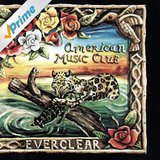
AMC Everclear.jpg
American Music Club: Everclear

AMC started out as an obscure late-80s alt-rock band and turned into a slightly-less obscure early-90s alt-rock band.

I first heard them way back then while driving home from work. I have no idea what song it was I heard -  it isn’t on this record, or the other one I have by them - but it was off kilter enough to catch my attention.  It started with a minor chord based melody (misery is my favorite company) and then went into an instrumental break dominated by an aggressively strummed acoustic guitar. Pretty cool, I thought.

So I sought them out, first getting Mercury from 1993, which is pretty good - one of those records with a few very striking songs, a few annoying ones and a bunch in the middle.

Everclear is it’s predecessor from 1991. It’s more consistent, more melodic, but like Mitski, not quite strong enough to grab your attention.  Those same pretty melodies and arrangements make it harder to tell some of these songs apart.

They are/were led by singer/songwriter/alcoholic Mark Eitzel, whose voice isn’t pretty but pleasant enough when he’s not straining too much. Then he sounds like Elvis Costello with a sinus infection. (And Elvis already sounds like he’s got one.)

He does strain a couple of times here, but if the band keeps up with him it’s not awful. They pay his tab and drive him home safe.

I get the feeling this one will be a once-in-awhile-go-to record I’ll enjoy quite a bit.

But then I’ll file it away for a while before I need to hear it again.

B+
“Rise”


Either Or.jpg
Elliott Smith: Either/Or

Elliot didn’t suffer fools gladly, himself included, and he’s having none of it here. Lots of songs about drinking and the ramifications thereof. You could find yourself humming a pretty tune with lyrics that will eat through your speakers.

But lurking beneath this is a very Beatle-y sense of melody and arrangement. Which doesn’t fully emerge until XO.

But this one’s got a bracing effect, like a person you respect who’s just thrown a cold drink in your face.  It makes you sit up and take notice. He may be mad, but you know he cares because he really wanted that drink.

Plus it’s got the right vibe for the times. Not giving sh*t. At least some of the time, right? Otherwise we’d all go mad.

B+

“Rose Parade”


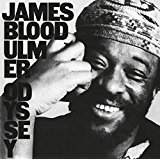
Ulmer.jpg
James “Blood” Ulmer: Odyssey

Kind of strange: guitar, drums, fiddle, but no bass. And the stuttering rhythms make me wonder if the CD has a scratch in it.

It’s really hard to pin down the genre here. Sometimes jazz, sometimes rock, and weird, weird blues.

And then the gruff, ancient voice. Jimi Hendrix from Hell?  No, more like Purgatory.

B+

“Are You Glad to Be In America?”


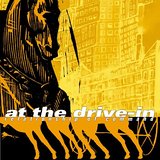
ATDI.jpg
At the Drive-In: Relationship of Command

Shrieky, and not at all what I had in mind for Thanksgiving, when I got it, but maybe what I need for the next four years.

Kind of like, Rage Against the Machine (Or was it System of a Down? I’ll have to ask my son.)

At first it nearly unbearable, but that was before the election. Now it sounds about right.

Compressed, focused, powerful. And maybe more than I can take.

B+

“Sleepwalk Capsules”


Gavin Bryars.jpg
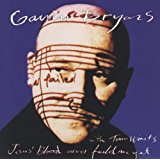
Gavin Bryars: Jesus Blood Never Failed Me Yet

Holy sh*t, does this go on. The same musical phrase for nearly an hour and a half. How dare I recommend such a thing? I can’t in good conscience. But I will tell you that I like it a lot.

Absolutely insane in its serene hour-plus of the same refrain over and over and over (and over) again.

At times, it’s quite beautiful, and I’ll probably put it on when no one else is around. You may not have time for all that, though.

B+

“Jesus Blood Never Failed Me Yet”


Joy of Cooking.jpg
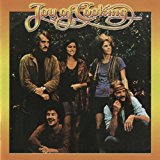
Joy of Cooking

This is old-style early-seventies blues played by white people. But that makes it sound really terrible. It’s not that bad. It is quite dusty though. I hear bits of Ani DiFranco, but it’s a little corny. That organ, ugh!

I hear enthusiasm but it’s hard to get past some seventies cliches.

The further back you go, the more time you have to give something.

B-
“Hush”


Libertines.jpg
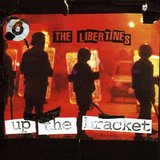
The Libertines: Up the Bracket

Loud obnoxious British louts. Produced by Mick Jones of the Clash, who was pretty obnoxious himself, so he ought to know.

But me? I don't know yet.

“Up the Bracket”


Music For the Age of Trumpy:

A lot of this and other music will have to get me through the next few years.

Most of the above is quite diverting, but maybe not useful for this moment in time.

Gavin Bryars is meant for “special” occasions.
At the Drive-In are good for rage, but I’m too old for that.
Glassworks is for Solace.
The Chills are Endurance.
The Libertines are F*ck It.
Elliot Smith is F*ck You.  (Not you. But you get the idea.)


And they will all be needed.

Friday, July 10, 2015

A Matter of Life and Death

Given my hard-to-stay-dead crisis of not being able to love any new music, it seemed to make the most sense to stick with happy/poppy/fun records to snap me out of it. What I needed was a good time! It sure didn’t make any sense to get a record about death.

Plus I already had a few records by this artist and felt I may have maxed out on him anyway.

But then, my son Michael - an adult now, who makes his own choices - comes to the rescue and gets this record anyway. And although I tend to stick to those records I myself buy, in this case I’m happy to make an exception.


Carrie and Lowell.jpg

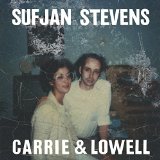
Sufjan Stevens: Carrie & Lowell

Sufjan sometimes does long, sprawling albums, filled with orchestrations, like Michigan and Illinois (one of my faves from the last decade), and experiments in electronica like The Age of Adz. He even wrote a symphony about the BQE. link

But occasionally he’ll just write a bunch of tunes, perform them in a simple setting, and end up with a simple, straightforward album. Before, it was the religiously themed Seven Swans. And now, it’s Carrie & Lowell, about the death of his mother.

Now before you get all weepy about it, or worse, feel like you’re being forced into having to like something because of the subject matter, Sufjan points out how their relationship was complicated by her substance abuse and mental health issues, necessitating her leaving him when he was three, to be brought up by others.

So it’s hardly a miss you so much ma weep-fest, There’s an admission of the pain and regret left in the wake of such a relationship and the death that ends it, preventing it from ever being fully repaired.

But he doesn't try to just get by on the gravity of the theme, slipping in some sub-par songs because we feel sorry for him. He puts together eleven excellent to brilliant songs. There’s no skimping here at all.


The first song - “Death With Dignity” - actually starts with an uplifting melody and guitar figure, and ends with some subtle pedal steel guitar and almost Beach Boy-like harmonies. It's a microcosm of the rest of the album - a deft mixture of pain and joy.

Next comes “I Should Have Known Better”, and again, the music is sweet and muted, while the lyrics probe how to better handle such a complicated relationship, and ending hopefully by looking to the future, embodied by his niece.

“All of Me Wants All of You”, about a less than equal relationship, opens up a bit more musically, which is nice, since it staves off the claustrophobia one might feel after a couple of very low key numbers.

“Eugene” is a sweet, short folk song - just guitar and vocal like you’d expect from Cat Stevens. And since Sufjan is a religious fellow, here’s where I note the swimming instructor, pouring water on his head and mispronouncing his name, like a very public and very imperfect baptism.  It’s just one of the many religious and mythical references here that will take me years to figure out.

“Fourth of July” may be the quietest song on the record, but it’s also the most intense. The lyrics are a dialog between him and his mother both before and after her death. It’s a quiet masterpiece:
Did you get enough love, my little dove,
Why do you cry?
I’m sorry I left,
But it was for the best
My little Versailles.

It’s followed by the most beautiful song I’ve heard all year. The lyrics to “The Only Thing” are full of despair and thoughts of suicide, but the melody is so sweet that one is left feeling full of hope. The guitar interlude followed by the final verse may be the most sublime musical moment I’ve felt for years.

And after the poppy - relatively speaking - title cut, it gets quieter again,and stays that way until the end, which might be forbidding for any but the true believers. It’s all right, though, By now I am one.

I like how Sufjan, while keeping things sparse, doesn't get lazy with the instrumentation. He finds the exact string instrument that's right for the song. And I'd tell you what those instruments were if I could get the damned liner notes to open.

And he doesn't stint on the melody. Oh, he gets a bit prissy with his vocals occasionally, but only if the tune or the theme calls for it.

Those melodies are very straightforward, so it’s easy to get lulled into thinking you know what you're getting on first listen. But like John Prine and Neil Young before him, he’s written music that is so strong it stays with you long after you thought it would lose its power.

And it was this very mistake that led to my disappointment at his recent show. If I had just stayed with the album a little longer, the concert would have been brilliant.  I’ve had similar missed opportunities, like Elvis Costello in 1981, who, in the prior year, had put out three albums containing a total of 55(!) songs, all of which he seemed to play that night, and none of which I’d heard as yet, and REM in 1985, when in retrospect it would have been a good idea to have picked up their debut EP Chronic Town, which brought the show to a rousing finish.

By the time I saw Sufjan, I’d clearly underestimated his album. There was another level of enjoyment I hadn’t gotten to by then that I’d only reach over the next few weeks, when we played it over and over and over again.

I thought Aphex Twin would be the right way back into happy music, now I think Sufjan Stevens is. Of course, if I heard Carrie & Lowell in January, I may have never left the house again. But to paraphrase “Game of Thrones”, to get to happy, head to sad.

Yup, Carrie & Lowell is one of those "demanding" albums. No fun - the one thing I was looking for - at all. And yet, it's the best thing I've heard all year.

I guess Mick was right. If you try sometimes, you get what you need.

A

“The Only Thing”

Sunday, August 21, 2011

Secret History: 1973

Like the Big Bang, the explosion of music in the sixties hurled huge chunks of brilliance through space.  As time went on, they were no longer the size of stars, but rather that of planets and asteroids.  The great music was there, just not in your face.  It was more spread out and harder to find. But it was there.  I swear.


But we were arguing about it more.  We didn’t all like the same things anymore.  Or rather, we were starting to dislike stuff, instead of just being indifferent to it.


And speaking of arguments, it's a bit embarrassing for me to write anything about the New York Dolls for a couple of reasons.  One is that I hated them on principle at the time.  I was a big Allman Brothers fan.  The Allmans weren't exactly fashion plates, which suited me fine, as I was of the belief that my music heroes, unlike the super-heroes in the comics (link) I loved, should not have uniforms or costumes.  Music was all.  Everything else was a distraction, especially a bunch of guys dressed as women.  David Bowie was a macho man in comparison, and I didn’t like him, either.


But now the other reason to be embarrassed about expressing an opinion about them is that I might overcompensate and go to the other extreme, in the urge to make up for past wrongs.  I don’t want to do that.  I’d look like an idiot.  And you know, that never happens.


But screw that.  I'm here to repent.  The first New York Dolls album is simply one of the greatest rock and roll albums ever.  It's loud, brash, noisy and yes, trashy.  In other words, it’s everything rock ‘n roll should be.  It took a couple of years for me to really take it in.  At first listen, it's just a lot of clatter.  But when you find yourself loving the fourth song on side two, you know you've got a record that goes deep.


John Prine may have been overcompensating, too.  On his third album, “Sweet Revenge”, he moves away from the stripped-down-to-practically-nothing sound of “Diamonds in the Rough”, gracefully avoiding “pretty”, and ends up with what might be his best record.  Funny, rocking and sometimes beautiful.


I always found that reggae sounded best when it was hot as hell outside and you were sitting by some water, getting high.  Since my house doesn’t face a body of water, and my kids have no interest in seeing me high (I think it would ruin it for them), I don’t get much opportunity to experience this optimal setting.  That’s where the soundtrack to The Harder They Come comes in.  It’s a perfect introduction to reggae, and if you’re lucky like me, you’ll get the anniversary edition which contains a bonus disc of other hits from Jamaica (“I Can See Clearly Now”, “The Israelite”) at the time.


Countdown To EcstasyThere were no big AM hits on “Countdown to Ecstasy”, Steely Dan’s second album, (unless you count “My Old School” or “Show Biz Kids”).  But, in a lot of ways, it’s the quintessential SD album.  Fans love “Razor Boy”, “The Boston Rag”, and “Boddissatva”.  The guitars are working overtime here.  And not too jazzy.  Yet.


AquashowElliot Murphy made one of the all-time “Records That Annoyed Jaybee's Brother” with “Aquashow”, and I still can’t figure out why.  We've got the guitars and organs to give you that “Blonde on Blonde” feel.  The subject is a bit more Velvet Underground, though.  Okay, Elliot doesn't have the greatest voice, kind of a high pitched whine actually, but everything else coalesces into a great rock and roll record.


Greetings From Asbury Park, N.J.And then there’s Bruce.  The Boss.  Whose “Greetings from Asbury Park” kinda gets lost amongst his other records.  I can still recite every word to “Blinded by the Light”. (His is still the best version. The Hold Steady were probably conceived while this song was playing), “For You” and “It’s Hard to be a Saint in the City”, especially the wordy bridges.  I know you love “Spirit in the Night” and “Growing Up”.  But I love “The Angel” and “Does This Bus Stop on 82nd Street?”  Maybe my second favorite Springsteen album.


O Lucky Man! (LP Version)Back when weird movies were just beginning to entice me to into the city, “Oh, Lucky Man!” had the added attraction of the having the band playing not only on the soundtrack but right in the middle of the action.  Alan Price used to be in the Animals, playing that great organ on “House of the Rising Sun”.  (You can also catch him hanging with Bob Dylan in “Don't Look Back”.  How cool is that?)  Here he gives a slightly skimpy eight songs to this strange film, but they're all winners.


Valley Hi/Some Days You Eat the Bear and Some Days the Bear Eats YouThere are a number of attractions on “Valley Hi” by Ian Matthews.  One is his covers of early Jackson Browne, Richard Thompson and Mike Nesmith songs.  The other is his pretty voice.  He also does the version of “Seven Bridges Road” that the Eagles stole for their totally useless live album.  But anyway, this is pretty as heck.


BlondelIf you can handle Valley Hi, you’re ready for “Blondel” by the Amazing Blondel.  But be warned, the inside cover shows a guy sitting in his bare feet.  It’s that kind of record, and a prime example of mid-seventies English folk music with a pop gloss.  Depending on your point of view, this is either a beautiful masterpiece, as I thought at the time, or something that should come with a warning label for diabetics.  I’m betting you’ll like it.


ByrdsThe Byrds briefly reunited for an eponymous and much maligned album.  It does suffer in comparison to their earlier albums.  For some weird reason they do two Neil Young songs - one a great version of “See the Sky About to Rain”.  Chris Hillman and Gene Clark add the melody.  Roger must have needed the cash.  Not bad.  Really.


Journey's End/I'll Be ThereMatthew Fisher is the guy who wrote the organ melody on “A Whiter Shade of Pale”, and it took him over forty years to get the royalties for it.  And he spends most of “Journey's End” - his first solo record – feeling sorry for himself about it.  He's got the whiny voice to match, too.  But he writes nice melodies so it all goes down nicely.  It was truly made for sensitive sixteen year old boys like me, who hung our in out rooms listening to music like this, instead of going out and having a good time.


And maybe that was the problem.  When I look at 1973, I see a lot of music suited for isolation, and not much for community.  What did we agree on?  Maybe “Innervisions”, but not much else. 

And that lame metaphor I started with?  All I can say is that it’s easy to see the stars at night.  But you need a telescope for the other stuff.

Sunday, February 27, 2011

Secret History: 1972

I’ve heard it said that the music you’re listening to when you’re fifteen is the music you’ll be listening to for life. I didn’t think this was true in my case, but then why do I have more records released in 1972 than in any other year?

We're truly in the album era now. While it's hard for everyone to agree on what the real masterpieces are, there are countless very worthwhile albums. And they're all over the place.


Brilliance:

Here are my picks for the masterpieces:

Paul Simon's first solo album is a great record. No, I mean it. It’s one of the greatest records of the seventies. It's not just one of those Grammy winning records that nobody really listens to. It’s warm and wise, like sitting by the fire in the middle of winter.

I know I just finished telling you about how great "Blue" was, but now I'm telling you that I like "For the Roses" even more. It was my first Joni Mitchell album, and it took a few listens to follow the melodies, what with Joni swooping up and down all the time. This is an ambitious, arty record, and I'm sure there are people out there who hate it. I think it's brilliant. Songwriting doesn't get any better than "Woman of Heart and Mind" and "Blonde in the Bleachers".

Do I really need to tell you about Steely Dan? God, I hope not, but let me at least steer you away from the later lounge jazz records, to their earlier jazzy-but-still-rock period. Their first few albums are so good that the very first one - "Can’t Buy a Thrill" - kind of gets lost in the shuffle. It's so good, in fact, that it's worth hearing "Do It Again" and "Reelin' in the Years" - two of the more overplayed songs ever - all over again


Brilliance Recalled:

Bob Dylan’s Greatest Hits, Volume Two is one of the greatest, well, greatest-hits records ever made. It's got the second wave of great Dylan songs along with a few unreleased songs. "Down in the Flood" is my favorite.

Another one of the greatest greatest-hits records is the "Kink Kronikles" (link) Like the Dylan record, this one scoops us some obscure album tracks along with the better known songs from that particular era.

The triple album “Will the Circle Be Unbroken” by the Nitty Gritty Dirt Band is not for the casual record buyer. It is perfect for someone determined to learn more about bluegrass and early country music. “Dark As a Dungeon” is my favorite, but maybe you prefer “Tennessee Stud”. Or the title song. The singing and playing are stellar.


Near Perfect:

Young Bonnie Raitt sings as well as Linda Rondstadt and plays a mean slide guitar. Her music is more bluesy, and her taste in covers is better, too. "Give it Up" is probably the best record from the early part of her career. At first, I didn’t love this record, thinking I’d be getting pretty, when what I got was tough bluesy and soulful. Good then, and even better today, it’s aged quite gracefully, thank you very much.

I guess Pete Townsend was getting bored being in one of the greatest rock and roll bands ever, so he put out a sort of solo record “Who Came First”, which picks up right where side one of “Who’s Next” leaves off. “There once was a note pure and easy…” He’s got several friends, like Ronnie Laine, helping out, including on vocals. This is one of the sweeter records to come out in the seventies.

Not to be outdone, John Prine goes in the opposite direction with his second album, “Diamonds in the Rough”. Previously he used a small country combo. Now it’s just him and a couple of guitars. It’s not exactly pretty, but I find it riveting. "The Great Compromise" is one of the best Vietnam songs ever, but for me “Rocky Mountain Time” is the highlight.

It took for the movie soundtrack of "Super Fly" for me to become aware of Curtis Mayfield. (I thought the Chambers Brothers wrote "People Get Ready".) The title tune has some of the most insightful and saddest lyrics I've ever heard. One of the best soundtracks ever.

David Bowie ch-ch-ch-changes so much that it’s easy to forget that one of his best albums was "The Rise and Fall of Ziggy Stardust and the Spiders from Mars". “Five Years” still sounds great.

Nick Drake’s last record before his death – “Pink Moon” - may be quieter than his others, but it’s no less powerful. Short, lovely, and in retrospect, so very sad.


Well Worth It:

Do you remember the song that goes like this?:

It's sooooo Hard,
It's sooooo hard,
It's so hard,
Livin' without you

No? Well I guess that's what I'm here for. I finally found the song - written by Randy Newman, by the way - on "Manfred Mann’s Earth Band". You remember them, don't you? Let me help. In the sixties, they had the hit "Do Wa Diddy Diddy". In the later seventies, they went completely over the top with a cover of Springsteen's "Blinded by the Light". This is about half way in between, and seems to balance it all very nicely.

Stevie Wonder goes out on his own again with "Talking Book", and the results keep getting better. “I Believe When We Fall in Love” is my fave.

Eric Anderson was one of those poor folkies left in Dylan’s wake. He’d put out some good songs but never quite got any real notice, until “Blue River”. He achieves just the right balance of folk and rock. It’s got that old favorite “Is it Really Love at All?”.

I'm more a fan of the crazy/mystical Van Morrison more than the seemingly oxymoronic "soulful Irishman". "St Dominick’s Preview" kinda combines the two. And for that reason, it's a bit schizophrenic, what with a few pop/soul numbers surrounded by the long, strange "Listen to the Lion" and "Almost Independence Day". Guess which ones I like best? How about you?

After all these years, I didn’t think Bob Weir’s “Ace” would hold up. But Weir was savvy enough to open with something that’s got bass and drums going for it. The Dead couldn’t always be counted on for fast. He makes the most of his limited vocal range. “Playing in the Band” shows that they could still make compelling music in the studio, and “Cassidy” not so much a song as it is a miracle.

Side one of Jerry Garcia’s first solo album gets all the notice, but has anyone else noticed the absolutely transcendent “To Lay Me Down” tucked away amongst the weird stuff on side two? Not a perfect record, but a really good balance of good old songwriting and experimentalism.

Todd Rundgren’s “Something Anything” is one of the first one man does it all albums. Mostly, anyway, but it’s quite an achievement. A double album of pop songs and “fun in the studio”. It has a number of hits, like “Hello, It’s Me”, “I Saw the Light” and “Couldn’t I Just Tell You”. But it’s also got hidden gems like “The Night the Carousel Burned Down” and “The Viking”. My only Todd record, but I think I got the best one. Now if he only got it down to a single record, we’d have a certified classic.

If you didn’t know any better, you’d think the Steve Miller Band started out with “Fly Like an Eagle” or “The Joker”. In fact, he goes back as far as 1967 along with band mate Boz Scaggs. Steve could always be counted on to put at least one radio ready song on each of his albums. Luckily, he pulled a bunch of them together for “Anthology”, which covers 1968 to 1972. My only qualm about it is that it completely skips their first record. But I like it more than anything he made since.

Steve Goodman could always write tuneful and funny songs, but not always at the same time. I didn’t care for his first record, and his third record is good enough, but his second, “Somebody Elses Troubles” is just right. Clever funny tuneful emotional. And it’s got “The Dutchman”.

On “Manassas”, Stephen Stills redeems himself, albeit with lots of help from Chris Hillman and Al Perkins. They'd go on to totally tank with their second album, but here they put it all together.

Side One of Gordon Lightfoot’s “Don Quixote” is just great. Side two slides a bit, and it’s where you spot his big weakness. His music is just too nice. The anti-war “Patriot’s Dream” is a good example. Whereas Dylan’s “Masters of War” comes out and says he hopes they die, Gord goes into a long explanation as to why war sucks. But overall, very pretty, and side one’s got some real feeling to it.


Just Out of Reach:

Then there are those records that are lodged somewhere in memory but no longer within ear’s reach.

First, there’s Yes’s "Fragile", one of many casualties of the broken 8 track player syndrome. I recall this being pretty good, albeit in it’s shuffled, truncated 8 track kind of way. They would go completely over the top later that year with “Close to the Edge”, but because they could write tunes it’s a hard record to not like.

Unlike Emerson, Lake and Palmer’s “Pictures at an Exhibition”, which is EASY to hate, even though I like it. But man, they had no taste at all.

When I moved out of my parents house, I took a lot of records with me, some of which my brother could have argued belonged to him. (Perhaps because they, well, belonged to him.) One I couldn’t slip past him was the Flying Burrito Brothers “Last of the Red Hot Burritos”. I’m still trying to track down a reasonably priced copy of to see if it’s really as great as I remember. Al Perkins pedal steel replaces Sneaky Pete’s country licks with rock and roll. Different, maybe not better, but to my mind, just as good.

But this is all too long ago. Take out your copies and tell me what you think.


It Was a Very Good Year (Sort of):

I don’t see a lot of crowd pleasers here. That’s just because it’s the seventies, not the sixties, when such things happened to be brilliant, too.

It was more like the year when you began to play records in your room alone. And who could blame you? If you went outside, you were liable to notice that Nixon was getting re-elected. So these records provided me with some solace from that, not to mention the emotional turmoil that haunts a fifteen year old.

So tell me now, what got you through that year?

Sunday, November 14, 2010

Secret History: 1971

1971, especially the summer, sticks in my mind for a number of reasons. Before going back and (re)discovering the music of the time, I’m going to look at that year strictly through the eyes of a thirteen-year-old.


All About Me(’ve):

I had just graduated from a Catholic grammar school, and would be going to a public high school, relieved to not have to deal with the Franciscan brothers that my older brother warned me about.

No sooner had we graduated and the summer begun when two of my closest friends – brothers – moved away. And my family would be going to Ireland that summer. We’d be gone for five weeks – an eternity to a thirteen year old. I’d be away from the few friends I had left.

I was also ducking my father’s direct gaze, because it would sometimes be accompanied by a demand that I get my hair cut. After all, it fell onto my forehead and lightly brushed the tops of my ears. I tried to stay one room ahead of him, but since we didn’t live in a mansion, I’d quickly run out of rooms.

While in Ireland, I obsessed over “Won’t Get Fooled Again” and “Street Fightin Man” – hit singles in Europe at the time. T-Rex was big, and I got to love “Get It On” way before people in the USA heard it.

Upon our return to the States, I found out that my pseudo-girlfriend had tired of our pseudo-relationship, and slipped into the arms of another man. Well, another thirteen-year-old, anyway. Ah, well, the whole girlfriend thing seemed a bit scary anyway. Better to stick to music.

Otherwise, it was great to be back. There seemed to be so much going on.

The Fillmore was closing. I remember hearing about all the great bands that would be playing there that weekend. There were rumors about Dylan and Clapton showing up, but, as my brother told me, “they weren’t needed”. A friend of his was there to witness the Allman Brothers Band close the place down. If the general public was puzzled by the choice of a closing band, everything would be cleared up the next year when the Allmans released one of the greatest live albums ever.

On one Saturday night in August, a local AM pop station played John Lennon’s newly released “Imagine”, in its entirety, one cut at a time. In between songs, they had listeners call in with their reactions. Could you imagine such a thing now?

Alas, it was becoming clear that, in the Good Music Wars, we were losing on the AM radio front. Girl favorites like “Billy don’t Be a Hero” and “Seasons in the Sun” were pushing us boys to the harder stuff on FM.

This might explain the popularity of Grand Funk Railroad at this time. I admit that I was tempted to dip in – they had some good songs, like “I’m Your Captain” - but never did. Looking back, I’m not sure I missed anything.

Aside from the Jackson Five and the Temptations, Motown had somehow lost its appeal, too. I attribute this as much to the audience as to the music. Boundaries – musical and otherwise – were tightening.

My friends and I made a trip to the record store right before school started. Somebody picked up “Who’s Next”. Another got Santana’s “Abraxas”. We heard these records for the first time sitting on his stoop. I had to satisfy myself with Creedence’s latest single, “Sweet Hitchhiker”. (It could’ve been worse. I could have bought the album, generally considered their worst.)

I also picked up a book called “A Child's Garden of Grass” by I forget who, which was a manifesto on smoking pot. It was just like me to read about the stuff that everybody else was actually doing. Earlier that summer, I had gotten Bob Dylan’s first book, “Tarantula”, which I understand even less now than I did at the time.

But enough about me. What have I found in that year that I didn’t notice at the time?


Ringers:

Is there anyone out there who still doesn’t know that Joni Mitchell’s “Blue” is a great record? No, really. (Mrs. Jaybee disagrees ‘cause she can’t stand the voice. I admit it takes a bit getting used to, but it’s worth it.) The songwriting’s top notch: “River”, “The Last Time I saw Richard”, “A Case of You” and my favorite, “Little Green”.

Cat Stevens is in his mid twenties, but sounds a thousand years old on “Tea for the Tillerman”. So he’s a bit of a buzzkill, which explains why he’d peace out and find religion after a while. But man, I love this record, my favorite song being the intensely quiet “Into White”.


Happy Surprises:

When not playing with Neil Young, Crazy Horse managed to put it together for one album. Hey, they had Danny Whitten, Nils Lofgren and Jack Neitchze contributing. All the drugs in the world couldn’t stop one good album from coming out of this. Big brother hated it, though. (link)

The first New Riders of the Purple Sage album is a wee bit lightweight, mostly because of Marmaduke’s vocals, but very tuneful nonetheless. It’s also way better than their subsequent records. Bad records happen when Jerry Garcia leaves your band. But this first one is as good as it seemed at the time.


Singer/songwriters:

Gordon Lightfoot’s “Summer Side of Life” isn’t consistently great but it’s got some real beauties on it, like the title song, which, if it doesn’t make you cry, means you’re not quite alive.

John Sebastian was acting like the 60s never ended on "Live", and more power to him. He and the audience are having the time of their lives. He mixes in Spoonful favorites along with folk and blues classics. Wow, talk about a moment in time.

It would be easy to dismiss Elton John’s “Tumbleweed Connection” as just another EJ album, and a country themed one at that, if there weren’t so many good songs on it. “My Father’s Gun”, “Burn Down the Mission”, “Amoreena”, “Come Down in Time” and "Where to Now, St. Peter" have the greatest staying power for me. If he was a baseball player, he’d get the award for most at bats, and a great on base percentage.

After “Everybody’s Talkin’”, but before he started rubbing shoulders with John Lennon and jumping into the fire, Harry Nilsson made “The Point”, a lovely little fable about a boy named Oblio who lived in the land of Point. It would later be made into a cartoon. It’s right up there with his best records.


Survivors:

The old timers - the ones that were still left, that is - still kept coming up with the goods, if not the greats. No one would call “Surf’s Up” their favorite Beach Boys album, unless they weren’t Beach Boy fans to begin with. It’s too cute by half, but then again, it’s got treasures like “Until I Die” and “Disney Girls”.

On “Muswell Hillbillies”, the Kinks are slowly losing steam, which is ironic since they keep adding the brass. There are some great songs on this record, like“20th Century Man” and “Oklahoma USA”. For a lot of other bands, this would be a career album, but for the Kinks, only good.


The Great Ones:

John Prine’s self titled first album is a quiet masterpiece. The front cover couldn’t be less assuming. There’s Prine sitting on a bail of hay. But the sly devil is actually sitting on a pile of great songs. He may have been the most deserving of those given the title of "The New Dylan". He’d be rivaled only by Neil Young in his ability to churn out great songs using the same three chords

Quiet in a more ominous way, Sly and the Family Stone’s “There's a Riot Going On” let down a lot of people who wanted more of the positive, energetic music Sly was known for up to that point. It’s in the same universe as Neil Young’s “Tonight’s the Night” and Big Star’s “Third”. Heroin hovers over it like an angel from hell.


New Frontiers:

Man, John McLaughlin (Not my old grammar school classmate. He’s a good guy.) used to piss me off. How could I keep insisting that Eric Clapton was, as I put it "the best guitar player of all time" when McLaughlin was playing like this? The Mahavishnu Orchestra’s “The Innermounting Flame” is very intense. There's a bit of dopey violin playing, and Jan Hammer is good for a giggle now and then, but overall this is jazz disguised as hard rock music (or vice versa), if not rock and roll, exactly.


And I feel I have to add a category called

Not as awful as they may seem now:

Does anyone like Emerson, Lake and Palmer anymore? I wonder. C’mon now, they weren’t that bad. There first record has some pretty nice things on it, like “Take a Pebble” and “Lucky Man”, but the rest of it is very pretenscious and thus deserving of some ridicule. As Monty Python would say, very, very silly.

“Stephen Stills 2”’s badness first comes out of sheer boredom, and egregious taste. Did anyone even put the record on before regretting that they got it? (Don’t look at me, I only paid $2.) I guess we all got through the first listen, and then put it away for a while. When you try it out later, having dragged your expectations way way down, it doesn’t seem so bad. And how can you not like, “Change Partners” and “Mary Anne”? I even like the spoken word “Word Games”. But the rest just disappears upon impact. Along with the Kinks, Stills shouldn't be allowed near a brass section. You might enjoy it a bit while it's on, but when it’s over, you'd probably wish you put on a better record instead.

And in case you conclude I’m an idiot, here’s allmusic’s take on the year.

I'll admit they know a thing or two...

Sunday, July 20, 2008

Sex, Drugs, Rock, Roll, etc.

Hi. My name’s Joe Friday-on-My-Mind. I’m with the ACLU, Rock Music Division. We defend the indefensible. Here’s my story:

R&R

If your upbringing was anything like mine, your parents hated rock and roll music. Some lucky kids had parents who could at least stomach the Beatles. Not us. I’ll never forget my dad’s pronouncement, made sometime in 1964 I think, that There would never be a Beatles record in this house! Man, that sounded pretty final at the time, and even though we eventually wore him down, it took until 1966, and a double birthday combo (my brother’s and mine were three weeks apart) to get our first album ever – “Revolver”. And even that was Plan B, after the single (“Yellow Submarine”/”Eleanor Rigby”) they bought us kept skipping on our old Victrola. The pennies weighing down the tone arm didn’t work. They did eventually wear a groove into “She Said She Said” that was so deep that I was an adult before I heard the song all the way through uninterrupted.

After some time, the Monkees were permitted, too, but we knew there were limits. No one with facial or female-length hair need apply. We probably could have gotten away with the odd subtle drug reference here or there. After all, my dad missed what Country Joe was spelling out on “Woodstock”. But then my mom figured out what John Prine’s “Illegal Smile” was about.

And in my own cowardly and roundabout way, I struck a blow for justice when I accidentally (?) dropped a stack of Irish LPs on the floor. Back then the vinyl was thick and brittle. All I remember now is being up to my ankles in jagged black shards, feeling like I’d just slain Goliath (or Dorothy after she unknowingly dropped a house on the witch, but I’m a little uncomfortable with that analogy).

A lot of us spent our childhoods being told that what we loved was crap and that our heroes were bums. How did you deal with that? Did you ignore the criticisms or try to prove them wrong? If you did the former, weren’t you implicitly accepting the criticism? (Not really, but I thought so at the time. Unlike most other kids, I never learned to totally ignore adults.) And if you accepted it, then didn’t that mean that you yourself would eventually choose to stop listening to it, judging it to be juvenile? And even though I was confusing a simple change of taste with a conscious decision to reject something on philosophical grounds, I still think that the early seventies represented my generation’s first reaction against rock and roll. Many of us, in an effort to feel more mature, began listening to more “serious” music.

I did it too, by getting into “progressive” music, singer-songwriters and other such genres. I was looking for Artists who were making music that was more defensible. After all, I had adults I needed to be to arguing with. Other kids played stickball.

And what defenses did I use, you ask?

First, there was the Virtuosity, or, Ginger Baker is the best drummer in the world” defense. At around the age of twelve, musicianship became very important to me. Simply judging music by the amount of enjoyment it provided was too subjective for me. And it left me open to the criticism that my taste was immature. But if someone was a great musician, it meant that they had an inherent quality that could be measured, which validated the music. Alas, this is where music “appreciation” begins. Remember how much fun it was to listen to ten minute drum solos?

Then there was the Sounds Like Classical Music defense. You had to buy Emerson, Lake and Palmer records for this one. Some high school music teachers even pretended to buy into it. But it usually entailed listening to long “suite”s on side two. Rock operas could fall into this category, too, unless, like “Tommy”, they used actual rock and roll music. Imagine.

And finally, there was the Sounds Like Music Older People Would Like defense. I would play “Celluloid Heroes” by the Kinks for my mom, hoping that she would one day say “What a beautiful song. Well, rock music is actually very good! How’s about putting on some Hot f-ing Tuna?” Instead, she mistook the drum beat for a scratch on the record. Much later, to her credit, she very unexpectedly said that she liked “Ripple” by the Grateful Dead. And dad noted that David Lindley could play a mean violin, wild hair and all. Thanks, Mom and Dad.

Even on its own, independent of adult disapproval, rock music felt the need to get serious. I suppose we could blame Sgt. Pepper for this, but this hasn’t been an entirely bad thing. Let’s face it, for a lot of people, rock and roll music was just an excuse to act like an asshole. For every Woodstock, there’s at least one Altamont. So those of us who were not assholes – both listeners and musicians - were given a false choice between Significance or utter Stupidity. Choosing the former meant you were - and had - no fun; the latter meant that you were an ignorant clod. Foghat to the right of me, Genesis to the left of me - what’s a fellow to do? I wouldn’t resolve this dilemma satisfactorily until years later when I could absorb some punk rock.

And as I got older, I began to get the cosmic joke a little more. I could see how rock and roll would always be in danger of looking stupid when it took itself too seriously. Some of us get more serious over time, but those of us who are too serious to begin with sometimes learn to just lighten up. You can be unserious and smart at the same time.

It took time to appreciate rock and roll music that could be both, even when it was right in front of me. You can have your cake and eat it too, it said, by immersing yourself in the joy of the sound, having a good time with the theoretical stupidity (“Louie, Louie”), and totally rejecting the actual stupidity (see my posting “Most Awful Bands”). This is not easy for a teen-ager who takes himself way too seriously. I can barely manage it now.

But after a while, you realize that a good TV show is better than a bad book. And in the same way, good rock and roll is better than bad opera. Sometimes good rock and roll is an opera.

Sex (Not Really) and Drugs:

But I mustn’t ignore the second front of this particular war, which was a debate over lifestyle, by which I mean sex and drugs. Well drugs anyway. Sex (defined more or less as the seeing anyone else’s underwear, in any context whatsoever) wasn’t discussed. So let’s just check that one off right away.

A self evident axiom at the time was that Everybody who played rock music took drugs. My parents certainly thought so. “Rowan and Martin’s Laugh-In” had a great line about it: “In a recent experiment, scientists gave LSD to lab rats. There were few side affects, but the rats now have an album in the Top 40.” Even I laughed at that one.

Drug addicts (i.e., anyone who ever tried an illegal drug in their lives) were bad people, and bad people couldn’t do things like make great music. So I had to defend my favorite artists from this charge. I told my parents that they were being unfair, and that they shouldn’t assume this about anyone, blah, blah, blah…. I really believed this; hence my need at the time to find “clean cut” groups (i.e. those adhering to my dad’s facial hair dictum, which I’d apparently internalized by this time. Sgt. Pepper, again, caused a crisis, with the Beatles now sporting mustaches.) I can now admit that I was being a bit naive, but only because my mom probably won’t read this.

One of the low points of this period was the day my mom marched into our bedroom one morning to announce, with relish, that one of our heroes – Mickey Dolenz of the clean cut Monkees – had been arrested for drug possession. (Pot? LSD? Heroin? What difference did it make? It was drugs!) I felt so betrayed that I went through my copy of “Sixteen” (wait, that can’t be right. I was only ten!) magazine and decided to spit on his picture. Since these magazines had LOTS of pictures, there were a bunch to choose from. I decided that I would spit on the 30th one I found, which I got to about a third of the way through.

I made my way down to the kitchen, and heard on the news that it was Mick JAGGER who got arrested, not Mickey Dolenz! Of course he took drugs, mom! He was in the Rolling Stones! He practically had to. One perfectly good magazine ruined. I would find out later that Mick Jagger was a relative tea-totler, compared to everyone else around him. So I was wrong every which way from Sunday on this one.

Have Mouth, Will Defend:

Both personal experience and a perusal of Blender magazine force me to confront the fact that musicians may, in fact, be the most miserable excuses for human beings on the planet. (Oh wait, that’s Bill O’Reilly.) And when they interact with other humans, it’s the latter who usually get the worst of it. These friends and family members must endure them and thus pay a steep price for our joy. I hope there’s a special place in heaven for them because I will continue to require this joy until the day I die.

I think my problem was that I was trying to defend what can’t be defended. Once you try to fit music, or worse yet, the musicians themselves, into a set of philosophical preconditions, you’re going to run into trouble. The minute that irresistible hook comes around, you’ll be singing along with those lyrics about drowning puppies in a well. (What, you don’t remember that one?) Okay, may not. After all, we all draw our own personal line in the sand for when something is officially “offensive” to us, but it’s usually because the riff (or the punch line) isn’t good enough. I would call it my Guns n Roses line. And we all have a duty to encourage the good and discourage the bad. We should deny sex (yeah, this situation is always coming up) to those who profess an admiration for Hitler or John Tesh, both as punishment, and to clean up the gene pool.

But otherwise, if I may paraphrase some very unsound advice, if it sounds good, maybe you should just sit back and enjoy. And yes, I’ll admit that we’ll all draw the line at drowning puppies, but I wonder what I’ll be willing to sing along to before I get to that point? Hopefully not “Deutschland über Alles”.