Showing posts with label Mozart. Show all posts

Saturday, April 10, 2021

The Notorious LVB: 1809-27


1809 - 1811: Me and LVB Take a Break From Each Other, Part One:

We last left off in 1808, and since all I've got left in my collection are the remaining symphonies - which don't pick up again until 1812 - I'd hate for you to think LVB or the world are taking it easy. So here are some chronologies to pore over: one for him and one for us.

But if you can't be bothered, I'll sum it up below:

1809: 

Us: Oh, not much. War is declared against France, so the French army invades Vienna

Him: Teaches music to Archduke Rudolphe and composes a string quartet, a few piano sonatas,  and a bunch of songs for various luminaries.

1810:

Us: France (thanks Napolean!) continues to invade everyone and their moms. The Germans respond by declaring the first-ever Octoberfest. (All agree they should have just stopped right there for the next two hundred years.)

Him: Presents 'The Letter for Elise' to Thérèse Malfatti, for whom he's got the hots. Having addressed his frontal area, he moves on to covering his posterior by continuing to writing tunes for big shots. 

1811:

Us: The King of England goes mad.

Him: He begins writing the seventh symphony


1812: The Seventh Symphony

So while the rest of the world is blowing up, LVB is writing another symphony. This time, he's back to four movements, probably because he realized that having five parts last time was a real a*hole move, even for him.

The first movement starts off with a Blam! I love the opening chord progression. Maybe it appeals to the plebes like me too much but that's okay. LVB's a plebe at heart. Just one who reached for the stars. 

Then two minutes in he's about to up the ante but then pulls back. Sly dog. But he's only setting us up because at five minutes he comes at us even stronger. And he keeps up the bobbing and weaving and boppity-bop rhythm for nine more minutes! Pastoral Schmastoral! LVB's back, baby!  

Is the second movement a funeral march? Not quite - it's got sort of a "Climb Every Mountain" vibe, but with horns instead of nuns - a switch that would have dramatically improved my childhood. 

In the third LVB cheers up, picks up the pace, and adds a rather snappy rhythm. 

In the fourth, he takes it up another notch but keeps things from getting too crazy. He must be on his meds. Ah, but then towards the end they wear off and he's his old crazy self as if to say it's the summer of Ludvig!! 

He conducts it the following year to celebrate the Brits kicking Nappy's ass.

A

"Lenny Number Seven"


1813: The Eighth Symphony:

Having proved he was no sissy last time, he's a little less of a dick now, but still thrashing when necessary. 

In the first movement, he tries to sound "stately" as if he owns a thousand acres, which he kind of does by now. But it still moves. 

The second is short and mellow. I can see putting this on for dinner guests.

The third gets regal, like he thinks he's the king. He was smart enough to not tell the actual king,  though.

The four is customarily fast - the typical Beethoven charge at the gates - nice but nothing amazing. 

And before you know it, it's over.  It's his shortest.  All in all, it feels like this one is made up of the parts that didn't make the last symphony. 

B+

"Lenny Number Eight"


1814 - 1823: Me and LVB Take a Break From Each Other, Part Two:

Then the man drops out for a while, taking a break from Symphonies and lots of other things.

Was it a Clapton break, involving substance abuse followed by long years of mediocre music? Nah. More like a Dylan motorcycle accident break where he (eventually) does the basement tapes once he gets better. 

But what was going on? Oh, let's see: his brother dies, he gets into a custody battle over his nephew and becomes very ill.

By 1820 he's finally composing more, including three piano sonatas, and he's already started on the Ninth Symphony.


1824: The Ninth Symphony 

He just HAD to go back to five movements.  Not only that, each one is loooooonnnnng. The whole thing runs about SIXTY-FIVE Minutes - at least half again as long as anything before it. 

We're in double album territory. Not The Beatles, mind you, which was over 90 minutes long. More like London Calling or Exile on Main Street. You know - double albums that come up a bit short time-wise but are great nonetheless. (Speaking of London Calling, what if LVB - instead of having that 5th movement - just had a hidden track at the end?)

And speaking of the Stones, do you find it as odd as I do that he finishes this with a chorus, kind of like "You Can't Always Get What You Want"? Typical of the Stones to take something meant to be so positive and shitting all over it just before heading on out to Altamont.

Two seconds in and it already feels bigger! (now, there's a sentence I never expected to write...) It moves - rhythmically, melodically, and dynamically - all over the place, and yet it holds together. It reminds me of "Funeral for a Friend/Love Lies Bleeding" in the sense that it takes its time to make its point and expects you to sit there and wait.

It's like listening to a drunk guy in a bar who you think might take a slug at you. He's had a tough life and he's got to take it out on somebody.

The second movement opens with a theme everyone would recognize. Again the insistent rhythm, and, as usual, the rhythm and melody match perfectly. The drunk is angry and might strike out at any moment. By the end of it, I feel like I've done a few rounds with Ali. Float float float float float STING!! You get the idea. 

You finally get to rest in the third movement. The drunk has calmed down and LVB is taking his time. And after years of personal turmoil, he's got a lot to say. Who? Both of them.

The fourth grabs you again. You thought he'd mellowed out, didn't ya? No, he's still drunk and still knocking shit over. And still upset. But then he finally hits that happy stage and loves the world. 

And in the fifth, not only has he started singing, he wants the whole bar to sing with him, too. And they do!

I've gotta admit the singers are really wailing by the end of this one. And the orchestra keeps up with them. The ending combines the orchestral and vocal into what must have been an overwhelming climax. But that's also how I feel about "You Can't Always Get What You Want" which I'll admit I still prefer. 

He conducted it at the premiere, even though he was totally deaf.  When it was over, one of the singers had to turn him around so that he could at least see the audience going nuts.

And well, there it is. One of the "great albums" - snob that I am - that I never quite got comfortable with. I guess I liked his early stuff better before he became a big star and everyone else liked him.

But it's really really good.

A-


1825 - 27: "...the love you take/make, etc..."

He continues to compose, even starting a tenth symphony. But he's getting ill again and family issues are taking their toll. 

When he passes away the funeral attracts 30,000, and among the pallbearers was that suck-up Franz Schubert. (We'll get to him eventually.)

So after all of this, I must REALLY LOVE Beethoven, right? Not exactly. 

I still a fan of rock 'n roll and pop music. I dip into classical music like I dip into reggae or the blues. I need a change, stay for a while and then go home.

I still love the Beatles, the Stones, and the Who more than any of the Big Three Bs of Classical Music - Beethoven, Bach, Mozart.  Why Mozart you say? 'cuz he's such a little Bitch.

Jk, it's really because it's Brahms, and despite having his Requiem, I can't say I'm up to him yet. (Remember the Jaybee motto: don't let facts/reality stand in the way.)

So I hope this exercise hasn't been a complete waste of time for you. I'm glad I did it because it forced me to listen to it all more closely, and I'm really glad I did.

So rock/pop will always be first, but if someone puts on any of the LVB music I've covered here, I'm going to really enjoy it.

Anyway, let's finish with this small piece you might know as "Schroder's Theme".  

RIP LVB.

Saturday, October 27, 2018

World History Project: Haydn In Plain Sight

As you may recall, the World History Project is my pathetic attempt to make sense of the world via history, literature, movies and even music.

It started out sometime in the 1980s as a way to better understand literature by reading it chronologically. Figuring that reading the “great novels” was the way to go, I started out with Don Quixote, which was written around 1600.

Over the next fifteen years or so I made it up to the late 1800s and was reading Samuel Butler’s The Way of all Flesh on  9/11, at which point I decided I needed to know more about the world - and what led us to that moment - than I did. 

So I decided to start over - this time including history - and started from around 3000 BC. I read the Bible and histories of Asia, Greece, the Middle East, Rome, and Europe. I threw in a few philosophy and art books for good measure.

Along with way, I got the idea that, since I’m enough of a music nerd to occasionally “recycle” my records, why not do it along with the WHP? It’s just like me to take an already unwieldy idea and make it more so.

Adding music would have absolutely no significance until I got to around 800 AD, when I played Chant, which is the earliest music I have.

It’s now seventeen years since “The Great Reset”. So where am I?

Well - as is usually the case with me - it’s complicated.


Don’t Know Much About History!:

Once I included history I had to figure out some practical things, like when different history books covered overlapping time periods, how should I read them? One at a time, from beginning to end, no matter how far into the future it goes, or switch from one to the other when I got to a year that is picked up by another book? I ended up going with a version of the latter.

An extreme version of this would mean jumping from one book to another as soon as I got up to a date that other book covers. Since some books are very general and others very specific (A People's History of the World vs. The Day Kennedy was Shot, say), this might mean stopping in mid-paragraph in the more general book, to move on to and read another book from start to finish before finishing that paragraph in the first book, maybe months later.

This can get really silly really fast and end up defeating the whole purpose of WHP, which was to let one book strengthen my understanding of another by adding context. So I’ve made some compromises.

I’ll start with the more general book, and then get gradually more specific. When I’m reading the general book and get to a point covered by a more specific book, I’ll at least read to the end of the chapter or section, before making the jump.

Another issue has to do with dealing with different branches of history, (i.e., American vs. European vs. Middle Eastern, etc). Sometimes they intersect and sometimes they don’t. When they don’t seem to, I’ll stick with one branch through the more hectic periods - say, the American Revolution - and then, once things calm down, move onto another branch, like the French Revolution. And yes, I know they do intersect but I had to draw the line somewhere.

Where does this leave me?


America:

I finished Robert Remini’s The Jackson Era which puts me at about 1837. 

I’m partly through Howard Zinn’s A People’s History of the United States, Alistair Cooke’s America, Alex Haley’s Roots and Lawrence Levine’s Black Culture and Consciousness.

I’m on pause, catching up with European history before I delve into the American Civil War.


The Middle East:

This is getting short shrift for now, with me only reading Albert Hourani’s A History of the Arab Peoples and Paul Johnston’s A History of the Jews, with me resting at the early 1800s.


Europe: 

I’ve been relying on several of my college textbooks to get the overview. 

I then doubled back to Europe and England and covered the French Revolution. I just finished the fantasy fiction (and slightly disappointing) Jonathan Strange and Mr. Norrell by Susanna Clarke, and working on The Charterhouse of Parma by Stendahl, which is a lot better (i.e., funnier) than The Red and the Black. I'm more or less in 1820.


Ireland:

I was just getting some traction in Europe when - inspired by a trip to Ireland - I decided I had been neglecting my heritage. I decided to learn more about its history, when meant going all the way back to about 500BC. I’m up to when St Patrick arrives, which is around 432. And no, there wasn’t a parade.

My plan was to catch up to 1800 or so and then get back to Europe, when my neighbor threw out a book about the Catholic popes. Then I started hearing good things about The Memoirs of Hadrian by Marguerite Yourcenar, which is now my current read, circa 130 AD.

I appear to be going in the wrong direction.


Art:

I’ve been getting by with Janson’s History of Art and Michael Bird's 100 Ideas That Changed Art. I’m up to the early 1800s.


Music:

As ridiculous as this all sounds, my going backward in time has given me some breathing room to catch up on some classical music I’d previously missed.

The late 18th century was a pretty hectic time history-wise as evidenced above. On top of those convulsive events, there were several musical geniuses emerging. I’ve already covered Mozart in my singularly uninformative way, and will be getting to Beethoven soon.

At the moment I’m enjoying Joseph Haydn.

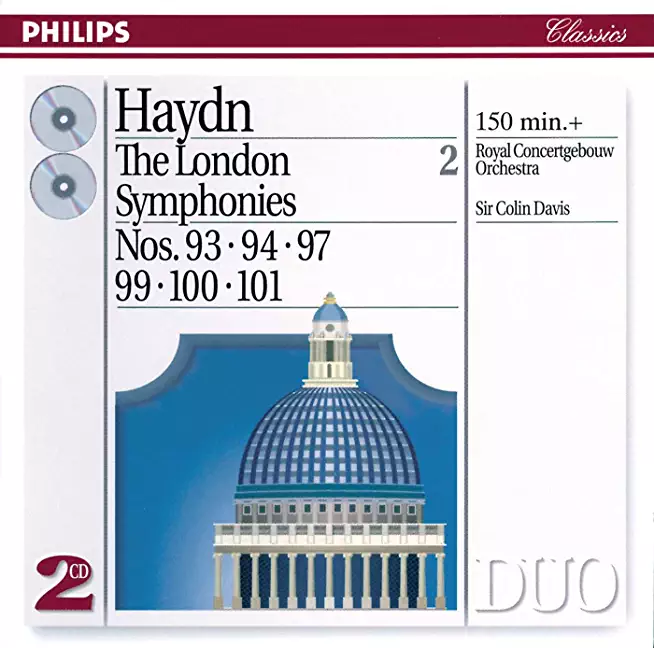
Haydn: The London Symphonies, Nos. 93,94,97, 99, 100, 101


Moe and Larry, I mean, Mozart and Beethoven called him the grand old man. And anyone who can crank out over a hundred symphonies deserves respect. 

But as much at Mozart and Beethoven liked him, he’s just not quite on their level. But that’s like saying Big Star wasn’t quite the Beatles. So what?

If Bach is, say Chuck Berry, and Mozart is the Beatles, then Haydn is probably Elton John, just on output alone. I mean, look at the Symphony numbers here!  Over a hundred?  That’s pretty impressive. Even if they sucked, who would go to all that trouble?

And let’s not get into whether or not anyone, including the musicians - and Haydn - can really tell Symphony number 63 from 36. Does the violinist sit there playing thinking hmmm, this sounds an awful lot like the last one to me...

And it doesn’t suck. It’s stately and grand. Not exciting grand, or beautiful grand, just well, grand-grand. Like Bach, it’s neither obnoxious nor forbidding. I can’t say I love it, but it’s hard to dislike it. Is that also an Elton John parallel?

So there’s absolutely nothing wrong with this music. I guarantee if you put it on, you’ll kind of like it. It’s almost fun-nish, but you will feel like you should be dressing a little better. (Not and EJ parallel.)

So put it on for company to show you’re classy.

B+

Once I’m done with Hadyn, I’ll be at about 1794, music-wise. Then I can jump to Beethoven, who I’m beginning to think, based on temperment, was the Phil Spector of his era.

So, on Hadrian! On Pope Pius! On St. Pat! I’ve got to catch up to be only 200 years behind!

Saturday, August 25, 2018

Moe’s Art!

I kept hearing how great this guy was:

Image result for moe howard easel

And I agreed, initially. After all, how do you beat this?

Turns out they meant another guy:

Oh, Christ, I thought, classical music is so boring. I mean, they hardly ever poke Curly in the eye, do they?

But I soldiered on and learned a few things. But so did Classical Music. Like, Don’t Be Annoying.

I always hated how fussy sounding it could be. Everybody was so exact and specific. It’s the sound equivalent of a foppish guy in a wig raising his pinky while sipping his tea, all the while imagining he’s better than the servant who brewed it for him. So even when he’s having a good time taking in a sonata or two, and you can’t be happy for him.

So I just wished they’d all relax a little. Like on The Brandenburg Concertos, where you can imagine the orchestra taking a hit or two before starting, or that Vivaldi Mandolin Concerto where you can just make out the Heineken's at their feet. Okay, that's a stretch, but you get the idea - relaxed.

But when they’re serious, oh boy, look out. It’s like a lecture from your teacher. Or worse, your mom. So these obstacles have slowed my appreciation somewhat.


For instance, it’s taken thirty years to really get this record:


Mozart: Eine Kleine Nachtmusik (K. 525): Orpheus Chamber Orchestra  (1787)

Back in 1989, ex-friend Dan said that A Little Night Music was his favorite piece of classical music, which should have told me something.

But in typical Jaybee Record Store Trip fashion, I picked up this epitome-of-classical-musical along with the Replacement’s epitome-of-sloppy-rock n’ roll Tim.

So which one do you think I listened to more at the time, even with a baby in the house? It wasn’t even close. (And that wasn’t even the best one by the Mats…)

After all, the two artists couldn’t be more different:
  • One was by a snotty young genius with bad manners, and the other was, well…  
  • One celebrated juvenile jokes and the other, well…
  • One died young (a fate we all secretly wish on those we see as having too good a time…) and the other, well….
  • One created music that would ultimately be considered among the greatest of the era and the other would, well...
But no one would mistake Wolfgang Amadeus Mozart for Paul Westerberg (and no, Westerberg didn’t die, but guitarist Bob Stinson did. He was at least as wild as WAM) would they?

For all WAM’s proclivities, he’s long since been enshrined in the upper-class Museum of Why We’re Better Than Everyone Else.

Not so, the Replacements who’d take that bucket of black paint to the canvas.

But how are these records different? Well, one has guitars on it. The other doesn't, so I shelved it.

I have since gotten a few more opportunities to listen to it thanks to my World History Project, which is now up to 1787. And it's begun to grow on me. But first we had to get past that perky beginning, which is familiar so so many. I’ll take the second movement any day.

One good thing about classical albums is that they tend to throw in more than one piece in order to fill up the album. ALNM runs only about 15 minutes so there’s plenty of room for more. And that’s where this record really shines.

There's Divertimento en E flat major (K. 252 (240a) for those of you keeping score). And another one in D Major (K.131) both of which I like more than ALNM.

WAM knows how to fits in lots of melody without overdoing it. The violins don’t just play, they saw furiously to get in as many notes as can fit. And every one counts.

Like a tasty lead guitar with a couple of seconds here and there for fills.  Or even better, when they make the riff part of the overall structure.

Which is all I ask for, you know?

A-


And since I pretend to be open-minded I would eventually get some other records by Mozart, but in fact, a bunch of them just fell into my lap, like:


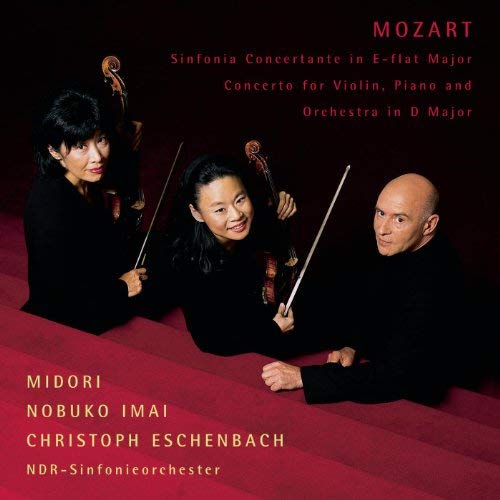
Sinfonia Concertante; Concerto in E-flat Major 
Concerto for Violin, Piano and Orchestra in D Major (c. 1777)

These two long pieces have got everything going for them, and the CD sounds great on headphones. The playing is excellent and they sound like they’re enjoying themselves. It's too fast for weed to explain, so I'm just going to assume lots of coffee.

A-


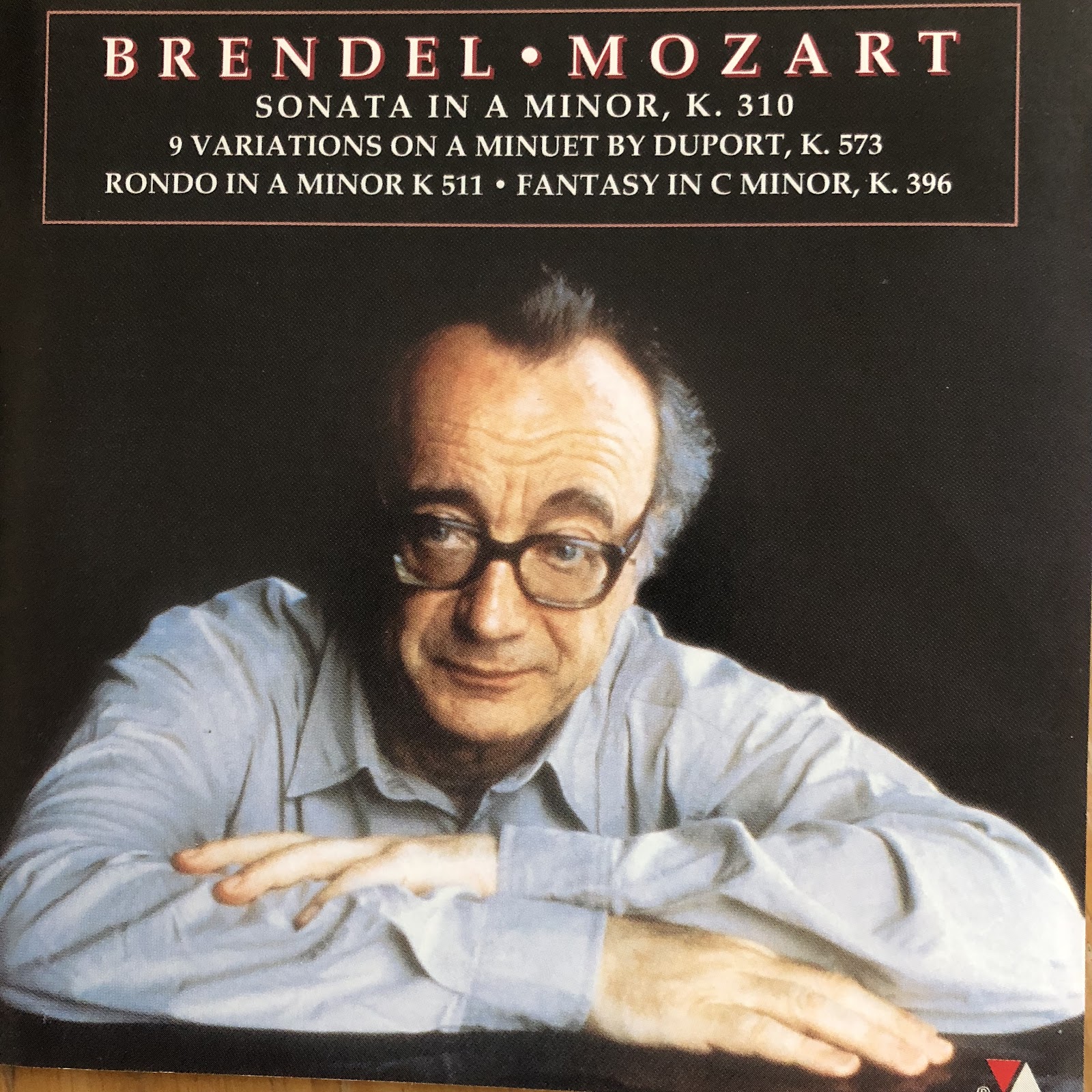
Sonata in A Minor K 310 (1778)

When I first saw the cover my deep animosity for the upper class made me think hey Alfred, get over yourself. But now I see him as thinking all right, we both know I kick ass on piano, so calm the f*ck down and we'll get this over with as quickly as possible.  And if you can get over that I gotta get dressed up to listen to this record feeling, you'll notice he skipped the tie and jacket, so I think he's trying to meet us halfway.

And this music is pretty serious sounding. (Hey, you, sit up straight!) But if you give Alfred a chance, you'll start to notice that it's worth listening to. It's not just serious for the sake of taking the joy out of your life. It's there to put some back in, so by the end you're cheering him on.

And when you really look at him leaning on the piano, you think maybe he's had a few himself. Hey Alfred, let me hold the rest of that six pack while you play!

And he also includes a few other pieces, like Fantasy in C Minor and Rondo in A Minor that are quite pretty.

My favorite part, though, is “Variations in D on a Minuet by Duport”, where Mozart comes up with  NINE different ways to show he's better than the original composer. So obnoxious, he might have been asked to join the Replacements. He'd only have to live two hundred more years.

A-


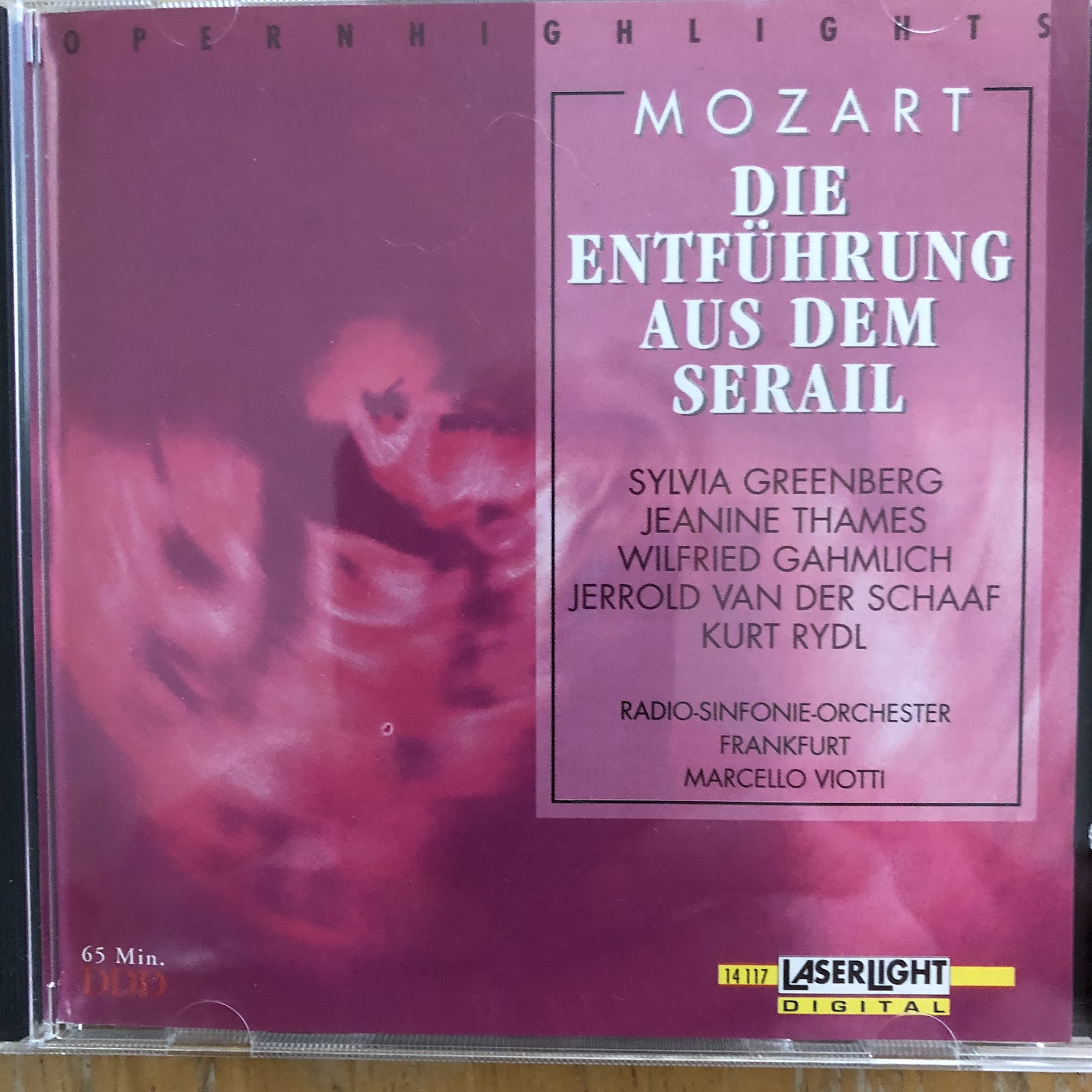
Dude even did an opera (or thirty). I got it at Costco for about $1. WAM must be having a laugh at that. Even Pleased to Meet Me cost more than that!


Die Entfuhrung Aus Dem Serail  (1782)

But it’s all right. As usual, there’s lots of energy and melody, like they’re all planning to have sex after the show.

B+


Piano Concertos 23 and 24 (1786?)

And there are these two piano concertos I’m just getting into. I waited a month to get this. I thought maybe they were digging up old Wolfgang for me. When I complained they sent me two copies, because that makes sense, right?

So I’m still just getting into them. If we wait until I figure them out we'll be here until they unfreeze him, so he can explain it all to us.

In the meantime...

Grade: TBD


Requiem: (1791)

And finally a Requiem, in anticipation of his death. And, as you’d expect, it ain’t perky.

I’m not big of Requiems as the singers seem to be having an even worse time than the Monks, who are kind of boring to begin with.

Rest assured, nobody’s having fun here.

It’s not like I wanted him to die or anything. All he had to do was chill. But he has to overdo even that.

B


But I do appreciate all of his wit, energy and invention.

So I say jump in and enjoy a guy who is almost as good as the Replacements, but maybe not as good as the Beatles.

Or Moe Howard.


Sunday, November 15, 2009

Decade: 2006 - Heaven and Hell, All at Once

Winter:

Just when things were going really well, another major life crisis arrived, and life suddenly sucked again. Luckily for me and everyone else, this time around, when the thrasher came I was able to give what was mine. And, unlike the last time when this happened, I decided that I wouldn't forgo music. Maybe it would help.


But not right away.


Spring:


When your life sucks, why not retreat into someone else’s? Which is why I read Neil Young’s biography, “Shakey”. This would lead me to filling some holes in my record collection with the second and third Buffalo Springfield albums - "Again" and "Last Time Around", and Neil's own “American Stars and Bars”.


I was tempted big time to get the Buffalo Springfield boxed set, which was put together by Neil Young, until I found out that Neil left off some tracks from “Last Time Around”. Yo, Neil, wtf?! (a phrase, I might add, that could apply to several episodes in this infuriating genius’s life). But it all worked out for the best at the bargain bin of my favorite record store, which is my equivalent of the McDonalds plastic ball pit.


Buffalo Springfield is sometimes called the polar opposite of the Byrds - a band that was great on record and a bit rickety live. Legend has it that the Springfield was monstrous live, but that their records never captured it. Their first record is quite good when you get past the anemic production. They hated it. "Again" has several all-time classics (“Bluebird”, “Expecting to Fly”, “Broken Arrow”) and a couple of forgettable songs (uh, I forget. See?). "Last Time Around" doesn't have as many peaks, but it's excellent throughout, and it’s the one I played a lot more. Of course, I’d heard those classics a thousand times already.
---------------- Now playing: Neil Young - I Am a Child
via FoxyTunes

“American Stars and Bars”
is half pretty good country rock with Linda Rondstadt singing backup, the highlight of which is the more rocking “Bite the Bullet”, and half bits of genius from the vault, like “Star of Bethlehem”, “Will to Love” and “Like a Hurricane”.

Before an adult came to tell me it was time to go, I also found “The Best of Love”. They were a California band from the sixties best known for that obscure FM cut "You Set the Scene" from their classic album “Forever Changes”. This CD pulls four songs from that record, along with a bunch from the albums that came before and after it. It's a very good, varied collection, with the brilliant "She Comes in Colors", reportedly the inspiration for the Stones' "She's a Rainbow".

---------------- Now playing: Love - She Comes in Colors via FoxyTunes


Summer:


"The Sky is Crying: The History of Elmore James"
contains the originals of “I Can't Hold Out”, “It Hurts Me Too”, “Madison Blues” and “Done Somebody Wrong” and others, each of which beats the cover by way of raw guitar, pounding piano or stronger vocal.
---------------- Now playing: Elmore James - Done Somebody Wrong
via FoxyTunes

Ah, have music and life ever melded together as intimately as they did that summer? Sufjan Stevens' "Illinois" was the only possible soundtrack to our numerous grim trips to the hospital that summer. No one asked me to turn off "Casimir Pulaski Day", which, as great as it is, would have been understandable under the circumstances. Best of the Year, hands down. One of the best of the decade, too. I think I would have loved it even if everything was okay.

---------------- Now playing: Sufjan Stevens - Casimir Pulaski Day via FoxyTunes


Maya Arulpragasam was born in England but has lived in Sri Lanka, India and elsewhere. She makes a very potent mix of dance music and electronica under the name M.I.A. I play her first record, “Arular”, to impress my nieces. I’ll have to play it a lot more, I guess. She manages to keep your attention without letting things get too grating. She’s adds some smart lyrics, and doesn’t overstay her welcome. Highly recommended, especially if you want to know what those young folk are up to these days.

---------------- Now playing: M.I.A. - Galang via FoxyTunes


I file the soundtrack to the film "The Harder they Come" under Jimmy Cliff, but that's not quite right. If one person did all these songs I'd have to rate him above Bob Marley. Jah was smiling the day that BMG offered it as a special two disc edition containing a number of other Jamaican hits, like "The Israelite" and "I Can See Clearly Now". But even if it was just the original single disk, it would be great. "Johnny Too Bad", "Pressure Drop", "Sitting Here in Limbo" - there's not a bad song here, and I enjoy it more now that times are better. But what's that I smell? Oh that’s right, nevermind…

---------------- Now playing: Toots & The Maytals - Pressure Drop via FoxyTunes


Thelonious Monk Quartet, with John Coltrane at Carnegie Hall combines two of my favorite jazz artists, and is one of those records you can play over and over again, and never reach the bottom. The fact that this record even exists is a miracle - someone found a fifty year old tape lying around. Treat yourself to the warm embrace of music that seems almost Easy Listening at moments, but that over time reveals its many layers and dark corners.


I decided that I’d been playing it too safe with Monk – only listening to his late ‘50s recordings, and so went for the circa 1947 “Genius of Modern Music”. This is his first record as a band leader and it immediately grabs you with its odd angles and structures. It must have seemed like a space ship landing at the time. I wouldn’t start here to learn about Monk, but it's well worth the ride.

---------------- Now playing: Thelonious Monk - Humph via FoxyTunes


Sometimes I get over-sated, and feel bad that I've gotten a CD that I didn't absolutely need. It's compounded when it doesn't bowl me over. Such was the fate of Roxy Music's “Avalon” - a perfectly good, if a little slick sounding record. It just didn't have any surprises or brilliantly weird Roxy moments. Great music for company, though.

---------------- Now playing: Bryan Ferry & Roxy Music - More Than This via FoxyTunes


Who the hell are the Impressions, I wondered? Well, they’re more significant than Wolf Blitzer, I can tell you. I didn't know that Curtis Mayfield didn't spring out of the ether fully formed with "Move on Up" and "Superfly". He had a life and career before I became aware of it. This vocal trio started in the 50s doing light, airy doo wop-like tunes. Their arrangements got more varied during the 60s, and their lyrics became more socially relevant. Then they broke up and Curtis went solo. I never tire of "Superfly", which has some of the tightest drumming, and the best lyrics, ever. "The Anthology" brings all of this together in one place, and while at first I resisted, I find myself coming back to this record more and more.

---------------- Now playing: Curtis Mayfield - People Get Ready via FoxyTunes


Fall:


One morning after working all night, I put on Gogol Bordello's "Gypsy Punks" and The Hold Steady's "Separation Sunday", and I can't think of two records that are worse to put on when someone's trying to get some sleep. Ask my daughter. "Gypsy Punks" is exactly how it sounds - accordions, violins, electric guitars, screams. It's been a while since I've been to the caravan so I don't listen to it often. But the energy is undeniable. "Separation Sunday" is the sound of "Blinded by the Light" Bruce Springsteen, but without the Big Man, and the guitars turned up. And he’s had a few. The characters are low lifes of varying degrees, and I don't always want to spend time with them, but they do make life interesting.

---------------- Now playing: The Hold Steady - Hornets! Hornets! via FoxyTunes
---------------- Now playing: Gogol Bordello - Sally
via FoxyTunes


After the next all-nighter, I tried Mississippi John Hurt's “Rediscovered” (link) which worked a lot better. John's gentle voice and nimble guitar accompany tales of love, violence and, well, coffee. It’s so quiet, you could practically blast it and no one would complain. On the downside, you could easily miss it if the world intrudes. File under "don't play too softly".
---------------- Now playing: Mississippi John Hurt - Candy Man
via FoxyTunes


James Talley's "Got No Milk, No Bread, No Money, But Sure Got a Lot of Love" wins the best title award. This is laid back country music that doesn't even try to grab you. It assumes you're paying attention. James's voice isn't going to knock down any doors either. Although I appreciate the feeling, it's an acquired taste, and only for certain occasions.

---------------- Now playing: James Talley - Take Me to the Country via FoxyTunes


Mozart’s Sonata/Fantasy/Rondo and Variations (played by Alfred Brendel), is the abbreviated title. (Jesus Christ, why can’t these guys name their tunes something sensible, like “Louie, Louie”?) Even so, James Talley’s still got them beat. Anyway, this is a fine collection of solo piano music. When it comes to classical music, for me, smaller is always better. Now I’m waiting for the kazoo version.


Good friend Mike had seen Art Blakey's Jazz Messengers in Europe ages ago (which, by the way, used to mean hours, but now means decades) and raved about them. But which one to get, I wondered? I eventually choose their first, because of the nice cover (and price), and even the record store guy concurred. It's energetic, tuneful and certainly worthwhile, if not earth shaking for the non-jazz nut.


Sam Phillips was married to T-Bone Burnett, and before they broke up, he produced her "Martinis and Bikinis" which is more serious than it sounds. You may have heard “I Need Love” at your local drug store chain, between announcements for specials on toiletries. Sam's voice is less raspy than Kim Carnes’. She obviously loves the Beatles, and even covers John Lennon’s “Gimme Some Truth”. While it doesn’t all cohere into a great record, there are a number of excellent, accessible songs here. Not bad at all.

---------------- Now playing: Sam Phillips - Baby I Can't Please You via FoxyTunes


Joanna Newsom’s “The Milk-Eyed Mender” is my latest "the rest of the family gives me funny looks" CD. It's understandable, really. With her whoops, cackles and regressions into early childhood, she makes Bjork sound like Mary J. Normal. And yet, and yet, some of these songs are incredible. There is a fearless openness here that makes other such attempts pale in comparison. Oh, and she plays a harp. One of the quietest records ever, it slowly fades in from an utter silence. It'd still piss off someone trying to sleep, though.

---------------- Now playing: Joanna Newsom - Sprout and the Bean via FoxyTunes


Loved:

Illinois


Liked a Whole Lot:

The Harder They Come

John Coltrane/Thelonius Monk at Carnegie Hall

Genius of Modern Music


So, we made it to the end of the year, which is all any of us can ask.

Sunday, October 18, 2009

Decade: 2004 - False Spring

It was around late March or April before I decided that it was okay to listen to music again.

But the Musical Heritage Society wouldn’t wait – they just can’t help but send you a CD now and then, and around February, I got Mozart ’s “Sinfonia Concertante in E Flat Major/Concerto for Violin, Piano and Orchestra in D Major” (I’m too out of breath to tell you who plays on it.) It’s a little more cheery than the classical music that I usually listen to. Party animal Wolfgang Amadeus just isn’t going to let you slit your wrists in the tub, even if you feel like it.

Right around then, one crisis was passing. But instead of feeling relief, I was tired. Another crisis was on its way, and I must have felt it coming. Life can wear you down, and although music can help, you can’t expect it to fix everything. Sometimes all it can do is slow down the process.

Even though, I’d actively searched out the Wrens “The Meadowlands”, after getting it I had a bout of buyer’s remorse, and decided to not expect much from it. When I heard the chiming guitars usually I love, I told myself Oh it’s just those chiming guitars you love. Big deal. The less-than-obvious lyrics promised to reveal more over time. But the print on the cover is just too small to read. Then there was the dynamic sound and overall energy. Well, okay. I guess that’s good, too. To this day, I’ll put this CD on and notice a song I barely listened to before, because it was near the end of the CD, and realize how good it is. The sheer generosity of the thing promised enjoyment for years to come. Ho hum.
---------------- Now playing: The Wrens - This Boy is Exhausted via FoxyTunes

A friend lent me a CD by the Beautiful South – the one with the wonderful “36D” and “Old Blue Eyes Is Back”, but since I tend to go to the source, I bought their first record, Welcome to The Beautiful South. This is another one of those pleasant sounding records with venomous lyrics. These guys love to barb their pretty tunes with lyrics about politics and murder. But you do hum along.
---------------- Now playing: The Beautiful South - Old Red Eyes is Back via FoxyTunes

In the USA, Youssou N’Dour is known as ”that guy who sings real nice at the end of Peter Gabriel’s ‘In Your Eyes’”. (At least that was how I explained who he was, when someone asked me what CDs I got lately. Maybe it’s my fault.) To the rest of the world, he’s merely a superstar, so I figured it was time to try him out. “Nothing’s in Vain” is a pop record that just happened to be recorded in Africa. I normally pass on crossover attempts, but after several years, this still holds up quite well thank you very much. And it’s an ideal introduction to African music. ---------------- Now playing: Youssou N'Dour - Africa Dream Again via FoxyTunes

You bought “Buena Vista Social Club”, so I wouldn’t have to. That freed me up to get a record by the bass player, Orlando Cachaito Lopez. It always surprises to me when bass players make great records. (I obviously know nothing about bass playing.) If you put a gun to my head, I’d guess it’s Cuban music, but I hear jazz and hip hop, too. It also falls into the “great night music” category. Whatever its genre, “Cachaito” is great music period. ---------------- Now playing: Orlando "Cachaito" Lopez - Redencion via FoxyTunes

If I ever hoped to get a clue about African music, I knew I’d have to get something by Fela Kuti, who’s made, oh, about fifty albums. Another superstar virtually unknown in America (although now I see there’s an off-Broadway show about him), he’s made so much music, that it’s hard to figure out where to start. He’s even got a bunch of best-ofs. This one – “The Best Best of Fela Kuti” - solves the problem. This is hard-core African music – outspoken, political and brooding. Fela’s edited tracks run at least ten minutes apiece. This 2 CD set spans several decades. It is definitely not for your tea and crumpets crowd. (Maybe your burn down the house with the tea and crumpets people inside crowd, though.)

If CDs were priced by quality, Fountains of Wayne’s “Welcome Interstate Managers” - (link) one of the great albums of the decade – wouldn’t have been going for $2.99 at BMG. The guitar based pop and rock and roll goes down real easy, because the melodies stick, and the words are consistently smart and funny. It definitely cheered me up, and was one of the high points of that summer. The theme is white-collar working life. I can relate. Maybe you can too. Go ahead, treat yourself. ---------------- Now playing: Fountains of Wayne - All Kinds of Time via FoxyTunes

The election that year did nothing for my mood, so by the holidays, I went back into the past and got Benny Goodman’s “The Famous 1938 Carnegie Hall Jazz Concert”. It’s been on my lift of must buys for a while, and the scene in Phillip Roth’s The Human Stain where the narrator is listening to this record finally pushed me to the store. It’s obvious why this album is treasured by many, but I also realize that I’m not a big band fan, so I’m still waiting for this one to hit home.

And finally, for Christmas, Brian Wilson’s “Smile”, which was a lot to ask of me, but just what I needed. This is just about the only record I can think of that could pull me out of the funk I was in. It’s got to be one of the most melodic records ever made. Are you a little hesitant to get a record that’s a bit off the Beach Boys-beaten path? Don’t want to be told to eat your vegetables? Think you’ve hear this before? Don’t let that stop you. Jump in. The water’s fine. ---------------- Now playing: Brian Wilson - Wind Chimes via FoxyTunes

Loved:

Brian Wilson

Fountains of Wayne

The Wrens

Liked:

Youssou N’Dour

The Beautiful South

Orlando Lopez

I hadn’t remembered 2004 as a great year in music - I practically crawled to the end of the year. Now I can see that I just wasn’t responding to the good music I was hearing.