Showing posts with label Eric Clapton. Show all posts

Thursday, August 15, 2024

Jimi


Ah, Jimi.

In 1967, you scared my young, white ten-(but in reality eighty)-year-old soul, with your (and Mitch's and Noel's) wild hair and even wilder music. The bent notes, sound effects, and suggestive lyrics (and suggestive music!) all put me off. 

I was a conservative Beatles fan and had strict rules for what was acceptable. Your hair could be long but not wild. Your clothes could be cool but not Dionysian (and no, I didn't know what that word meant and I'm still not sure, although the Olympics helped). And most importantly: you had to JUST PLAY THE NOTES. I could never quite put you in the pantheon because I suspected you were all show and no substance. 

And you looked nothing like that nice Dr. Martin Luther King, Jr. Yes, we did end up killing him even sooner than you, but you get my point. So for a guitar hero, better the admittedly paler (coincidence?) Eric Clapton who, well, just played the notes. And look how he turned out! 

I was sorry when you died but not devastated. Not like I was with John Lennon. You were one of those revered artists I couldn't bring myself to love. And yet, over the years your name kept popping up in conversations with friends, usually when yet another album of "newly discovered tapes" was released, albeit to less and less enthusiasm. Even so, everyone I knew - including my Mom - considered you a titan. 

After punk broke in 1977, when I learned noise had value, I began to suspect I may have missed something in 1967. So, in 1980, I broke down and began to buy your albums. 

Since I already knew most of the songs from Are You Experienced? I started with Electric Ladyland. (That record trip also yielded The River and Trout Mask Replica me being into double albums at the time.) With its vast swathes of material I'd never heard, it was a record I could immerse myself in. And I did! From the soul vocals of the title track to the hard jam of "Voodoo Chile" and the sheer beauty and majesty of "Burning the Midnight Lamp" and "1983 - A Merman Should I Be", and finished off by "All Along the Watchtower" and "Voodoo Chile (Slight Return)", it was studded with sublime moments. I would play it more today except it's on vinyl and thus a pain in the ass to put on. As with most double albums, it's not as consistent as single ones, but it's about the overall impact, and in that it is  marvelous. A

I'd heard Axis: Bold as Love at Childhood Friend Mike's house around 1968 and remembered the time passing quite pleasantly. But by 1981 I couldn't hum it if I tried, so it was time, and I found it nearly as warm and weirdly laid back (at least compared to AYE) as I'd remembered. There are rockers with great guitar playing, of course, but it was the vocals and drums that drew me in. And the songs! This one is my personal favorite - very rewarding and highly recommended. A

We got married in 1985, and on the way to church that day, I stopped at the record store to pick up Are You Experienced? (Okay, I made that up but you get the idea.) In one of the rare instances when I hear a record where I already know most of the songs, not only was I not let down by an anticlimax, I felt I was hearing it for the first time. A stunning debut, and one of the all-time greats. Jimi turns out to be a better guitar player, singer, songwriter, and human being than Eric Clapton would ever be.  A

Having finally absorbed these three core records, I was sated. Temporarily anyway. 

Cut to 2008 when I kept hearing about how - like the Beatles and Stones records before him, and Elvis Costello after him - the UK version of Experienced differed from the American one. Since CDs can contain about 80 minutes of music, many record companies (bless their hearts!) took the opportunity to re-release expanded versions of many such albums. Most of the time they include dross. In the case of the Beatles, however, we got the longer, usually better, UK versions. For Jimi, they included all the US cuts in their original sequence first, followed by the missing British songs. Oh, and also singles like fucking "Purple Haze". Better than the American version for the simple reason there's more of it. A

This reminded me of the daunting Band of Gypsies that Childhood Friend Eddie used to play on his stoop when it came out. I remember how tense and forbidding "Machine Gun" was. Now I felt ready for it, and it didn't disappoint. One good thing about Hendrix playing live is that you get to hear what he could do with a single guitar outside a studio. The mood here is more somber than before. He's got a different band, and he's taking the opportunity to explore a more brooding sound, at least for side one. Things get faster and louder on side two, but it's "Machine Gun" that stays with me. A-

That kept me satisfied for a while. Now it was time to dig deeper. The problem is that we're now dealing with all those posthumous releases some of which are just cash grabs. 


The Cry of Love (1970)

This record was assembled from what were deemed completed or almost completed recordings. Lucky for us they are high quality. It wouldn't always be that way.

After the supernova of his first three records, Jimi is merely human here, albeit one who plays great guitar. Having proven himself many times over, he now shows his more relaxed side. Like he has all the time in the world. But that was just for show, as the voluminous tape vaults can attest. 

So while there's nothing epochal here it is full of moments that show what a superb craftsman he could be. "Angel", "Night Bird Flying" and "Freedom" all being examples.

A good balance of guitar and songwriting from an artist who had more to give.

 A-


Rainbow Bridge (1971)

This also came out in 1971. And since producer/engineer Eddie Kramer was involved it's not a rip-off. The barrel scraping had not yet begun in earnest.

It's more raw than COL, which is fine, but it's also a little lightweight. It contains an inferior studio version of "The Star Spangled Banner", and an overly dramatic "Roomful of Mirrors". The songwriting is not quite up to par. 

The guitar playing nearly makes up for it, though. "Hear My Train A Comin'" is magnificent. Sounds like what "Voodoo Chile" would eventually become.

B+


The rest of Jimi's catalog is far too vast and plagued by bad faith - at least until the Hendrix family took over - to dive into head first. There appear to be many worthy live recordings, but since they are usually made up of familiar songs, I'm less inclined to try those.

So until something changes, I'll take another extended break. 

Who knows? Maybe next time I'll get to meet him in person.


Saturday, April 10, 2021

The Notorious LVB: 1809-27


1809 - 1811: Me and LVB Take a Break From Each Other, Part One:

We last left off in 1808, and since all I've got left in my collection are the remaining symphonies - which don't pick up again until 1812 - I'd hate for you to think LVB or the world are taking it easy. So here are some chronologies to pore over: one for him and one for us.

But if you can't be bothered, I'll sum it up below:

1809: 

Us: Oh, not much. War is declared against France, so the French army invades Vienna

Him: Teaches music to Archduke Rudolphe and composes a string quartet, a few piano sonatas,  and a bunch of songs for various luminaries.

1810:

Us: France (thanks Napolean!) continues to invade everyone and their moms. The Germans respond by declaring the first-ever Octoberfest. (All agree they should have just stopped right there for the next two hundred years.)

Him: Presents 'The Letter for Elise' to Thérèse Malfatti, for whom he's got the hots. Having addressed his frontal area, he moves on to covering his posterior by continuing to writing tunes for big shots. 

1811:

Us: The King of England goes mad.

Him: He begins writing the seventh symphony


1812: The Seventh Symphony

So while the rest of the world is blowing up, LVB is writing another symphony. This time, he's back to four movements, probably because he realized that having five parts last time was a real a*hole move, even for him.

The first movement starts off with a Blam! I love the opening chord progression. Maybe it appeals to the plebes like me too much but that's okay. LVB's a plebe at heart. Just one who reached for the stars. 

Then two minutes in he's about to up the ante but then pulls back. Sly dog. But he's only setting us up because at five minutes he comes at us even stronger. And he keeps up the bobbing and weaving and boppity-bop rhythm for nine more minutes! Pastoral Schmastoral! LVB's back, baby!  

Is the second movement a funeral march? Not quite - it's got sort of a "Climb Every Mountain" vibe, but with horns instead of nuns - a switch that would have dramatically improved my childhood. 

In the third LVB cheers up, picks up the pace, and adds a rather snappy rhythm. 

In the fourth, he takes it up another notch but keeps things from getting too crazy. He must be on his meds. Ah, but then towards the end they wear off and he's his old crazy self as if to say it's the summer of Ludvig!! 

He conducts it the following year to celebrate the Brits kicking Nappy's ass.

A

"Lenny Number Seven"


1813: The Eighth Symphony:

Having proved he was no sissy last time, he's a little less of a dick now, but still thrashing when necessary. 

In the first movement, he tries to sound "stately" as if he owns a thousand acres, which he kind of does by now. But it still moves. 

The second is short and mellow. I can see putting this on for dinner guests.

The third gets regal, like he thinks he's the king. He was smart enough to not tell the actual king,  though.

The four is customarily fast - the typical Beethoven charge at the gates - nice but nothing amazing. 

And before you know it, it's over.  It's his shortest.  All in all, it feels like this one is made up of the parts that didn't make the last symphony. 

B+

"Lenny Number Eight"


1814 - 1823: Me and LVB Take a Break From Each Other, Part Two:

Then the man drops out for a while, taking a break from Symphonies and lots of other things.

Was it a Clapton break, involving substance abuse followed by long years of mediocre music? Nah. More like a Dylan motorcycle accident break where he (eventually) does the basement tapes once he gets better. 

But what was going on? Oh, let's see: his brother dies, he gets into a custody battle over his nephew and becomes very ill.

By 1820 he's finally composing more, including three piano sonatas, and he's already started on the Ninth Symphony.


1824: The Ninth Symphony 

He just HAD to go back to five movements.  Not only that, each one is loooooonnnnng. The whole thing runs about SIXTY-FIVE Minutes - at least half again as long as anything before it. 

We're in double album territory. Not The Beatles, mind you, which was over 90 minutes long. More like London Calling or Exile on Main Street. You know - double albums that come up a bit short time-wise but are great nonetheless. (Speaking of London Calling, what if LVB - instead of having that 5th movement - just had a hidden track at the end?)

And speaking of the Stones, do you find it as odd as I do that he finishes this with a chorus, kind of like "You Can't Always Get What You Want"? Typical of the Stones to take something meant to be so positive and shitting all over it just before heading on out to Altamont.

Two seconds in and it already feels bigger! (now, there's a sentence I never expected to write...) It moves - rhythmically, melodically, and dynamically - all over the place, and yet it holds together. It reminds me of "Funeral for a Friend/Love Lies Bleeding" in the sense that it takes its time to make its point and expects you to sit there and wait.

It's like listening to a drunk guy in a bar who you think might take a slug at you. He's had a tough life and he's got to take it out on somebody.

The second movement opens with a theme everyone would recognize. Again the insistent rhythm, and, as usual, the rhythm and melody match perfectly. The drunk is angry and might strike out at any moment. By the end of it, I feel like I've done a few rounds with Ali. Float float float float float STING!! You get the idea. 

You finally get to rest in the third movement. The drunk has calmed down and LVB is taking his time. And after years of personal turmoil, he's got a lot to say. Who? Both of them.

The fourth grabs you again. You thought he'd mellowed out, didn't ya? No, he's still drunk and still knocking shit over. And still upset. But then he finally hits that happy stage and loves the world. 

And in the fifth, not only has he started singing, he wants the whole bar to sing with him, too. And they do!

I've gotta admit the singers are really wailing by the end of this one. And the orchestra keeps up with them. The ending combines the orchestral and vocal into what must have been an overwhelming climax. But that's also how I feel about "You Can't Always Get What You Want" which I'll admit I still prefer. 

He conducted it at the premiere, even though he was totally deaf.  When it was over, one of the singers had to turn him around so that he could at least see the audience going nuts.

And well, there it is. One of the "great albums" - snob that I am - that I never quite got comfortable with. I guess I liked his early stuff better before he became a big star and everyone else liked him.

But it's really really good.

A-


1825 - 27: "...the love you take/make, etc..."

He continues to compose, even starting a tenth symphony. But he's getting ill again and family issues are taking their toll. 

When he passes away the funeral attracts 30,000, and among the pallbearers was that suck-up Franz Schubert. (We'll get to him eventually.)

So after all of this, I must REALLY LOVE Beethoven, right? Not exactly. 

I still a fan of rock 'n roll and pop music. I dip into classical music like I dip into reggae or the blues. I need a change, stay for a while and then go home.

I still love the Beatles, the Stones, and the Who more than any of the Big Three Bs of Classical Music - Beethoven, Bach, Mozart.  Why Mozart you say? 'cuz he's such a little Bitch.

Jk, it's really because it's Brahms, and despite having his Requiem, I can't say I'm up to him yet. (Remember the Jaybee motto: don't let facts/reality stand in the way.)

So I hope this exercise hasn't been a complete waste of time for you. I'm glad I did it because it forced me to listen to it all more closely, and I'm really glad I did.

So rock/pop will always be first, but if someone puts on any of the LVB music I've covered here, I'm going to really enjoy it.

Anyway, let's finish with this small piece you might know as "Schroder's Theme".  

RIP LVB.

Saturday, December 30, 2017

Top One or Two Hundred Whatevers, Part Three: Guitar Solos

This just another group of ten, with no attempt at being comprehensive. Just ten I immediately think of, or that are playing in my head at any given time.

But it’s better that way. This isn’t something I should have to think too hard about.

Oh, and the number of artists is ludicrously low. My mind is usually all over the place, but in this case these solos have gotten all the way into the lizard part of my brain. I’ll do another post if I make it back out to the monkey part.


Television:

Supposedly punks because of their intensity, they actually know how to play their instruments. Tom Verlaine and Richard Lloyd are both great guitar players.

There’s all kinds of loveliness on their second album, but it’s the first one that shook the world.

“See No Evil”:
The first guitar bangs out a primitive rhythm in a low register. The next one plays a repeating pattern that can only be described as snarling, this time in a higher register. Then Tom Verlaine chokes out - in yet a higher register - the words What I want, I want now! so you know these guys really mean business.
But it’s not quite fast enough to let the soloist just coast. It’s setting a level of intensity that will have to be heightened or it will all be for nothing. But Richard Lloyd's solo finds exactly the right space by going up yet another register, but not too high. Not yet. He plays a simple riff but builds the notes and the speed until there’s nowhere else to go, at which point he ends it with a descent (or is it an ascent?) into supremely controlled chaos.

“Marquee Moon”:
Nine minutes long, with dueling guitar solos taking up the middle, this one reminds me of climbing a mountain. Slow at first, but gradually increasing the intensity until it’s at a fever pitch.
It climaxes with a rush to the top of the mountain where you can feel the wide open space and even hear some (prehistoric?) birds. (You always risk sounding like an idiot when writing about rock and roll, don’t you?)
It was the song playing when a life change occurred. Friend and then Roommate Mike was moving to Europe.
While we shared an apartment, he and I would stay up all night drinking, talking and listening to music. On the day he left, I put this album on as he was getting ready. I picked it because we both loved it, and knew it would be the last one we’d listen to together.
He was all packed and waiting for the ride when this song came on, and it really felt like we were climbing that mountain. At the end, Mike put on his wings and jumped off the top, and I stayed behind because that’s what I do.
After the climax, it starts all over again. On the original vinyl, Tom Verlaine gets out a couple of lines of the verse before it fades out at 10:08, leaving you with the feeling that it continues on forever while you (but most likely me) have to head back down the mountain to face real life again, or perhaps the cemetery that they mention earlier in the song.


Crosby Stills Nash and Young: 

Yeah, who would have thought?

“Carry On” (Live Version):
In theory, this long live version of a pretty tight studio song should suck. But I’ve got it basically memorized. Sloppy, self-indulgent but brilliant nonetheless. The singing doesn’t even try to match the polished harmonies on the original, but that is more than made up for by the passion. Again, dueling guitars - this time courtesy of primal Neil Young and fluid Stephen Stills - that are worthy of the Allman Brothers, Grateful Dead and Eric Clapton. Who said more isn’t better?


Eric Clapton: 

And speaking of this idiot, I like to recall the time when he could do no wrong (music-wise, that is):

“Let it Rain”
It helps that this is a very pretty song with a chord progression that just encourages a guitar hero to go nuts. But on the studio version, Eric manages to balance control, passion and invention. I used to love when it came on the radio when my Led Zeppelin-loving friends were around.

“Crossroads”
Yeah, I know that it’s been spliced together from several performances but as a piece of recorded art it’s astounding. There are so many shifts of phrasing, tone and angle of attack that it simply can’t be absorbed all at one time. You have to pick the part to pay attention to or risk exhaustion.

“Badge”
Who knew Cream could do a perfect pop song?  But here it is. Beautifully vague but evocative lyrics, emotional singing, George Harrison’s lovely guitar and then Eric's solo. In terms of compression, emotion and technique this might be his best.

“Sitting on Top of the World”
From Goodbye this is an overlooked masterpiece. It’s rough and raw with at least two changes in tone. But he is all over it. Intense as hell.


Stephen Stills:

“Go Back Home”
From the first Stephen Stills record, but it’s Eric Clapton who solos on this. Apparently recorded in the middle of his heroin addiction, he didn’t even remember doing it.
It starts off slow and easy but then halfway through Clapton jumps in and there is just no turning back. Another example of him improving a song without completely taking it over.

And as long as we’re talking about guitarists who are all over someone else’s record….


Derek and the Dominos:

“Why Does Love Have to Be So Sad?”
This is really all about Duane, and I must add that it’s not just the solo, but also the frantic pace of the damned thing. And then there are his fills that only tighten the screws further. So the bar is set very high when it’s time for the solo. And Duane doesn’t let us down. He matches the blistering pace and then some.
Clapton does his level best to keep up (and without Duane his would have been a perfectly good solo) but he may as well just be playing rhythm. And in a way, he kind of is.


And that’s it for now.

Okay, I know I left a lot out but since I limited myself to ten, my conscience is clear.

Like the first two One or Two Hundreds which were about voices and melodies and emotions, these guitar players provide the same thing without saying a word.

But I’m sure you can think of a zillion records I left out.

Come at me, bro!

Saturday, October 8, 2016

My 70s Show, Part Two

Lately, I’ve been having a lot of fun exploring and revisiting the early 1970s. I turned thirteen in 1970 and feel like I missed a lot of what was going on at the time.

Alas, 1970 was also the first year of “I Wish Things Were As Good As They Were in the Sixties”. After all, we were aware of “the sixties” as a concept even during the sixties themselves. So, along comes 1970, and what could possibly send you the message that the sixties were not only literally over, but also symbolically over than the news that the Beatles broke up?

The only thing that made the summer of 1970 bearable was the Woodstock Soundtrack. But everyone wondered what was next, and had the troubling feeling it couldn’t possibly be as good. Except for the Led Zeppelin fans, who already thought they were better than the Beatles. )I swear. Ask my childhood friends Joe and Mike.)

The trouble was if you just assumed things were going to be bad you were bound to miss a lot. And a problem with the sixties was that you could point to five or ten key artists who made 75% of the great records. With the seventies, the quality was more evenly spread, which made it harder to find, let alone agree on.

So it was no wonder we started breaking up into our little groups of taste like glam, Southern rock, singer-songwriter, heavy metal, etc. And black artists? Forget about it. They were exiled to AM radio.

And yet, there are probably a lot more great albums made in the seventies than the sixties, at least if you leave out jazz.  Let’s face it, good pop albums didn’t really start getting made until 1964, and then only by the Beatles, Stones and Dylan. Everyone else didn’t get into the swing of things until about 1966, which may be my all time favorite year for music (67-69 wasn’t too shabby, either, as I recall).

By 1974, I knew there were great things out there because by then I had a job, and spent all the money on collecting albums. First, there were the key sixties albums I needed to catch up with, like Blonde on Blonde but mostly it was seventies music. I was no longer looking for the “next Beatles”. I was just looking for good music wherever I could find it.

And now, when I’m feeling I’m not connecting with new music, I can always go back to the sixties and seventies for some relief. The sixties for brilliant meteors scraping the summer sky and the seventies for bright and cool autumn sunshine.

And it’s been working out pretty well, with the Kinks, Fairport Convention and Roxy Music. I had some making up to do since it was the British stuff I tended to miss at the time.  But, hey, why not an American artist?


Leon Russell (1970)

You remember Leon, don’t you?

Friends with Joe Cocker, highlight of the Bangla Desh concert, co-writer of “Superstar”, member/leader of Mad Dogs and Englishmen, which overlapped with the  Delaney/Bonnie/Clapton nexus that together made about a dozen albums together at the time, including this one.

He was also up to his ass in sixties studio work and the maker of many hit singles in the seventies.

And a great piano player. Elton John was/is a huge fan.

Leon’s got that grating voice and extreme Southern drawl. We all liked it then, but I like it somewhat less now. Ahh, another great thing about the early seventies was that you could get away with a lot. Now as I get closer to my early seventies, not so much.

This is not even his first record, but it’s his first record where he’s billed as the solo artist.

And it boasts some great tunes.  “Delta Lady” (almost as good as the punchier Joe Cocker version), “Humming Bird” (one of my favorites) , “A Song for You” (covered by everybody), “Roll Away the Stone” (quite humorous).

I just wish it boasted more. If it did, I’d rank it amongst the greatest albums of the seventies. Alas. no. Leon could write some great ones but maybe not enough for one full album at any given time.

And the key, with revisiting early seventies albums is getting beyond the better-known cuts and seeing how the rest of the record holds up. And in this Leon is hit or miss. And it’s not that these other songs aren’t good. They’re well executed, but just don’t rise above a generic seventies sound. Except for that organ on “Hummingbird”, which sounds great.

The playing is real tight. And why not? He’s got half the Stones, half the Beatles, and an assortment of rock n roll all-stars helping him out.

But unlike, say, Lola, which boasts several excellent songs I hadn’t heard before, there’s nothing here like that.

So while he probably deserved an A- at the time of release, the years have taken their toll on it.

My recommendation? Look for one of the extensive compilations and catch all of his highlights. If that isn’t enough for you, then come back to this one.

Mind you, I'm not disappointed. "Less than great" comes with the territory. And "pretty damned good" is all over the place.

B+

“Hummingbird”


Saturday, August 29, 2015

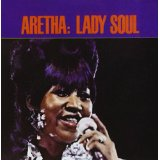
Aretha Two: And the Title Goes To...


Lady Soul

Such was the impact of I Never Loved a Man… that no one batted an eye at the title of this follow up album.

After the white hot vocals of I Never Loved a Man… she dials it back ever so slightly here. The rhythms are dialed back a bit, too. Not a problem. If anything she might be even more focused, and the band really cooks.

The material, though, is slightly weaker. (The best songs lead off and end each side (if you remember what a “side” is, that is) I think she senses this. Yet she doesn’t overplay her hand by oversinging. Pretty smart, if you ask me.

Her covers compete with the originals: I think I prefer her version of “Money Won’t Change You” to James Brown (but I’ve still got that mountain to climb). “People Get Ready” is fine but not quite on the level of the Impressions.  “Come Back Baby” is up there with Ray Charles’ (and let’s not forget Hot Tuna’s!). “Groovin” is okay but I’m not sure it gives her room to add much to it.

Of course “Natural Woman” is one of the greatest pop songs ever recorded (Thank you again Carole King!) with a an utterly transcendent bridge (starting at 1:45) and perhaps the greatest use of strings on a pop record ever.  A great to be alive record.

“Since You’ve Been Gone” is just So. Damned. Insistent. Whew, I need to sit down.

And there's little old Eric Clapton showing up as a guest on “Good As I Am To You”, but you could easily miss it because of how Aretha wails. Who’s the idiot who said she was dialing it back?

The closer, “Ain’t No Way” tries to match this intensity of “Natural Woman”, and actually has a better vocal, but the song itself comes up short, but that just means instead of it being great it’s merely damned good.

As is the album overall. So I give the edge to I Never Loved a Man…, which is a little more consistent and has more songs. But if you want to be entertained, and amazed by that voice, and you can’t find your copy of that record, this one will do just fine.

B+

“Natural Woman”

Sunday, April 25, 2010

Secret History: 1966


1966 is one of my favorite years in music, not just because I got my first album "Revolver" then, but because it's a year where the quality is still higher than the musicians themselves.

The music has a light touch. Psychedelia hasn't yet kicked in, the guitars aren't too distorted, the musicianship and songwriting is improving, the songs are still short and to the point. In other words, it's right before things started getting pretentious.

You already know about what the Beatles and Dylan were doing that year. And I'll save the Stones for a separate post. But until Allmusic.com comes up with a "We Love 1966" post, you'll have to settle for my take on that year. So, in order of my preference, here's a few records worthy of your time and attention:
  • First, there's the Kink's greatest record "Face to Face". Here's my post on that criminally neglected era. Nuff said.
  • Then, there's the Beach Boys' "Pet Sounds", which I finally picked up in 1990. I have to admit being underwhelmed at first, especially with it popping up on all these all time greatest albums lists. I still think it's a bit overrated, but it's certainly a very worthy record. Brian Wilson with his heart on his sleeve.
  • And don't' forget the Byrds. Their third album, "Fifth Dimension" starts off with the title track – one of my all time favorite songs – and stays great until more than halfway through, up to “Eight Miles High”, after which  they do a lame version of "Hey Joe", a song that seems to trip up everyone except Jimi Hendrix. It's also followed by some filler, but the rest of it is brilliant, and well worth your while.
  • Then there's the Who, who are already getting a bit arty on "A Quick One". I also went on about them, too. Although the songwriting it divided pretty evenly, everybody comes up with good tunes. And the title tune - our first mini rock opera (awwww!) - is just wonderful. Sweet and funny all at once.


  • And don't forget "John Mayall's Bluesbreakers, With (a Pre Cream/post Yardbirds) Eric Clapton". Here, Slowhand has not yet turned into Slowhead. In fact, he's as sharp as a tack. Too bad about the singing, though. Not perfect, but pretty fine.

    And… well, I don't know
I'm sure I'm forgetting someone. (What do you want, I was nine years old.) So please remind me, or berate me for any obvious omissions.

Sunday, January 17, 2010

My Eric Clapton Problem, and Hopefully, Yours

I made a number of resolutions for the New Year.  You know, the usual - be more negative, appreciate things less, be less patient. 

And how to better put these resolutions into practice than to reconsider an old idol?   Especially one who has suffered great tragedy? 

So first let me say sorry, Eric, about what happened to your son.  And I’m glad you’re not drinking any more.  But god (remember your other name?), you were such a jackass.

Like any number of other artists who started out in the sixties, and managed to not die, Eric Clapton is still making music.  I wish he’d stop.  Baby boomers continue to buy his records when they could be listening to more worthy artists, many of whom can actually sing and write songs.

I’m not saying that he’s never written a great song, or sung well.  But Jesus Christ, he's been at it for almost fifty years.  I’ll bet you’ve written some good ones by now, too.

These nasty thoughts are prompted by a couple of things.  The first was my post last year about Led Zeppelin, where I sort of champion Eric over Jimmy Page.  The second is my reading of the Clapton autobiography,

So a few observations:

Way back when, Clapton seemed like the quintessential nice guy musician.  Always part of a band, didn’t sing much, but boy could he play guitar.  This period – with the Yardbirds, Bluesbreakers, Cream, Blind Faith and Derek and the Dominoes - represents his high point.  He also did a lot of memorable work as a sideman on other people's records.  This seeming shyness was very winning, and made his subsequent addictions seem more forgivable. 

But based on his autobiography, I must conclude that Eric was a drunk stupid idiot, and I no longer have the patience for people like that, or their current and recalled misdeeds.

Yeah, I know he stopped drinking a while ago, and he’s done some good work with his foundation, but since his book has a happy ending for him, let me just speak for the humans who had the misfortune of crossing his path, just as a sort of rebuttal.

It’s not that he comes across as an asshole.  But given all the dumb things he recounts in his book, he does sound like someone who spent too much time around people who told him his sh*t didn’t stink.

Looking back on what I took for his shyness, I now see someone who couldn’t stay with one band for more than two years.  And once the records get labeled “Eric Clapton” I start to have problems.  Aside from the live stuff, which of his records do you play with any consistency?  And don't tell me about his blues records.  They all could have used a singer.  (Is it me, or did he actually sing better when he was younger?)

Looking back on that huge pile of mediocre solo albums, I can’t help but think that Eric should have always remained a sideman.  Another George Harrison, if you will – someone who can contribute the occasional gem, but who mainly plays guitar real good.  Then, every few years, they’d let him go make a pretty good solo record.

He mentions how he let everyone down at the concert for Bangladesh, because of his heroin addiction, where he at least showed up and did his job as a sideman, but not so during his 1974 tour – where he was the, uh, headliner - when he let hundreds of thousands of fans down by showing up drunk and playing  abbreviated sets. 

The typical fan – like me (no, I’m not too bitter) - spent hours standing in line for tickets, came to the shows hours early because of the general admission seating, only to see an seventy minute show.  In other words we each put in about six hours to Eric's 1 1/2.  Oh, and the money.  We probably paid about $7.50 per ticket – then a high price.  So Eric, I figure you owe us five bucks each.  I’ll take mine as an eggplant parmigiana hero from my local pizzeria, without the spit, thank you.

The bottom line here is that you shouldn't have hit the road until you were ready to play.  That's what people came for.  He even mentions how he played an entire show lying on the ground drunk, but rationalizes it by saying that everyone in the audience was drunk, too.  Well, I guess that’s what a drunk would say.

And what about the driver of the van you smashed into when you were driving drunk?  Was he okay?  You don't say.

And now that George Harrison is dead, you give the impression that you and he weren’t as close as we all thought.  Better to make the whole Patti Harrison episode appear a little more palatable, I guess.  What a jerk.

You express surprise that punk rockers saw you as part of the rock establishment, since you didn't consider yourself part of it.  But you were doing whatever you liked and getting paid a ton of money for it.  That’s sort of the definition of it, Eric.  If you weren't part of the rock establishment, who was?

I should have stopped buying your records after “EC was Here”, which I got because it was live and you actually play guitar on it.  Now I find out that you really were as sexist as the cover indicates.  And there I was, thinking it was a joke.  I was dumb enough to get “No Reason to Cry”, which was not terrible, by the way.  Just unnecessary.

Jon Landau’s criticism of your guitar playing while Cream was at the height of its fame is often cited as one of the reasons Cream broke up.  But you totally ignore it in your book.  You attribute it to hearing the Band and wanting to join them.  But they already had a guitar player, Eric.  And let’s face it, you would have quit after a couple years anyway. 

The sad fact is that Clapton made more memorable music between 1965 and 1970 than during the nearly forty years since then.  His electricity drenched circa-1968 solos were his signature sound.  Self indulgent?  Yes, but that was the order of the day.  His blues licks were awesome, but I’m in no position to say how original they were.  To someone like me, they were revelatory.  I’ve just been a little slow on finding their origins.  But just you wait.

So Eric, you should have enough money and adulation you need by now.  Some of it even earned.  So why not just join a band, let someone else sing and write the songs, make some records and tour?  I dare you to keep that up for five years.

Can’t?  Fine.  Then just go away.

Sunday, November 29, 2009

Decade: 2007 - Highway '07 Revisited

Since I’ve already done a roundup of 2007 and 2008, I’m just going to give them a quick once over to see if I’ve changed my mind about anything. (Have I ever?)


Here's the original post for 2007.

There’s not much to add, except to say that Neko Case, while not outdoing the Go Betweens, did outlast them. While it clear from the start that “Oceans Apart” was great, “Fox Confessor Brings the Flood” hung back and slowly took over. Once it kicked in, we played it for weeks straight. It’s definitely one of the best of that year, and of the decade, too.


The other Go Betweens record – “Spring Hill Fair” - turned out to be pretty good, but not great. Sometimes the GBs –at least the Robert Forster part - are all elbows. It’s on “Oceans Apart” that they grow wings.


So the revised “Great List” stands as:

The Go Betweens – “Oceans Apart”

Neko Case – “Fox Confessor Brings the Flood”

PJ Harvey – “Stories of the City, Stories of the Sea”


And the “Really Goods” now are:

Nick Drake – Pink Moon

John Mayall’s Bluesbreakers, Featuring Eric Clapton

Thelonious Monk – “Solo Monk”


The remainder of that year’s music more or less stays where it was in my original estimation, although some records will continue to swim around inside my brain, only to surface years from now, at the oddest times.


If I’m lucky.

Sunday, January 25, 2009

You Say Noise Like It’s a Bad Thing

“If you throw a garbage can down a stoop, and it sounds good, it’s music.”
Some original BS from jaybee.

And not the plastic ones, either - those old aluminum ones. And, in case you’re wondering, no, I didn’t invent the term Heavy Metal.

It was a long time ago, so I forget exactly how the conversation got to this point, but there I was discussing music (even then!) with a friend. He was an older gentleman – you know, in his forties - and a playwright. Believe it or not, he disagreed with me.

I guess someone who worked hard to craft every line of a play would think a similar effort would have to be involved in the creation of music. After all, how could something so random - so blatantly non-musical as a garbage can - even potentially have the same emotional impact via music as the most finely wrought prose? But I say you gotta focus on the result, not the process, and ignore the utter unfairness of it all.

And it’s just a theory after all. I don’t actually have any garbage-cans-thrown-down-the-stoop records (although I don’t doubt they exist) but I do have quite a few that come close. Check out the “drums” on Elvis Costello’s “Watching the Detectives”. The story goes that they used a garbage can. Perfect!

----------------
Now playing: Elvis Costello - Watching the Detectives
via FoxyTunes

There used to be no greater insult you could hurl at a musician than to say that what they played was “noise”. This created an issue for those of us who liked any music created since 1963, and some would say 1956.

The logic went something like this:
1. Music is nice.
2. Noise is not nice.
3. Ergo, calling music noise is not a compliment.

This put many of us on the defensive. Our logic went something like this:
1. I like pop music.
2. Noise is bad.
3. Hence, the music I like is not noise.

I can see why we would feel this way, but it ignored certain things, like the tons of experimental music that came out even before this time. For the sake of argument, I’ll stick to pop music.

“You Really Got Me” by the Kinks was powered by a guitar connected to a damaged amplifier. When Dave Davies played the song with said damaged amp, he liked how it sounded. The song became a hit. Apparently lots of people liked it. ----------------Now playing: The Kinks - You really Got Me
via FoxyTunes

Then there’s the feedback that starts “I Feel Fine” by the Beatles. The Who. The Grateful Dead. The Velvet Underground. Jimi Freaking Hendrix (who, when I’d compare him to Eric Clapton back then, I’d criticize him for playing…guess what? Noise! )

----------------
Now playing: The Beatles - Intro: I Feel Fine
via FoxyTunes

Now, you may think that the argument above still applies, that somehow, once the music becomes enjoyable, it ceases to be noise. But I say that sometimes music is noise, and/or vice versa.

My argument goes like this:
1. I like it.
2. It’s got noise.
3. Hmmm…..noise! Good!

Q.E.D.


----------------
Now playing: My Bloody Valentine - I Only Said

----------------
Now playing: My Bloody Valentine - Blown a Wish
via FoxyTunes

Wednesday, April 23, 2008

My Led Zeppelin Problem, and Yours, Maybe

There are some artists you love, some you think are okay and some that you hate. If you like them, they’re great, if you don’t, they suck. Taste as aesthetic judgment, right?

But then there are those artists who you don’t like as much as you think you should. Or you may respect their talent and acknowledge that their music is well made. But it just doesn’t move you.

Is it just a matter of taste, or something more? What if you, for some reason, actually dislike the artist? Would this get in the way of your enjoying their music? You’d think the two things were separate. I mean, can’t I just listen to the music without it getting personal? (Actually, I can’t even eat breakfast without it getting personal, but that’s another post entirely.) Apparently not. For some of us, music, like sex (now, anyway) requires that we like the person.

This is my Led Zeppelin problem, and it has strained more than one friendship. When my wife and I compare our teen years, it appears that the Led Zeppelin issue could separate neighborhoods, and even nationalities. After all, how many Irish Led Zeppelin fans do you know? (Actually I know two, but stay with me on this.) How many Italian Grateful Dead fans? (See?) There even seemed to be a correlation to your choice of recreational drug.

But to bring it back to me, just how did Zeppelin and I get to this point?

I trace it back to when I was twelve, and hanging out at my best friend’s house. (We almost always hung there instead of my house. Otherwise, he’d be writing about the Grateful Dead right now.) His big brother put on “Led Zeppelin II”, which had just come out. I’d never heard of them. When it got to all the sound effects in the middle of “Whole Lotta Love”, he made the statement that they were “better than the Beatles”, who couldn’t do this. Wouldn’t was more like it, but what did I know then? He was the one with every Beatles album. And, since older kids were the supreme authorities on everything, this was a major challenge to one of my most deeply held beliefs.

To make matters worse, their fans thought that Jimmy Page was “the best guitar player in the world”. In other words, better than Eric Clapton, who, I happened to know, was the best. The idea that some loud, obnoxious axe-man could be better than modest, unassuming Eric was appalling. (A major theme in my Irish/Catholic youth was that conceited people shouldn’t be better at something than modest people, which was why I hated anyone with a high opinion of themselves. Even Elvis Presley’s sneer signaled egotism instead of libido, which was not yet on my radar.) In retrospect, it might have been that Eric just had better press. Still, after all these years, I don’t quite get it. And when you’re twelve – which is where I am now, emotionally – these things matter.

Now let’s add the swaggering, screeching Robert Plant, who was everything I hated in a singer. I much preferred poor, moaning Greg Allman, or kind but demented Jack Bruce. And moreover, Mr. Plant must be made to answer for all of the shrieking, big-haired male singers that followed in his wake.

So for me, Led Zeppelin was the epitome of rock and roll excess. Their music was unseemly. I would never be able to defend them against my parent’s objections like I could the Beatles.

So I hoped that they would just go away, and that the world, as I defined it, would right itself. But just when the memory of their last LP was fading, another one would come out and sell millions, and it would all start over again.

It was only much later that I learned that Led Zeppelin had a reputation for redoing old blues standards and taking songwriting credit. Although these facts do serve to justify my more ethical objections to them, to be fair, I only became aware of this after I decided that I wouldn’t like them. (But jeez, guys, I think you owe some people some money!)

And on top of all of this, add their reputation for debauchery while on tour. So you can see how a tight-ass like me could really work up a case against them. The libertarian in me, however, feels that the young woman who got slapped with the fish, probably chose to get slapped with the fish. (Don’t ask.)

So they were loud, dishonest, obnoxious, leering, sexist, and remarkably successful with women. And there I was listening to the New Riders of the Purple Sage.

And their fans seemed…well, kinda dumb. This sounds awful, and obviously wrong, in retrospect, but it just didn’t seem like the Zeppelin fans were hanging with the honor students. But they didn’t seem too worried about it. They were too busy having a good time. And if that isn’t a good reason to resent them, I don’t know what is.

So, why should any of this matter?

Well, this issue reared its ugly head again when my wife asked me to add some Zeppelin CDs to our next BMG order. (It had slipped my mind that she ran with a Zeppelin crowd back in the day. And here I was thinking I had her brainwashed.) Had this request come earlier in our relationship, it would have been tantamount to her saying she wanted to see other people.

But now, the notion (buying the CDs, that is) wasn’t as appalling as it might once have been. Still, it was galling to have to guide her to the album that had “Whole Lotta Love” on it, which she thought was their first record. So I – the non fan – rattled off the songs from that record for her. (Doesn’t everybody know this stuff?)

So we got down to the business of deciding which albums to get. We already had several on vinyl, and briefly considered getting the 10-CD-complete-album-box-set-yadayadayada, but declined to pay the $80. Instead, we got four for about $25. She wanted II and IV. I wanted III. Neither of us wanted I, but we got it anyway because, well, what’s the sense in having II, III and IV if you’re not going to get I, too? It wouldn’t be right. It also helped that BMG was having one of those buy-one-get-40 sales. (Because you were going to get those 40 CDs anyway, right?)

So we’re talking the Zeppelin pantheon, more or less. And just how do these records stack up, against, say, the first four Allman Brothers or Cream albums?

Sorry fans, but “Led Zeppelin I” is rip-off central (just type “Zeppelin songwriting credit” into Google) but it has the most music, and man, they sure had their own sound. The Allman Brother’s first record is perfectly good, and it captures their emerging personality. “Fresh Cream” is the most modest of the three. It’s got excellent blues covers, but the originals could be better. I give a very slight edge to Zeppelin, for gall.

“Led Zeppelin II” is, again, a more generous album (albeit, not towards the artists they are still stealing from), and less bloated than their first. But I still prefer the high points of “Idlewild South”. “Disreali Gears” – a supposed classic – is not bad, just a little dated. A slight edge to the Allmans.

The third albums don’t compare easily since two of them are double albums - one all live, and the other half-live. But since such albums usually suck, it all comes out in the wash anyway. “Live at the Fillmore” is the classic. “Wheel’s of Fire” is a mish mosh, with weird studio stuff and loooong live stuff. It can be very silly, but it’s still fun. “Led Zeppelin III” is a departure, and not bad at all. And with all the acoustic stuff, it’s actually pretty brave. But the clear edge goes to the Allmans.

Now, call me crazy but I happen to love the “Eat a Peach”’s 35 minute “Mountain Jam”. Add to that “Blue Sky”, “Little Martha” and “Melissa” and you’ve got a very strong LP. It’s probably my personal favorite here. Cream’s “Good-bye” shows them limping off stage - the sound on the live cuts sucks. But side two is excellent – highlighted by an intense “Sitting on Top of the World” (crappy sound and all) and “Badge” (greatest guitar solo on a pop song, ever?). But you have to give “Led Zeppelin IV” its due. The songwriting is blossoming, the drumming powerful, and production, courtesy of Jimmy Page, absolutely sterling. There’s not a bad song here. It’s one of those records that I don’t love, exactly, but that I know is great. On the whole, a tie between Zeppelin and the Allmans.

Now, I wouldn’t blame you for totally disagreeing with me on all four albums. I mean, talk about your apples and oranges! But that’s exactly my point. Some of us have a preference, and I’m struggling with music I prefer versus music I know is great on its own terms. So how do I explain the fact that Zeppelin has gone toe to toe with the Allmans, who I supposedly prefer, a clearly best Cream, record-wise?

Well, I’ve come to respect Jimmy Page as a sound maker. As a producer, he used to overdo it, of course. Early on, he was always throwing sound affects into the middle of songs. Later on, he learned how to give a record a unified sound, to better effect. And he always strove to add a unique guitar sound to each song.

Paradoxically, this was my problem with him as a guitar player. He was always more sonic than musical for my taste. His actual solos could be a little sloppy, sometimes. Maybe someday I’ll hear the great Jimmy Page solo, but I haven’t yet. And that includes the little display in “Whole Lotta Love”, and the one at the end of “Stairway to Heaven”, which I think is his most Clapton-esque. I’ve heard that Jimmy Page appears on about 60% of all the English rock records between 1963 and 1966. Someday, I hope to find a really good collection of the best ones so that I can fully appreciate his talent.

But I now see that Jimmy Page was consciously trying to make rock and roll records. So he didn’t just hang out until his solo came, like Clapton would. Jimmy Page is all over his records, playing lead, rhythm, acoustic, twelve-string, banjo, mandolin, all in the service of making the end result distinct from start to finish. And that counts for a lot.

And just how did this abrasive band could come up with such beautiful songs as “Thank You”, “That’s the Way”, “The Battle of Evermore” and “Going to California”? Man, the snob appeal of looking down on a supposedly loud, stupid band wore off pretty quickly.

But, not to worry. It’s not like I’m standing around with a Zeppelin CD in one hand, and an Allmans CD in the other, unable to decide what to play. That's what your 5-CD-carousel changer is there for - to get you through such crises. Besides, I’m probably listening to something else altogether now. (Except for the next month or so, since the BMG order just came in.)

When I was a kid, I wanted to believe that you couldn’t be good at something unless you were nice, too. So it’s been hard for me to admit that you can admire or respect someone you don’t particularly like, but it’s time for me to admit that Led Zeppelin has earned a place in my CD player.

So I think I’ve finally made my peace with the blimp from hell.