Since this was the era of the music video, the feeling may have been that although the video image was meant to complement the music, it was really competing with it – sort of an updated version of radio’s fear of “dead air”, where even a moment of silence could cause a potential listener to bypass your station. Instead, in this case, it was feared that any letup in the sound would give the image the chance to take over. But I can’t say that the resulting information overload ever conveyed a performance as real or as intimate as the most over-the-top show stopper from an MGM musical. And I hate musicals.
I’ve got nothing against commercial music, and even consider 1984 (Springsteen, Prince, Cyndi Lauper, Tina Turner) a banner year for it. And there’s nothing inherently wrong with a professionally recorded album. Michael Jackson’s “Off the Wall” and the Pet Shop Boys’ “Very” are terrific records, as slick or even ornate as they might be, because they are also full of emotion.
And loud is good. too. I caught the Clash at Shea Stadium, opening for the Who, in 1982. The latter were well past their prime, but they had the sound system needed to fill that huge space. I hate to admit it, but that night, they were better than the Clash. Even if the Clash used the Who’s equipment, I doubt that they would have been better. It just seemed to me that their music was better suited to a smaller space, like Bond’s, where I had seen them the year before, to much better effect. But that night at Shea belonged to the Who.
I have more of a problem with what I call the “arena” sound, which is when an artist’s original conception of their music is based on it being played in a huge arena. I suppose if you’re very famous, thinking this way makes a lot of sense, but I’m referring to a sound I identify with the “hair bands” and commercial heavy metal music, which is hard to imagine being played in a club or even mid-sized auditorium. I guess it’s “rock” music, in the strict sense of hardness, but I wouldn’t call it rock and roll, which should connote motion and joy. Tens of thousands of people shaking their fists in unison reminds me more of a Nazi-rally than a party. Or maybe I’m just a snob that hates crowds. In any case, more is not necessarily better.
So my preference is for something more modest, more intimate. That doesn’t mean that it has to be quieter, though. I mean something that sounds like it’s being played in a space that accommodates somewhat less, actually way less, than 50,000. Joy Division’s “Dead Souls” (from “Substance”, or the soundtrack to “Control”) sounds like it was recorded in a padded room from which the singer is desperately trying to escape. The guitarist is trying to help him by playing louder than anyone I’ve ever heard, and not just because he’s turned the amp up to 11 – everyone does that - but rather because it’s all happening in this very finite space. It feels like the walls are about to crash down around you. Another example of this is “Just Like Honey” by the Jesus and Mary Chain (from “Psychocandy”, but it can also be heard at the end of “Lost in Translation”), which conveys a somewhat larger room, but one that is still going to collapse anyway. With all of the distortion and echo, the guitar is so loud that it’s almost funny, especially since the singer sounds like he just woke up.
My favorite music has all of the accompaniment that it needs – but no more and no less. It’s true to itself, not necessarily the company you’re having over. So sometimes it’s best to listen to this music alone.
I notice this a lot with older albums. They have a hard time competing with the clarity that current recordings are capable of, let alone the ones that insist on throwing everything at you. I sometimes have to brace myself when I’ve bought an old album because I’m afraid that the sound quality will be an obstacle to the enjoyment of the music. It’s important to get past that if you ever hope to enjoy music recorded more than a couple of decades ago. Of course, this is irrelevant to most people, who are perfectly happy with what is put right in front of them. “But,” as the Beautiful South say, “you want more!”
There are many older albums, like “Layla”, that have quite a lot going on inside, but that don’t sound busy. Maybe that’s because it can’t yield those details with perfect clarity anyway. Over the years, I’ve gotten it three times - twice on vinyl and once on CD – each time assuming it would be a little clearer. And it was, sort of. Yet, it seemed to have this impenetrable core that I wanted to somehow pierce without ruining. (We do “murder to dissect”, after all). But “Layla” is a great example of music that will not be dissected. The core of it is there but I’ll never quite make it out.
And yet there are a number of current artists who accept, and actually embrace, similar limitations in sound quality. They don’t worry that all of the musical details get through the speakers in pristine condition, instead counting on overall impact. This approach – sometimes called lo-fi – has been around ever since the punk era, and is a virtual guarantee that the record will not get much airplay. (Radio audiences don’t like to have to keep playing with the volume knob.) But I think these artists are trying to make music you can’t get to the bottom of.
When the lo-fi approach is used now, the artist may be using a deliberate strategy to evoke the sound of an era for which lo-fi was a given, not a choice. In other words, it’s a cheap shortcut to a certain audience’s emotions. You could even argue that, with better recording techniques available now, lo-fi is used to cover up bad technique, with the result that it also covers up potentially good music.
What really matters, though, is the final result. Just try to think of bad lo-fi music as the racket coming out of your neighbor’s house. Good lo-fi is the racket coming out of yours.
And besides, some lo-fi records are actually kind of pretty. There are albums with music that is so great that it takes me a while to realize that the recording isn’t crystal clear.
One great example of this is “If You’re Feeling Sinister” by Belle and Sebastian. This is one of those rare records that will bring you back to a time that may have never existed in the first place. It might sound a bit muddy compared to other contemporary CDs, but it will sound quite pleasant to those of us who used to listen to their music on portable record players.
That evocation of another time is also managed by the use of certain instruments that were in vogue at that time. B&S manage to avoid the more obvious ones, like the farfisa organ or - god help us - the sitar. They prefer instead to add a touch of electric piano or even vibes, and that makes all the difference between what is merely pleasant, and what is haunting.
But B&S won’t let you off with mere nostalgia. Their subject matter is a little more modern. There’s the cool but admiring one about the “beautiful people”, the couple who thought they were seeing other people but maybe aren’t, and the woman who’s into bible studies and S&M. And it’s hard as heck to keep the genders straight. So by the time you hear “The Fox in the Snow”, the emotion is well earned.
When I first put this record on, I had to turn it way up because it starts off at a whisper. The first song slowly builds in volume, all the while unfolding its melody, until, like a wave at the beach, it knocks you down and washes you away. Several other songs pull at you like the undertow before you realize how far out you are.
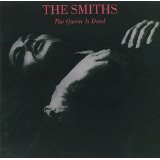
I’ll admit that it can be a bit precious, and the singing’s occasionally weak. There’s the bad joke (rhyming “minister” and “sinister”) in the chorus that takes away from the otherwise beautiful title song. “Me and the Major” tries to fit in too many lyrics into the flow of the music. And “Get Me Away From Here” is fun until you hear “I’m dying” a dozen times. It reminds me too much of the Smiths.
But there are at least three absolute classics (“Seeing Other People”, “Like Dylan at the Movies” and “Fox in the Snow”) here, and a couple of others that come close, although we’d probably disagree about which are which.
So, even with some minor flaws, it’s still one of the best records of the 90s (or is that the 60s?). And as beautiful as I think this music is, I don’t play it for company. Belle and Sebastian are a very private pleasure.


 Occasionally my wife reminds me that all the good music drifting through our house doesn’t originate solely from
  . Ian played guitar for Echo and the Bunnymen, a band I’ve never quite gotten. So the idea of sitting through one of their solo albums wasn’t very appealing to me. I was resigned that the ongoing pollution of my record library was to continue in this way. (It all began with the Great Merge of the record collections that took place right after we got married.)

 The other night, while watching one of those VH1 Top something of the 80s, I couldn’t get over how similar all of the music was. Regardless of style or genre, it was all very, very…busy. Everyone seemed to be trying to fill up every last bit of aural space available - sometimes with volume, but mostly with…stuff. There must have been a fear of leaving any moment empty of sound, as if an occasional silence couldn’t contribute to the overall musical effect.